TRAI Chairman calls for reforms in TV viewership measurement system
In a candid conversation with e4m, TRAI Chairman AK Lahoti reiterated the need to introduce competition in audience measurement, which he believes is critical to restoring fairness and accuracy
 by
by
Published: Jun 12, 2025 9:45 AM | 4 min read
 Follow Us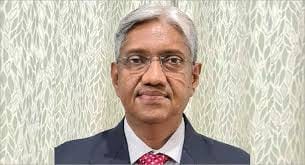

In a candid conversation with exchange4media, Telecom Regulatory Authority of India (TRAI) Chairman AK Lahoti raised pressing concerns about the current television viewership measurement system in India.
Calling the ecosystem “distorted,” Lahoti underlined the need for multiple rating agencies, improved technological integration, and urgent government intervention to ensure parity between traditional broadcast and digital OTT platforms.
A distorted ecosystem
“The system is skewed,” Lahoti said, adding, that there is an uncertainty whether the set top boxes that have been installed somewhere are properly distributed or not, highlighting doubts around the fairness and transparency of the system.
Lahoti reiterated the need to introduce competition in audience measurement, which he believes is critical to restoring fairness and accuracy. “We have clearly said that there must be more than one rating agency,” he emphasized. “Right now, there’s only one set of data coming in, controlled by a specific management. The market should have the option to choose which agency is more reliable.”
The presence of multiple rating bodies, he believes, will allow advertisers to make more informed choices and foster a healthier media marketplace.
“Then the people — the advertisers — can choose. The market can decide which agency is more reliable, and accordingly, that agency will thrive,” he said.
Parity between platforms
With content being increasingly consumed across platforms—linear television, Connected TV (CTV), OTT apps, and YouTube—Lahoti believes the regulatory landscape is overdue for an update.
“There are two mediums disseminating the same content: one is regulated, and the other has no regulations at all,” he said. “Some level of parity needs to be brought in. The government will have to take a call.”
The disparity between regulated linear broadcasters and unregulated OTT platforms is creating an uneven playing field that could harm the industry in the long run.
Leveraging technology for better measurement
Lahoti strongly advocated the use of modern technology to improve sampling, data accuracy, and ratings transparency.
“We’ve said repeatedly that multiple mediums should be used. Connected TV, for instance, is a good source — it can provide a lot of data,” he said.
Smart TVs and OTT platforms also provide significantly more detailed insights into viewer behavior.
“With smart TVs and OTT, you can even get to know who is watching — because OTT allows for user profiles,” he said. “So, the data is far more targeted and refined.”
He believes these technological advancements make it possible to shift toward much more accurate and real-time viewership data. “Technology must be leveraged for better sampling, more accurate surveys, and improved ratings.”
The risk of misleading advertisers
The current limitations of the viewership data, Lahoti noted, not only distort the perception of market size but also mislead advertisers. “One distributor once told me that in a particular state, a manufacturer wanted to advertise a product and was told there were 50 lakh viewers on a particular channel. But when he cross-checked, the actual number was only one-fifth of that,” he recounted.
“Unless you have reliable ratings, the market remains distorted. People don’t really know what the actual viewership is,” he added.
OTT vs Linear TV: Two distinct mediums
Lahoti cautioned against bundling OTT and linear TV viewership data without context. “OTT and linear TV are two different platforms with different types of advertising. You can’t just combine the two and treat them as the same,” he said.
In OTT, where content is delivered via the internet, data can be tracked with far greater precision. “With OTT, you can get much more accurate data — it’s digital, it goes through the internet, and you can measure exactly how much is being watched,” he explained. “But with linear TV, unless the rating systems are improved, you simply won’t get that level of accuracy.”
As digital consumption continues to rise, Lahoti’s comments underscore the urgent need for a robust, transparent, and pluralistic ratings system in India. His call for reform, greater technological integration, and regulatory parity may serve as the foundation for long-awaited changes in how Indian media is measured and monetized.
Read more news about Television Media, Digital Media, Advertising India, Marketing News, PR and Corporate Communication News
For more updates, be socially connected with us onInstagram, LinkedIn, Twitter, Facebook YouTube & Google News