Misinformation on social media has pushed audiences back to News TV: Zakka Jacob
CNN-News18 Managing Editor Zakka Jacob and Ruhail Amin engaged in a fireside chat at e4m NewsNext Summit 2025 on the evolution of the grammar of television journalism over the last decade
 by
by
Published: Dec 13, 2025 2:15 PM | 3 min read
 Follow Us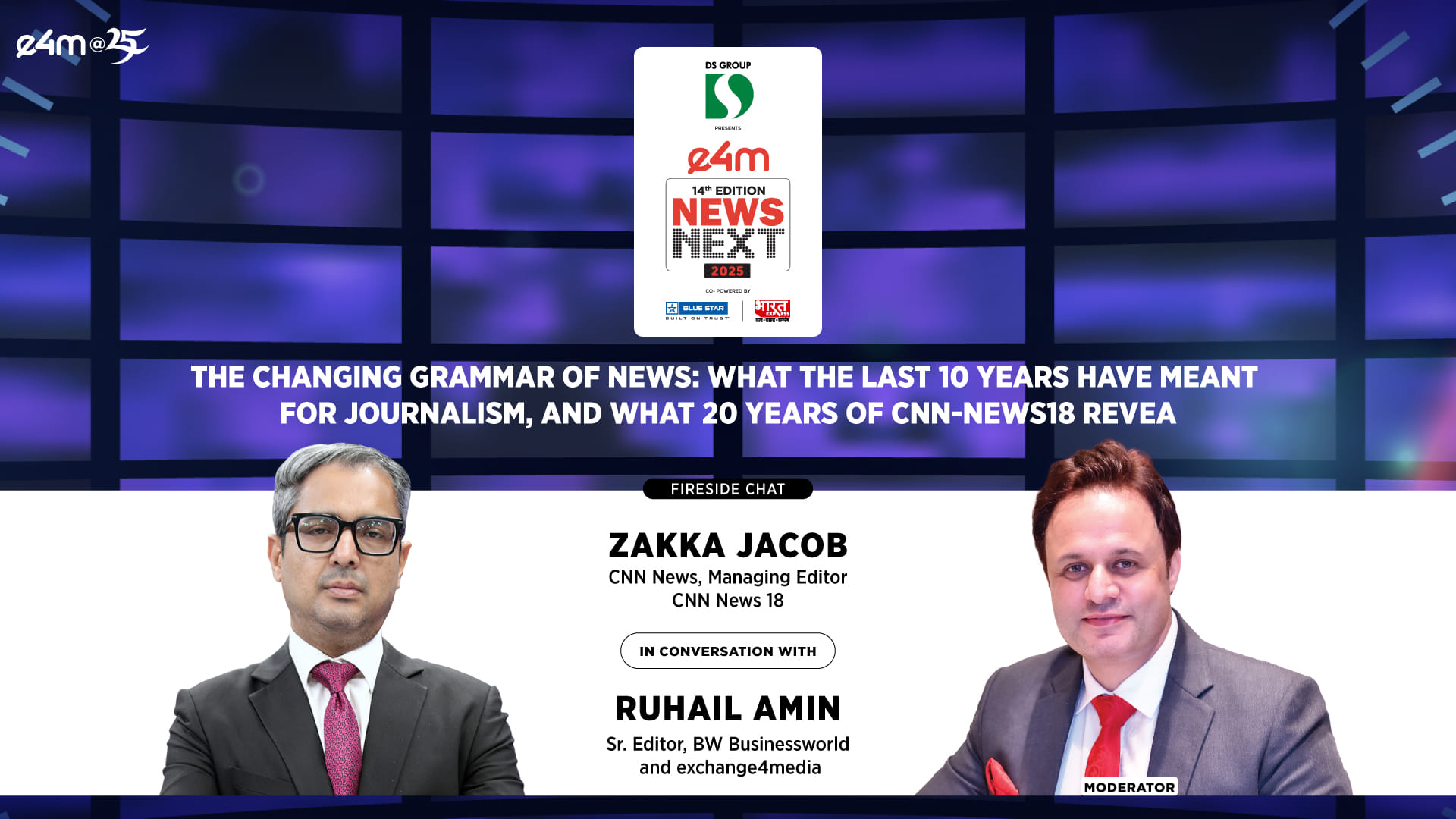

e4m NewsNext Summit 2025, being held in Delhi today, witnessed a fireside chat between CNN-News18 Managing Editor Zakka Jacob and Ruhail Amin, Sr. Editor, BW Businessworld and exchange4media. The conversation dealt with the evolution of the grammar of television journalism over the last decade, why viewers return to TV during crises, and what must be protected at all costs in an era of misinformation.
Opening the session on “The Changing Grammar of News: What the Last 10 Years Have Meant for Journalism, and What 20 Years of CNN-News18 Reveal,” Ruhail Amin set the context by noting how both the network and the industry have evolved over time.
Zakka Jacob said the most fundamental change in journalism over the last decade has not been technological, but editorial. “The fundamental thing that’s changed in the last 10 years is the way people are consuming news,” he said, pointing to the sharp rise in mobile and digital consumption. However, he added that 2025 has shown television finding its relevance again. “I think TV has found its mojo back,” Jacob noted
Citing major news events such as Operation Sindhu and the Air India crash, Jacob explained how misinformation on social media pushed audiences back to television. Recalling personal experiences, he said parents told him they tuned into TV news “for the first time in five years” to verify what was actually happening. “The panic was fueled by social media… the only refuge that people had frankly was to turn to traditional media,” he said, adding that established news platforms have accountability and legal consequences for misinformation.
Addressing the pressure to break news first, Jacob rejected the idea that speed should come at the cost of accuracy. “There is no pressure to be first,” he said. “If it’s on CNN News18, then it is true.” According to him, credibility is the only real currency journalists possess. “You can’t break every story first… what TV should be doing is making sure whatever we break is with a degree of responsibility,” he added
On the criticism that television news has become overly opinionated, Jacob offered a nuanced view. While acknowledging the presence of debates, he said it was unfair to judge TV journalism only by prime-time shows. “Barely four hours is talk television, the remaining hours is basically on-field ground reporting,” he said, emphasising a conscious shift towards explainer-led journalism. “We’re trying to move away from this debate format and look at explaining stories,” Jacob said.
Discussing the challenges in TV journalism, Jacob highlighted the need to present multiple viewpoints without imposing opinions. “The Indian viewer is so smart… you don’t have to spoon-feed him or her,” he said, warning that excessive lecturing has driven younger audiences away from traditional news format. Jacob attributed the brand’s longevity to trust. “If that trust is broken, then frankly what else are we plying our wares with?” he said, adding that credibility has also translated into strong viewership over recent years.
Concluding on the future of television news, Jacob dismissed claims that TV is dying. “TV will always be alive,” he said, noting that audiences continue to return to television during major events for verified information. “People want a source that is credible and therefore they are returning to television,” he added.
Read more news about Television Media, Digital Media, Advertising India, Marketing News, PR and Corporate Communication News
For more updates, be socially connected with us onInstagram, LinkedIn, Twitter, Facebook YouTube & Google News