Heartland, not metros, powers FM’s future: Phase III auctions signal pivot
DB Corp, Malayala Manorama, Mathrubhumi and other networks expand aggressively in Tier-2/3 India as rural demand and FM reach outpace cities
 by
by
Published: Sep 19, 2025 9:41 AM | 7 min read
 Follow Us

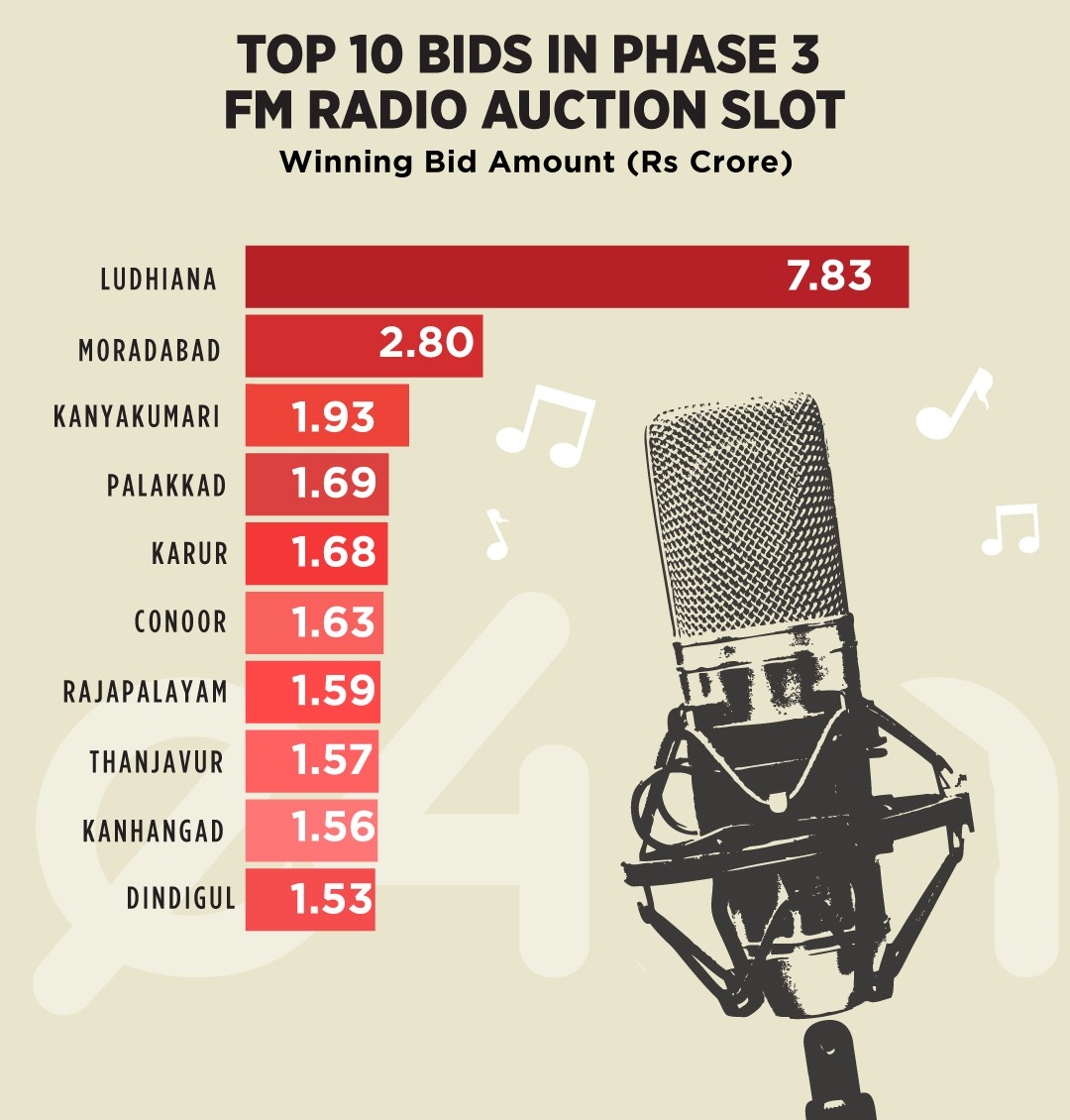
Radio’s next act is being scripted far from the metros, on India’s Tier-2 and Tier-3 turf where growth is strongest. From a ₹29-lakh licence in Silchar to a ₹7.83-crore splash in Ludhiana, the Phase III FM auction tells its own story. Broadcasters are chasing audiences and advertiser rupees where consumption is rising fastest. The momentum is unmistakable, with under-served markets turning into must-win territories for network scale and yield.
In Phase III, DB Corp, Malayala Manorama and Mathrubhumi were among the most aggressive bidders, picking up fresh frequencies at several crores each in markets where private FM presence has so far been limited. DB Corp (MY FM) emerged as one of the most active participants, winning close to 14 new stations across Alwar, Bhilwara, Bhuj, Daman, Ratlam, Rewa, Rewari, Rohtak, Sikar, Ganganagar, Gandhidham, Panipat and Pali.
As per MIB documents, bid amounts ranged between ₹80 lakh and ₹1.49 crore, highlighting both the competitiveness of the auction and the value placed on smaller-town frequencies.
In Kerala, Malayala Manorama’s Radio Mango and Mathrubhumi’s Club FM each won two new stations, Kanhangad and Palakkad, paying over ₹1.55 crore per licence. Other regional players such as Malar Publications, Kal Radio and Rajasthan Patrika also added to their portfolios, picking up frequencies across Tamil Nadu and Rajasthan with winning bids stretching up to ₹1.93 crore.
Also read: Lifestyle advertisers going back to Radio
Also read: MIB to introduce digital FM radios in 13 major cities of India
Why heartland, not metros, is driving radio’s next growth spurt?
As per latest data from market research firm NielsenIQ, even while in Q1 2025, rural consumer demand grew at a slower pace compared to Q1 2024, it remained four times faster than growth in urban areas, where consumption further decelerated. Rural markets continued to outperform urban counterparts across most regions of India. Traditional trade volumes increased to 6.2% in Q1 2025, from 5.0% in Q1 2024.
Radio’s expansion bet also leans on solid evidence from non-metro India.
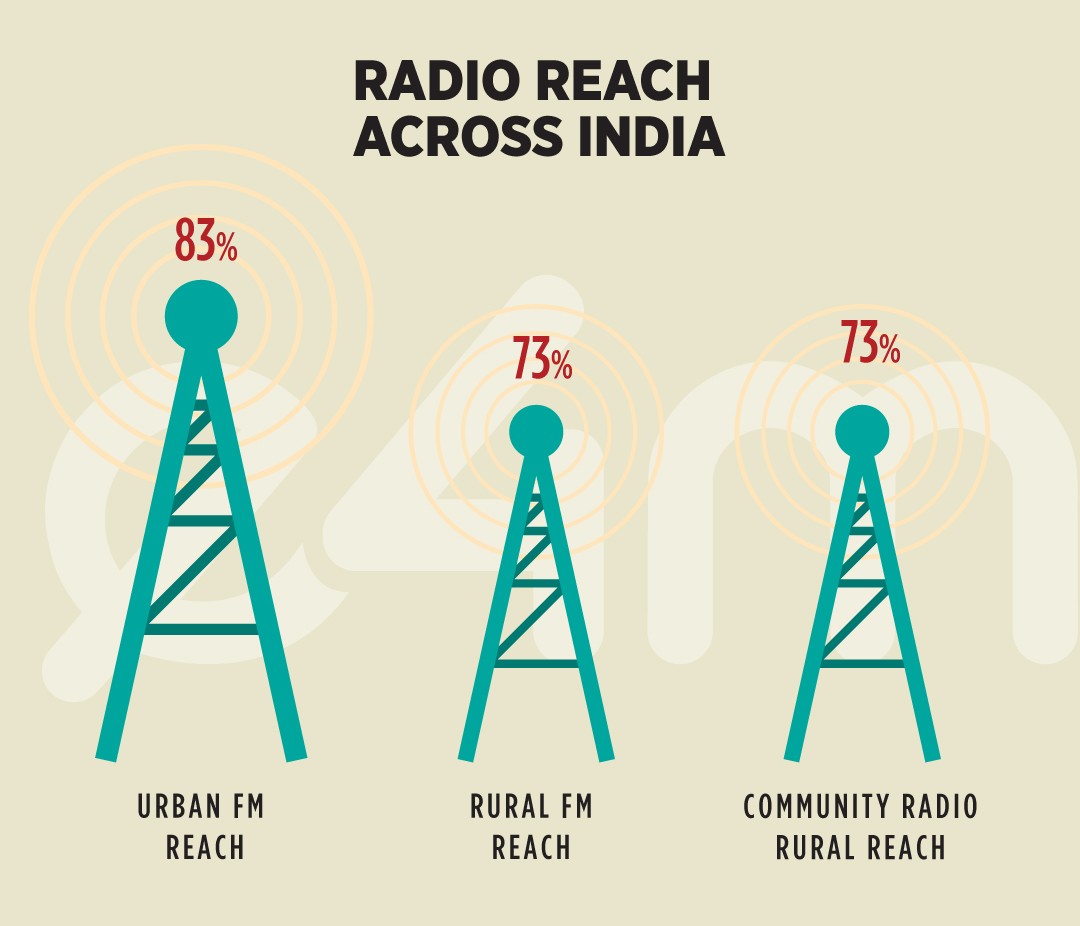
TRAI reports there are 388 operational private FM channels across 113 cities, many outside metro areas, served by 36 private FM operators. India Radio Forum suggests radio reaches 73% of rural India, compared to 83% in urban centres. For community radio stations as well, over three-fourths (77%) of listeners are from rural zones, showing strong embeddedness outside cities. These figures reinforce that FM’s pulse beats loudest in Bharat.
This backdrop explains why network heads insist this isn’t opportunism but a deliberate, growth-first pivot to Bharat.
“Our decision is both strategic and forward looking. These cities may appear small on the map, but they are vibrant hubs of consumption with rising disposable incomes and growing aspirations,” said Rahul Namjoshi, Chief Executive Officer of MY FM.
He added, “Tier II and III markets are no longer emerging; they are the real engines of consumption today. Every major brand is chasing these audiences because their spending power is rising rapidly.”
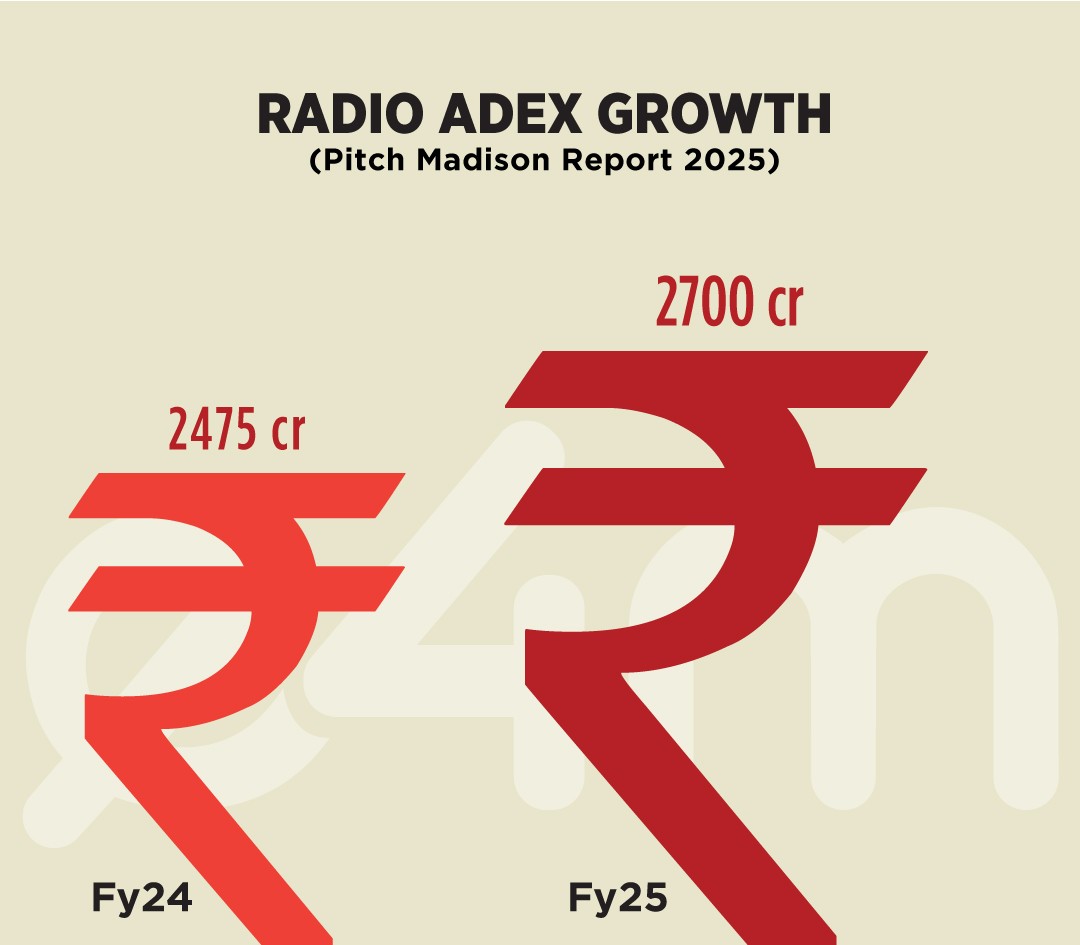
There are more numbers to support the claim. As per market research solutions company, Toluna, across more than 30 non-metro towns, 80 percent of respondents regularly listen to FM radio, with working professionals clocking the highest engagement. The Madison Advertising Report 2025 projects that radio ad spend will grow about 9 per cent this year, pushing total expenditure close to Rs 2,700 crore.
For radio executives, the numbers underline what they have seen on the ground, that radio remains affordable, hyper-local and trusted.
“These towns represent the next growth frontier for the media. While metros are saturated, Tier 2 and Tier 3 cities are witnessing rapid shifts. Radio remains one of the most trusted and accessible mediums in these regions,” said Mayura Shreyams Kumar, Director of Digital Business at Mathrubhumi.
Expansion strategies
For MY FM, the focus is on deepening its grip over North and Central India. Namjoshi noted that the network already enjoys leadership in many of these states and wants to use the new stations to strengthen that position. “As the largest radio network in these markets, we are best positioned to connect brands with consumers through radio’s unmatched reach and deep local connect,” he said.
In Kerala, the strategy is about building a statewide footprint. Mathrubhumi, which currently operates six stations, will expand to eight, a scale Kumar said is important for advertisers. “From our present six stations we are growing to eight, making us the FM brand in Kerala with the largest network. This ensures better yield as advertisers can now access an all-Kerala reach,” he said.
Malayala Manorama’s Radio Mango, which also bagged Kanhangad and Palakkad, is following a similar approach. “Radio Mango is a Kerala-specific brand and every opportunity that we get to expand within Kerala, we will take up. These markets have people craving for audio content after video fatigue,” said Manoj Mathan, Chief Executive Officer of Radio Mango.
Mathan admitted that smaller towns may not bring in big revenues initially but said the business is monetizable over time. He pegged the set-up cost of a new station at Rs 3 to 4 crore, depending on land and transmission infrastructure. “Revenue potential may not be as big as larger towns, but these markets can be monetised steadily. Tier 2 and 3 audiences deserve a medium that is non-intrusive but informative and entertaining,” he added.
Executives also acknowledged that advertising solutions in smaller cities must reflect local sensitivities. Namjoshi explained that brands entering these markets are highly price conscious and require customised solutions.
“It is premature to put a number on ad rates in these new cities. What is exciting is that private FM is entering these cities for the very first time. This opens a completely new advertising avenue for local businesses and provides brands with a powerful medium to connect with audiences in a personal and cost-effective way. Rates will naturally evolve once advertisers experience the impact of radio,” he said.
Beyond the airwaves
One striking theme across broadcasters is the emphasis on non-core revenues. With traditional ad slots alone insufficient to drive profitability, radio networks are building what they call 360-degree offerings.
Namjoshi said the goal is to keep radio at the heart while expanding into measurable, advertiser-friendly extensions. “Radio is our heartbeat, and around it we create powerful extensions like branded experiences and activations that help advertisers measure impact, scan brand efficacy and see real consumer response. Whatever we do, it is designed to keep listeners engaged and brands meaningfully connected, ensuring radio remains not just relevant but indispensable in every market.”
Kumar agreed, noting that digital and on-ground activations will play a crucial role in engaging audiences beyond FM. “We are focusing on branded content, sponsorships, and hyper-local tie-ups with RJ influencers. We want our RJs to become strong voices and opinion leaders in their communities, bridging the gap between advertisers and listeners in an authentic way,” he said.
Mathan added that listener-centric experiences are becoming increasingly important in Kerala’s competitive media environment. “Radio is still about community. Events and on-ground initiatives will help us create direct connections that strengthen loyalty and make the medium indispensable for brands,” he said.
The bigger picture
The government’s Phase III policy has opened up 730 new private FM channels across 234 cities, with reserve prices totalling nearly Rs 785 crore. For many towns, this is the first time private FM will be available.
Broadcasters see it as both a challenge and an opportunity. It is a chance to connect with virgin markets but also raises the need to invest heavily in infrastructure, content and marketing to build listenership from scratch.
While the economics remain tough, with high set-up costs, infrastructure gaps and the need to calibrate ad rates to smaller markets, industry leaders insist that the long-term rewards outweigh the risks.
For DB Corp, Malayala Manorama and Mathrubhumi, the auction is less about chasing frequencies and more about betting on India’s heartland. With aspirations rising, disposable incomes growing, and radio still commanding trust, their gamble is that the hum of FM will continue to echo strongly across India’s smaller cities.
Read more news about Radio Media, Digital Media, Television Media, Marketing News, Advertising India
For more updates, be socially connected with us onInstagram, LinkedIn, Twitter, Facebook YouTube & Google News