‘No one will hand over press freedom on a platter – the media must fight for its rights’
Anant Nath, President - Editors Guild of India, speaks to e4m on the challenges faced by media organizations, the path forward for protecting freedom of expression, censorship and more
 by
by
Published: Oct 4, 2024 12:50 PM | 5 min read
 Follow Us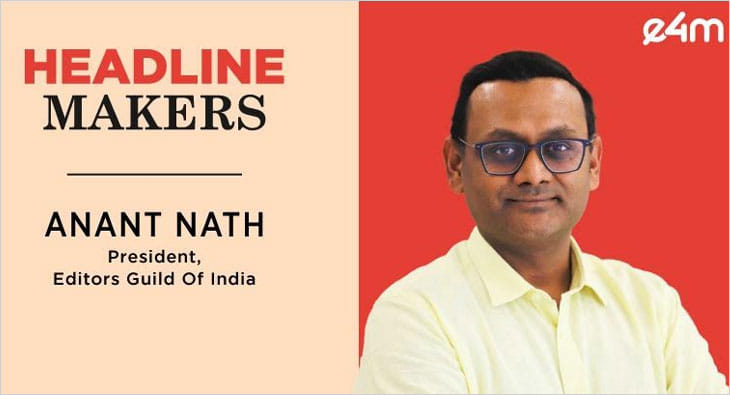

In a time when press freedom is under increasing scrutiny, the recent Bombay High Court ruling has been a significant victory for media independence in India. Anant Nath, President of the Editors Guild of India, speaks candidly about the broader implications of the ruling, the challenges faced by media organizations, and the path forward for protecting freedom of expression.
In this exclusive interview, Nath offers insight into how the media can collectively fight for its rights and navigate the pressures posed by government regulations and censorship.
Excerpts:
How significant is the recent Bombay High Court ruling in the broader context of media freedom in India?
The ruling is extremely significant. The judgement from the Bombay High Court has essentially set aside the government's attempt to create a strong censorship mechanism for reporting on central government affairs. The government had sought to establish a fact-checking unit with absolute power to determine what content was fake, misleading, or false regarding government affairs on digital and social media. If content was deemed inappropriate, they had the authority to remove it, which is nothing less than censorship.
The court’s ruling declared that this act was inherently unconstitutional. It invoked three fundamental rights—Article 14 (right to equality), Article 19 (freedom of speech), and Article 21 (right to life and liberty). The government was essentially positioning itself as both victim and judge in its own matters, which is not permissible. The court has emphatically ruled that this entire mechanism was wrong and unconstitutional, which is a big win for safeguarding constitutional rights.
Do you believe this ruling will affect future government attempts to regulate online content?
I certainly hope so. The judgement sets a strong precedent that any future attempts to control online media and speech will face a high threshold. The government cannot simply decide that content is inappropriate and remove it without proper judicial oversight. However, it's also important to recognize that there are existing provisions in other laws, such as the IT Act, which still give the government power to bring down content. These rules are being challenged in various high courts, but judgments like these strengthen the case for press freedom.
In your opinion, how can the government strike a balance between curbing misinformation and ensuring freedom of expression?
The solution lies in having an independent regulatory body that includes representation from media, civil rights organizations, the judiciary, and perhaps the government, but with a limited voice. What the government was trying to do with the fact-checking unit was give itself sole authority. This is not acceptable. The regulatory framework should involve diverse voices, including civil society and the media, with the government having only a minor role in the process.
How do you think this ruling will impact India's global image regarding press freedom and democracy?
While the ruling won’t immediately improve India’s press freedom ranking, it prevents things from getting worse. Our ranking has been affected by many other factors, including pressure from the government through economic and legal means. If the court had ruled in favour of the fact-checking unit, it would have further damaged our reputation. This ruling ensures that, at the very least, our freedoms are not eroded further.
What steps can media organizations take to protect themselves from arbitrary actions by the government?
The most important thing is for press organizations to be proactive and collective in their actions. We have seen success when media organizations come together to challenge government actions, as was the case with the fact-checking unit. Persistent and collective action can yield results. Media organizations must continue to fight for their space and ensure that they don’t lose their right to report and question government policies.
What is the current sentiment within the Editors Guild following this ruling?
We are encouraged and motivated to keep up the fight. The Editors Guild is organizing a series of programs across the country to foster dialogue on press freedom, media regulation, and challenges from emerging technologies like AI. We are also preparing to take on more legal battles to protect press freedom and ensure that these issues remain at the forefront of public discourse.
Are there signs that suggest a more accommodating environment for media in the near future?
I believe there is potential for space to open up, but not because the government has become more empathetic. It’s more a result of changing political dynamics. As the political opposition grows stronger, it will create more room for the press to operate freely. The media, political opposition, and civil society must work together to ensure that the government is held accountable.
Media organizations need to introspect and take a more proactive stance in questioning government policies and actions. The media must fight for its rights because no one will hand them over on a platter. Collective action is key. If the media stands united, we can ensure that we retain the freedom to report and question without fear. The fear of economic or political retribution often holds back larger media organizations, but collective efforts can diminish that fear and create a stronger, more independent press.
Read more news about Print Media, TV Media, Advertising India, Digital Media, Marketing
For more updates, be socially connected with us onInstagram, LinkedIn, Twitter, Facebook, YouTube & Google News