World News Day: How some algo stole the mojo of the journo
Guest Column: Dilip Cherian, widely regarded as India’s Image Guru, examines the changing news audience and declining trust in journalism, highlighting concerns around credibility and more
 by
by
Published: Sep 28, 2026 11:48 AM | 5 min read
 Follow Us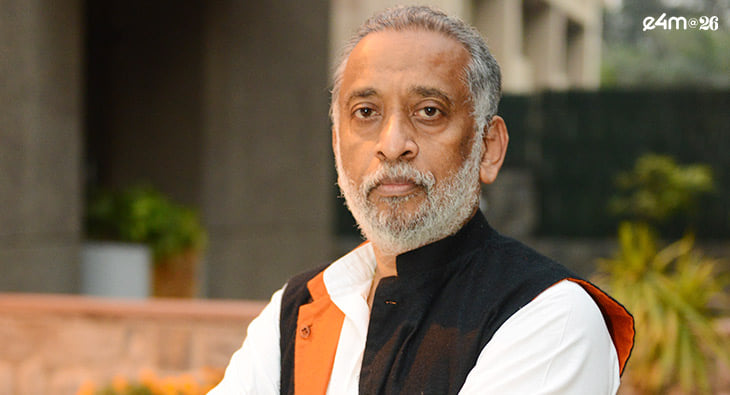

- The Reuters Institute's Digital News Report 2024 reveals a significant decline in trust in journalism globally, with only 40% of people trusting news, particularly among younger audiences like Gen Z and Gen Alpha, who increasingly rely on social media for news.
- In India, younger generations appear to have largely abandoned traditional media, such as print and television, favoring digital platforms for their news consumption, which has diminished in importance in their daily lives.
- The quality and credibility of journalism have deteriorated, with a rise in clickbait and a focus on virality over factual reporting, leading to concerns about the overall health of the industry.
- The financial crisis in journalism has created a dependency on advertising and algorithms, threatening the integrity of news reporting and raising questions about the future sustainability of quality journalism.
Before one begins to look at the state of journalism itself, it is usually a good idea to also figure out, even before we start out on any personal assessment, who the consumers for journalism are. India is rapidly graying and yet it is one of the few markets that still has a vibrant and growing young audience for news. Any journalism endeavor that believes it needs to be broad-spectrum must attempt to at least touch large parts of these audiences without excluding the impressive middle of the market.
Globally, the Reuters Institute's Digital News Report 2024 found that while 72% of people still access news weekly, trust in it has plummeted to just 40%. This trust deficit is most acute among the young. Gen Z and Gen Alpha tend to combine cynicism with an inexplicable but placid acceptance of garbage for information via doom-scrolling. An often quoted study by Ofcom in the UK noted that 16-24 year olds are now more likely to cite social media as their main news source than TV or news websites.
I haven't accessed any similar study on either the credibility or the touch points for the young in India today. But on occasions when I have been invited to speak with large numbers of students at formal university programs or during public lectures, I believe that the situation in India is one where the young have almost totally abandoned the use of traditional media, both print and television.Today the consumption of news has also drastically dwindled in terms of its importance within their working day, unless they themselves are in some media-related venture.
If journalism is the art of presenting news with an appropriately small lashing of opinion, then the aging and graying population, which traditionally consumed and drank at the faucet of conventional media, probably feels that its consumption is lower and that its need for that kind of media is distinctly less. The young don't consume traditional media at all. Today, they seem to get almost their entire wisdom, wit, and world awareness from tantalizing wisps of news served to them digitally.
The quality of what passes for journalism today is sadly wanting if one assesses it from a professional vantage point. While there is no complaint on account of either speed or scarcity, the real issue in that woodpile is quality and credibility. That has gradually eaten away the core of what used to be conventional journalism. Lamenting about the death of high-quality long form journalism is something that I don’t even want to begin on today because it’s a whole different graveyard there, even if there are a few hopeful signs of resurrection around.
To make matters worse, there is a very solid chunk that is today eaten up by pure pfaff in the name of paid journalism. Media outlets contend that they have no choice because of the sheer inability of the market to find ways of funding their news gathering expenses. As the media critic and author Michael Massing wrote, "The news industry's financial crisis has been so severe that it has become a threat to democracy itself."
This financial precarity, as former Guardian editor Alan Rusbridger argues, creates a dangerous dependency: "The business model that sustained journalism for a century has collapsed, and we have not yet found a new one that is not beholden to the whims of advertisers or the algorithm." Perhaps it is the revenues of New Age influencers peddling their version of truth that have become the new engine of growth in journalism or what passes for it? I'm not sure. And I'm actually scared to find out.
In my many years as a professional journalist, the two features that were the robust legs on which the entire edifice stood were primarily veracity, that included cross-checking, research and authoritative sources and then, editorial quality, as defined by the quality of editing the copy that one proffered to the news-desk. Both these have been ground down to near zero today.
Clickbait now rules the roost, and there is no doubt that veracity has long fallen by the wayside, and that the pathetic writing skills of the correspondents, if they exist, is often matched by the inertness of any editorial overlay that takes place or any filters that ought to be in place. What wins today is virality. What passes for credibility and quality is the New Age cross between shares, likes and the whims of some unseen algorithm that chooses to replay to you on multiple occasions in the day. News is sometimes reduced to what dominates the girl gang gaggles, what’s interested the boys who share news, or the picks of WhatsApp uncles who convert links into group chat fodder with effort on speed rather than veracity.
It is of course expected and maybe even proper for us to look for signs of life in this barren land that journalism has today become. It is sometimes considered either cynical or uncle-like behavior to castigate products which perhaps don't meet the standards or styles of those of the past. It is difficult to compete with the numbers of likes or looks that today's media claims for itself digitally. Yet to find anything that is either heartwarmingly high quality or even radiantly rapier-like in its piercing either the corporate veil, the political quagmire, or the technological advancements of our age, most journalism is today found sorely lacking.
Dilip Cherian, widely regarded as India’s Image Guru and former editor of Business India and of the Observer newspaper, is a Delhi based columnist and Litigation Landscaper. He is the Founder of Perfect Relations, South Asia’s premier image management firm, now a Dentsu Company.
Read more news about Digital Media, Television Media, Out of Home Advertising, Print Media, Latest Advertising India
For more updates, be socially connected with us onInstagram, LinkedIn, Twitter, Facebook, YouTube & Google News