From Odysseus to Hanuman — II
Guest Column: Ex-MIB Secretary Uday Kumar Varma writes about the untapped cinematic possibilities of India’s epics
 by
by
Published: Sep 26, 2026 4:11 PM | 4 min read
 Follow Us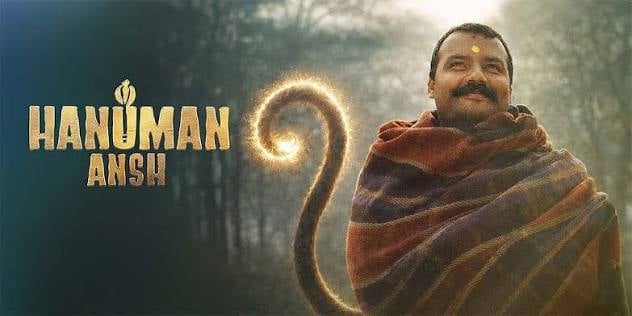

For an Indian viewer, the question raised by Nolan’s Odyssey is almost irresistible. Why should Homer have all the fun?
India possesses not one but an extraordinary constellation of epic and mythological traditions. The Ramayana and Mahabharata have survived not merely as texts but as living traditions, continuously retold through languages, theatre, dance, painting, folk performance, television and cinema.
We have never lacked epic stories.
Indeed, Indian cinema began by telling them. Dadasaheb Phalke’s Lanka Dahan was based on the Ramayana. Ramanand Sagar’s Ramayan and B.R. Chopra’s Mahabharat later demonstrated the extraordinary hold these stories could exercise over a mass audience.
And Indian filmmakers have not merely reproduced them. Films such as Shyam Benegal’s Kalyug and Prakash Jha’s Raajneeti found contemporary political and familial dramas within the Mahabharata. Others have approached the Ramayana through radically different interpretations.
So this is not a complaint that Indian cinema has neglected its epics. It is a different proposition.
We may still not have exhausted their cinematic possibilities.
That distinction matters.
The opportunity before us
The challenge is not to make an Indian Odyssey, still less to imitate Hollywood. It is to discover what an Indian filmmaker, working with an Indian story and an Indian cinematic sensibility, can do when given the freedom to think on an epic scale.
We now have the technology. We have actors, cinematographers, composers, designers and visual-effects artists capable of working at international levels. We have audiences accustomed to spectacle. We have a global Indian diaspora and a world increasingly curious about Indian stories.
What we need is not proof that our stories are good enough. They have already survived for centuries. What we need is the cinematic imagination and ambition to make us see them anew.
The unexpected clue from Hanuman
And then comes Hanuman Ansh.
Nothing about its early theatrical performance suggested a phenomenon. It opened modestly, without the machinery normally associated with a major commercial film. Then word of mouth took over. Audiences came. The film’s fortunes changed dramatically.
Around its success there has also emerged a conversation about faith, with some of its followers and makers seeing something almost providential in its journey. Whether one shares that interpretation is a matter of personal belief. It is not something a box-office result can prove.
But the underlying phenomenon is difficult to ignore. An Indian audience responded strongly to a story rooted in spiritual and cultural memory. That should make the film industry curious. Because perhaps the audience is not the problem.
Perhaps the audience has been waiting for stories that are familiar enough to belong to them and fresh enough to surprise them.
The stories waiting to be rediscovered
Imagine what might happen if the finest resources of Indian cinema were brought to bear on the extraordinary stories contained within the Mahabharata: Karna and his impossible loyalties; the dice game and its terrible consequences; the exile of the Pandavas; the many layers of Krishna; the tragic complexity of Bhishma.
Or on stories that are less familiar but no less cinematic: Nala and Damayanti, Savitri, Shakuntala, Panchtantra, or the countless narratives contained in India’s Puranic and regional traditions.
The possibilities are almost embarrassingly large. And they need not all become spectacles.
Some could be intimate dramas. Others could be political or psychological stories. Some might lend themselves to romance, others to adventure, tragedy, mystery or philosophical reflection. The richness of the material lies precisely in its variety.
The task is to find the cinematic form that the particular story demands.
Not an Indian Hollywood
This, then, is not a contest between Hollywood and Bollywood. Nor is it an argument that Indian filmmakers have somehow failed. It is an invitation.
Hollywood has shown what happens when a great inherited story meets extraordinary technical resources and a filmmaker willing to dream at scale.
India has the inherited stories. It has the resources. It has the audience. And it has filmmakers of immense talent.
What remains is to bring these things together with the confidence to create something that does not look like an Indian imitation of Hollywood, but something that could only have been made in India.
That is a very different ambition.
A simple test
The test would be wonderfully simple.
meCould we take a story that an Indian child has heard from a grandparent, seen on television, encountered in a temple or Ramlila, and make that same person sit in a darkened theatre years later and think:
I have known this story all my life. I have never seen it like this. That, perhaps, is the real challenge.
Nolan has gone back nearly three thousand years to find Odysseus. We do not have to go nearly so far. Our epic journeys are already here. From Odysseus to Hanuman, the distance is not measured in miles or centuries.
It is measured in what cinema still has the courage to imagine.
Read more news about Digital Media, Television Media, Out of Home Advertising, Print Media, Latest Advertising India
For more updates, be socially connected with us onInstagram, LinkedIn, Twitter, Facebook, YouTube & Google News