Snapchat pitches itself as IPL’s second-screen powerhouse
Speaking at the Pitch CMO 2026, Yagnesh Ravi, India Ad Solutions Lead at Snap Inc., positioned Snapchat as a platform where advertisers can tap into audience conversations during the IPL
 by
by
Published: Mar 19, 2026 8:30 AM | 5 min read
 Follow Us

At a time when brands are scrambling to capture shrinking attention spans, Yagnesh Ravi, India Ad Solutions Lead at Snap Inc., argued that marketers must rethink their playbook for the age of the attention economy. Speaking at the Pitch CMO Spotlight Session titled “Attention is the New Currency: Building Brands at the Speed of Culture,” Ravi positioned Snapchat as a platform where advertisers can tap into audience conversations during the Indian Premier League (IPL).
Ravi pointed out that Gen Z is now the largest generation in India, with a population of about 377 million people. In the coming decade, he noted, this cohort is expected to account for nearly 50 percent of the country’s workforce, fundamentally reshaping the consumer landscape.
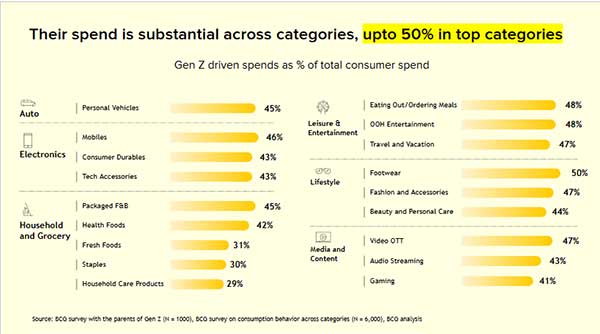
Their economic influence is already substantial. According to Snap’s presentation, Gen Z currently drives about $930 billion in consumer spending in India, a figure projected to reach $2 trillion by 2035. In categories such as footwear, their spending share can go as high as 50 percent.
However, the same audience is also the hardest to engage.
According to Ravi, an average Gen Z consumer now watches more than 400 videos a day, contributing to what he described as “massively fast attention decay.” Research commissioned by Snap with the attention measurement platform Lumen Research also shows that younger audiences abandon advertisements faster than older cohorts.
“An average Gen Z takes about half a second to figure out something is an ad before moving away,” Ravi said.
The study found that attention levels drop sharply after the first few seconds, with a clear attention gap between millennials and Gen Z once ads cross the two to three second mark.
“We call this the Gen Z attention tax. The moment an ad crosses two to three seconds, the attention gap between millennials and Gen Z becomes visible,” he said.
This shift, he argued, signals the decline of traditional interruption-led marketing.
“The age of interruption marketing is dead. Earlier, users were consuming a few pieces of content and a few ads. Today people see 500, 600 or even 1000 videos a day. That model simply does not work anymore.”
Multi-format storytelling for higher attention
A key theme of Ravi’s presentation was the importance of multi-format campaigns. Instead of repeating the same video advertisement, he said brands should distribute messaging across different creative formats.
“Imagine the first two exposures through video, the next through augmented reality, then maybe through chat or promoted places on maps. The message remains the same but the format keeps changing,” he said.
According to studies conducted with Lumen, such campaigns deliver stronger outcomes.
“Multi-format campaigns generate five times more attention compared to campaigns on other platforms, and they drive a 134 percent lift in consideration compared to video-only advertising,” Ravi said.
Meanwhile, the data also suggests that simply adding Snapchat to a campaign mix can improve attention metrics among younger audiences.
“For any brand trying to reach Gen Z, by just adding Snap to the mix, attention levels go up by about 22 percent,” he added.
Augmented reality also plays a central role in this strategy. Nearly 80 percent of Snapchatters use AR lenses daily, making them one of the key formats used by brands to drive interactive engagement.
Cricket fandom and second-screen behaviour
Meanwhile, cricket continues to remain a major cultural moment for younger audiences.
“About 85 percent of Gen Z users on Snapchat follow cricket or the IPL, which is nearly twice the affinity seen for other sports,” Ravi said. Snapchat users are also 13 percent more likely to be frequent sports viewers compared to non-users, according to the company’s data.
Although cricket viewing remains largely television-led, Ravi noted that digital behaviour during matches is increasingly multi-screen.
“Ninety percent of viewers are second-screening while watching the match,” he said.
However, the nature of this behaviour is largely conversational rather than passive browsing.
“What we discovered is that about eight out of ten Snapchatters are messaging friends and family while second-screening during a match,” Ravi said.
According to him, this behaviour positions the platform as a social layer around live sports viewing rather than a competing screen.
“We are not fighting for attention with the primary screen. We are actually helping people go deeper into the match. We are the layer that brings friends into the viewing experience.”
Cricketers and creator engagement
Sports personalities are also increasingly active on Snapchat as creators. Indian cricketers such as Arshdeep Singh have emerged as Snap Stars, sharing behind-the-scenes moments and interacting with fans on the platform.
According to Ravi, such athlete-driven content helps brands tap into real-time fan conversations during major sporting moments like the IPL.
Meanwhile, brands can also activate campaigns through interactive tools such as augmented reality lenses that display live match scores, trigger celebratory animations when boundaries are hit, or allow fans to predict the next ball. Other features include virtual cricket pitches created through AR, branded stickers and frames, and in-chat experiences designed for group conversations.
Ravi highlighted the platform’s scale in India as another reason advertisers are paying attention. Snapchat today has more than 250 million monthly active users in the country, including over 130 million daily active users. The audience is heavily skewed towards younger demographics, with around 90 percent of users aged between 13 and 34.
Meanwhile, engagement patterns on the platform also differ from passive scrolling feeds. According to Snap’s data, 98 percent of Snapchat users in India visit multiple tabs within a single session, indicating high levels of interaction across different features.
For advertisers preparing for the IPL marketing rush, the company’s pitch is clear. While the match unfolds on television or streaming platforms, a parallel layer of fan conversations continues to play out across messaging and social platforms on mobile screens.
Read more news about Marketing News, Advertising News, PR and Corporate Communication News, Digital News, People Movement News
For more updates, be socially connected with us onInstagram, LinkedIn, Twitter, Facebook, YouTube & Google News