Sam Balsara recommends 60-40 split between TV & digital media spends
At e4m Confluence 2024 Summit, Sam Balsara and Dr. Annurag Batra discussed brand building in a multi-platform world
 by
by
Published: Nov 11, 2024 2:11 PM | 5 min read
 Follow Us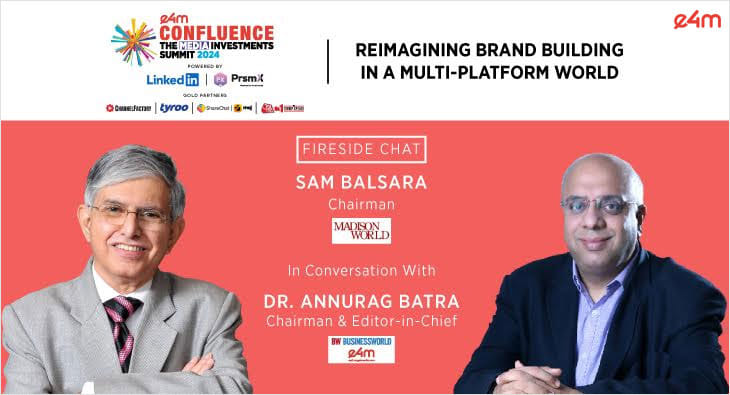

In today's digital world, brand building has expanded across multiple platforms, from social media to TV and streaming services. Brands now face the challenge of creating a unified identity that resonates everywhere, balancing traditional channels like TV for emotional depth with digital media for targeted engagement. To stay relevant and impactful, brands must blend these strategies effectively, connecting with consumers across all touchpoints.
At a time when the advertising landscape is rapidly evolving, e4m Confluence 2024 Summit, held in Mumbai on Monday, provided a crucial platform for industry leaders to explore strategies that keep brands relevant and impactful. The session titled "Reimagining Brand Building in a Multi-Platform World" focused on how brands can adapt to and leverage multiple media platforms effectively.
The conversation between Sam Balsara, Chairman of Madison World, and Dr. Annurag Batra, Chairman and Editor-in-Chief of BW Businessworld & exchange4media, was a deep dive into the shifting paradigms in brand building. Balsara, a stalwart in advertising, shared insights into how media investments can be structured to maximize brand impact in today’s fragmented media environment.
Opening the discussion, Balsara emphasized the importance of a balanced media strategy that encompasses both traditional and digital platforms. He stressed that while digital channels have reshaped consumer interactions with brands, traditional media, particularly television, still plays an irreplaceable role in building brand memory. “Studies have shown that television advertising can enhance recall by more than 100% when compared to digital,” he remarked, underscoring that TV ads are still integral to generating brand recall and purchase intent.
Balsara pointed out that while digital media has become dominant due to changing consumer habits, it cannot be the sole focus of a brand’s media strategy. “If all we are doing is investing in performance media, then we are risking the long-term brand equity that sustains a business,” he noted. He acknowledged the temptation brands face to prioritize short-term performance metrics, especially in light of digital's measurable impact, but warned that this approach might erode brand loyalty and value over time.
As AI continues to gain traction, Balsara shared his thoughts on its potential role in media investments. He expressed optimism about AI’s ability to enhance the efficiency of ad targeting but remained cautious about its limitations in generating brand love or recall. "AI might allow us to reach audiences more precisely and minimize wastage," he said, "but AI alone cannot drive the emotional connection necessary for lasting brand success".
The impact of TV versus digital advertising was a recurring theme in the discussion. Balsara shared data from recent studies that underscore the distinct advantages of each platform. He pointed out that TV ads in a lean-back environment — whether traditional or on connected TV (CTV) — lead to significantly higher visual attention compared to mobile or social media ads, where audiences tend to 'snack' on content in a hurried manner. “The effectiveness of advertising on TV, in terms of recall and emotional resonance, is still unmatched,” Balsara stated, advocating for a 60-40 split favoring branding over direct response or performance media.
“Branding without emotion is a missed opportunity,” Balsara asserted. He stressed that while performance media can drive immediate actions, branding campaigns are essential for establishing emotional connections. These emotional ties are the bedrock of brand loyalty and are particularly strong when stories are conveyed through television, where the visual and auditory aspects create a more immersive experience. “The ads we remember years later are those that struck an emotional chord,” he added, citing classic examples from iconic brands that have invested in emotionally driven advertising over decades.
Dr. Batra also touched on the challenges faced by younger marketers in today’s media environment. Balsara’s advice to them was clear: while it’s important to be agile and adaptable, they should not ignore time-tested principles of branding. “Understand the new, but do not abandon the fundamentals,” he advised. He encouraged young professionals to focus on building emotional resonance in their campaigns, regardless of the platform. “The new media landscape requires us to innovate, but the power of storytelling and the importance of emotion are constants,” he concluded.
Balsara warned against “short-termism” in marketing, which he described as an over-reliance on immediate returns at the expense of brand equity. He cited Nike’s experience of shifting a significant portion of its budget from branding to performance media, resulting in an erosion of brand equity and a substantial drop in market value. “Short-term gains should not come at the cost of long-term brand value,” he argued, advising brands to think beyond immediate KPIs when planning media investments.
Balsara repeatedly highlighted that “multi-platform brand building demands a careful balance.” Digital media provides valuable data and targeting capabilities, but it is not a substitute for the broad reach and emotional impact that television can deliver. For Balsara, the future of brand building lies in integrating the strengths of both platforms and creating campaigns that resonate emotionally with consumers across media channels. As the discussion concluded, Balsara’s insights left the audience with a renewed appreciation for the art of branding in an era dominated by digital. His perspectives offer a valuable reminder that while platforms may change, the fundamentals of brand building, storytelling, emotion, and consistency remain as critical as ever.
Read more news about Marketing News, Advertising News, PR and Corporate Communication News, Digital News, People Movement News
For more updates, be socially connected with us onInstagram, LinkedIn, Twitter, Facebook, YouTube & Google News
