Olaplex CEO On AI, Brand Building And Why Curiosity Is A CMO’s Biggest Edge
Olaplex CEO Amanda Baldwin explains why AI will amplify trust, brand distinctiveness and human creativity, making curiosity the defining skill for marketers in an AI-first era.
 by
by
Published: Jun 26, 2026 1:26 PM | 8 min read
 Follow Us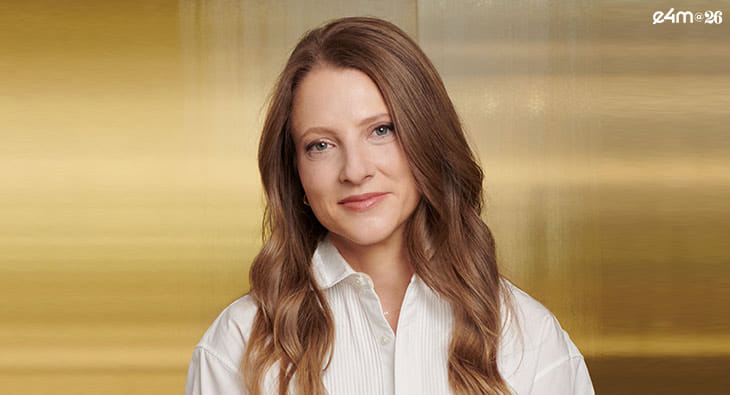

- Amanda Baldwin, CEO of Olaplex, emphasizes that in an AI-driven marketing landscape, trust, brand distinctiveness, and scientific credibility will be crucial for brands to connect with consumers effectively.
- She highlights the importance of balancing short-term performance marketing with long-term brand building, asserting that distinctiveness is vital for enduring success.
- Baldwin notes that beauty brands excel in leveraging creators and social platforms by building trust and providing authentic, educational content that resonates with consumers.
- Looking ahead, she believes AI will enhance product innovation and customer engagement but stresses that it should augment, not replace, human creativity and judgment in marketing strategies.
This interview was originally published on MartechAI.com
As artificial intelligence transforms marketing, brands are rethinking everything from consumer engagement to content, personalization and long-term growth. In response to questions from Brij Pahwa, Amanda Baldwin, CEO of Olaplex, shares why trust, brand distinctiveness and scientific credibility will become even more valuable in an AI-first world. She also discusses the balance between performance and brand building, the evolving creator economy, and why curiosity will be the defining capability for tomorrow’s CMOs.
1. Olaplex is often described as a science-led beauty brand. As AI becomes increasingly important across industries, how do you see technology changing the relationship between brands and consumers?
At OLAPLEX, technology has always been part of the brand story. We were born from a scientific breakthrough that changed what was possible in haircare. The question for us is not, “How do we use technology because it is new?” It is, “How do we use technology to make the consumer experience better, more personal, more educational, and ultimately more trusted?”
I think AI will change the relationship between brands and consumers by raising expectations for relevance. Consumers will expect brands to understand their needs, answer their questions, and meet them with the right information at the right moment. But I also think the human bar gets higher. The more automated the world becomes, the more valuable trust, expertise and emotional connection become.
For a science-led brand, that is a huge opportunity. Hair is personal. It has history, texture, damage, aspiration and emotion attached to it. AI can help us understand those nuances at scale, but it has to be in service of something very human: the professional community we serve is dedicated to helping people feel more confident in their hair and in the choices they make for it.
2. You've led transformations at both Supergoop! and now Olaplex. What have you learned about rebuilding growth in a market where consumer attention is more fragmented than ever?
A lesson I have learned is that fragmented attention requires more clarity, not more noise. When there are so many channels, trends and conversations competing for consumers’ time, a brand has to be even more disciplined about what it stands for.
At Supergoop!, the opportunity was to take SPF from something people knew they should use and turn it into something they actually wanted to use every day. That required education, product innovation and a sense of joy. At OLAPLEX, the work is about honoring what made the brand so powerful in the first place — breakthrough science, professional credibility, and products that deliver visible results — while making sure we are showing up with consistency, clarity and excellence across every consumer touchpoint.
One thing I’ve learned is that growth is rarely about one big move. It is about getting many things right at the same time: product, storytelling, education, channel strategy, team focus and execution. The brands that endure are the ones that can stay very close to their core purpose while continuing to evolve with the consumer.
3. Many marketers today are focused on performance. How do you balance short-term commercial objectives with long-term brand building?
I have never believed those two things should be in conflict. You have to hit your numbers. That discipline matters. But the best short-term results are usually strongest when they are built on long-term brand equity.
Performance marketing can tell you what is converting today. Brand building is what gives the consumer a reason to care tomorrow, next year and ten years from now. If you only optimize for the immediate transaction, you can train yourself out of distinctiveness. And distinctiveness is one of the most valuable assets a brand has.
The balance comes from being very clear about the role of each investment. Some activity is meant to drive conversion. Some are meant to build memory, emotion and trust. The magic is when you can do both when a campaign, a launch or a creator partnership drives commercial results while reinforcing the reason the brand deserves to exist.
At OLAPLEX, that means grounding everything in our science, but making sure the science feels accessible, emotional and connected to a real outcome: healthy hair.
4. The beauty industry has become one of the most sophisticated users of creators and social platforms. What lessons can marketers in other industries learn from beauty brands?
Beauty brands understand that influence is fundamentally about trust. A creator is not simply a distribution channel. A stylist is not simply a professional endorser. These are people with relationships, credibility and communities.
That is something beauty brands have learned very well. Consumers want proof. They want education. They want to see how a product works on real people, in real routines, with real texture and real concerns. They want to hear from someone who understands the category, not just someone with reach.
5. Consumer expectations are changing rapidly. How are data, analytics and consumer insights influencing decision-making inside modern brand organisations?
Modern brand organizations have access to signals we could not have imagined even a few years ago: what consumers are searching, what they are reviewing, what they are asking stylists, where they are getting confused, what claims resonate, what routines are changing. That can influence everything from product development to education to media to retail execution.
But you still have to interpret it and understand what is a real insight versus what is just noise. You have to know when the consumer is telling you about a problem that needs solving, and when the brand has to lead them somewhere they may not yet know they want to go.
At OLAPLEX, insights help us listen more carefully to consumers, to stylists, to retailers, to our own teams. This enables us to become more precise, more empathetic and more effective.
6. AI is making content creation easier than ever. In that environment, what becomes the true source of competitive advantage for brands?
When content becomes easier to make, meaning becomes harder to fake.
AI will create more volume, more speed and more variations. But if a brand does not have a clear point of view, all that speed can simply create more sameness. The brands that win will be the ones with unmistakable DNA: a reason to exist, a product that performs, a voice consumers recognize, and the discipline to show up consistently.
For OLAPLEX, the competitive advantage is not just that we can talk about science. It is that we have a science that changed the category, a professional community that helped build the brand, and a consumer relationship rooted in transformation. That is not something an algorithm can manufacture.
7. Many companies are investing heavily in personalization. How do you think brands can create highly personalized experiences without losing consistency and brand identity?
The key is to personalize the experience, not the essence of the brand.
A brand needs very clear non-negotiables: what it stands for, how it speaks, what it will and will not claim, what visual world it lives in, what standards it holds itself to. Once those are clear, personalization can become incredibly powerful because it helps each consumer find the most relevant path into the same brand promise.
Hair is a perfect example. Two people can have completely different textures, routines, concerns and goals and personalization can help us recommend the right regimen, the right education, the right cadence, the right treatment. But it should always ladder back to the same OLAPLEX promise: science-backed hair health.
8. Looking ahead, what role do you see AI playing across product innovation, customer engagement and marketing over the next five years?
I think AI will become a powerful operating layer across the organization.
In product innovation, it can help teams identify patterns faster: emerging concerns, ingredient conversations, unmet needs, product reviews, professional feedback, regional differences. In customer engagement, AI can help consumers understand their hair in a more personal way what they may be experiencing, what products may be right for them, and how to use them correctly. In marketing, AI will help teams move faster, create more intelligently, test more efficiently and learn in real time.
But the important word is “help.” I do not believe AI replaces taste, judgment, creativity or leadership. It augments them.
9. At Cannes Lions this year, there is significant discussion around creativity, technology and business transformation. Which of these conversations do you believe marketers should be paying the closest attention to?
The most important question is: how do we use creativity and technology to solve real business problems while making the brand more meaningful to consumers?
It is not about chasing novelty. It is about understanding what is essential about your brand and then using every modern capability data, AI, creators, commerce, content, community to express that essential truth more powerfully.
For a brand like OLAPLEX, that means taking something deeply scientific and making it emotionally resonant. The science is the foundation. Creativity is what helps people feel why it matters.
10. If you were advising CMOs today, what is the one capability they need to develop to remain successful in an increasingly AI-driven world?
Curiosity. AI will give marketers more of everything: more data, more content, more speed, more options. But more is not the same as better. The differentiating capability will be curiosity, and a good dose of judgment learning, always leaning in to what's next, figuring out what matters, what is true, what is on-brand, what is useful, and what needs to change. Then do it all over again!
Read more news about Marketing News, Advertising News, PR and Corporate Communication News, Digital News, People Movement News
For more updates, be socially connected with us onInstagram, LinkedIn, Twitter, Facebook, YouTube & Google News