Non-metros drive premiumisation, attract up to 35% of brand spends
Brands are expanding retail footprints in Tier markets, strengthening digital presence with more localised marketing using regional content and influencers to drive relatability and trust
 by
by
Published: Mar 26, 2026 8:47 AM | 8 min read
 Follow Us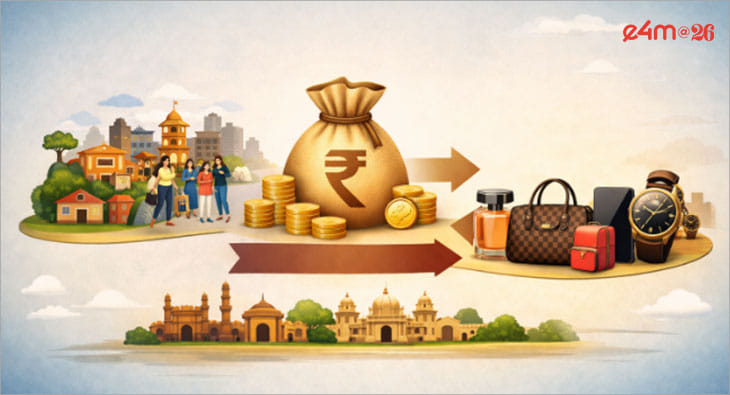

Premiumisation in India is no longer a metro-first phenomenon. Across sectors such as jewellery, beauty, consumer electronics and automobiles, brands are witnessing a marked rise in demand for premium products from Tier-2 and Tier-3 cities, signalling a deeper shift in consumption patterns driven by rising aspirations and increased access.
Industry executives note that consumers in smaller cities are increasingly willing to spend on premium, branded offerings, challenging the metro-centric view of premium demand. This shift is being driven by rising incomes, greater digital exposure and easier access via e-commerce and quick commerce, with social media and influencers shaping preferences.
In response, brands are expanding retail footprints in Tier-2 and Tier-3 markets while strengthening their digital presence, alongside more localised marketing using regional content and influencers to drive relatability and trust.
According to industry experts, marketing investments towards Tier-2 and Tier-3 markets are steadily rising, with brands now allocating roughly 25–35% of their overall budgets to these regions. This marks a clear increase from earlier levels, as companies recalibrate spends in line with shifting consumption patterns and the growing importance of non-metro markets as key drivers of premium growth.
Adding to this, Nirupam Sahay, Chief Executive Officer, Hindware Limited, noted a clear rise in demand for premium bathware from Tier-2 and Tier-3 cities, driven by greater internet access, increased travel and exposure to global design trends, making consumers more design-conscious about their homes. “This shift is also being driven by more informed decision-making. Customers today actively research designs, compare finishes, and pay closer attention to quality and durability. As a result, premium offerings that combine style with long-term value are gaining strong traction,” he said.
Sahay added that the strong response to its premium Fashion Faucet Series and Queo basin range underscores growing demand from these markets. He noted that while digital research is rising, in-store experience remains critical in bathware, prompting the company to expand its retail footprint, strengthen dealer partnerships and invest in curated displays, alongside targeted digital and local marketing to engage evolving consumer aspirations.
A similar trend is playing out in the premium audio segment. Vikram Kher, Vice President, Lifestyle, HARMAN India (makers of JBL, Harman Kardon, AKG, Bowers & Wilkins, Denon and Marantz), said the company has increased its marketing focus on Tier-2 and Tier-3 markets by 25–30% over the past few years, investing in retail expansion, manpower training, digital presence and on-ground engagement. He noted that this aligns with rising consumer upgrades across personal and home audio categories, driving strong traction for JBL’s LIVE and Tour series, as well as soundbars and PartyBox.
Kher said, “We are actively expanding our retail presence, while being selective in our investments to drive a strong premium positioning. This includes enhancing in-store visibility, creating experience-led displays, and ensuring the right product mix is available. On the marketing front, we are leveraging targeted digital outreach to engage the right consumer profiles, supported by outdoor visibility and retail experience zones.”
Echoing this shift, GoBoult noted that consumers in Tier-2 and Tier-3 markets are becoming increasingly aware of brands, design and features, moving beyond price-led choices towards more aspirational, well-designed products. The brand is witnessing strong traction for its newer launches and higher-spec offerings in these markets.
Sonali Srivastava, Brand Manager at GoBoult highlighted, “Our approach to marketing has remained quite disciplined. At GoBoult we usually keep marketing spends around 7 to 8 percent of revenue and that has largely stayed consistent. What has changed over the last few years is where we are focusing our efforts.” She added that as offline expansion drives growth in Tier-2 and Tier-3 cities, the brand is sharpening focus on retail visibility, local partnerships and targeted digital campaigns, with a greater share of spends now directed towards these markets.
DailyObjects said Tier-3 and Tier-4 cities now contribute around 40–45% of its total demand, highlighting how premium aspirations have moved beyond metros. The brand noted strong traction in East and Northeast India, as well as markets like Trichy and parts of Kerala, with performance across Apple Authorised Retail stores and its digital channels in some cases even surpassing metro markets.
“While we are scaling rapidly, our approach to marketing is driven by the organic momentum and brand recognition we’ve built. Interestingly, nearly 70% of our sales come through our own channels, which allows us to maintain a very efficient customer acquisition cost compared to brands that rely heavily on marketplaces,” said Pankaj Garg, Founder & CEO, DailyObjects.
He added that as the brand expands its physical footprint to 150 stores over the next 3–4 years, offline touchpoints across premium malls and airports are emerging as strong organic marketing drivers, reducing reliance on traditional spends, with a continued focus on capital efficiency and responsible growth.
The beauty category is also witnessing a similar shift. Medhavi Nain, GM Marketing, House of Beauty, noted that rising digital exposure and awareness of global trends are making consumers in these markets more experimental and quality-conscious, prompting the brand to scale up its marketing spends in these regions by 25–30%.
“Alongside increased allocations, our strategy has also evolved to focus more on digital-first engagement, influencer partnerships, and regionally relevant storytelling that resonates with audiences beyond metro cities,” she explained.
Beverage brands like Evocus also said they have increased marketing spends in Tier-2 and Tier-3 markets by around 25% over the past few years, reflecting their growing role in premium consumption.
“As consumer awareness around wellness and better lifestyle choices continues to expand beyond metros, these markets are becoming more receptive to quality-led offerings across the beverage and wellness space,” said Clavell Santiago, VP – HoReCa Sales and Marketing, Evocus. He added, “With rising aspirations, improving retail access and growing interest in functional hydration options, the shift towards premium products is expected to strengthen further.”
Yasin Hamidani, Director, Media Care Brand Solutions, noted a clear reallocation of media spends, with brands now directing 30–45% of their budgets towards non-metro markets, up from 20–30% earlier, as growth shifts to these regions, particularly across performance and regional content-led campaigns.
According to Hamidani, digital platforms are leading the shift, particularly short-form video, regional content and influencer-led discovery on Instagram and YouTube. However, he noted that traditional channels such as regional TV, OOH in key town clusters and on-ground activations continue to play a crucial role in building trust. “The most effective approach is a hybrid one - digital for aspiration and discovery, and traditional media for credibility and reinforcement,” he explained.
Financing & EMIs
Meanwhile, brands noted that easy financing and EMI options are playing a critical role in accelerating premium adoption in Tier-2 and Tier-3 markets by lowering entry barriers and improving retail conversions, particularly in fast-upgrade categories like wearables and audio. Strong consumer finance offerings, now standard across e-commerce and key retail outlets, are enabling access to higher-value products and driving traction for premium portfolios.
However, they added that the shift is equally driven by evolving consumer expectations, with buyers increasingly prioritising design, quality and performance, and willing to spend more for a superior experience, with financing simply enabling faster decision-making.
Kher noted, “Similar to Tier 1 cities, strong consumer finance offerings are becoming essential, as they significantly lower the entry barrier for higher-priced products. We are clearly seeing this trend across categories, where access to easy financing is accelerating premium adoption and improving retail conversion.”
DailyObjects, however, highlighted a different approach, stating that its products are increasingly seen as need-driven essentials rooted in everyday utility. Instead of relying on credit, the brand focuses on accessibility through initiatives like its biannual Half Price Sale, aimed at democratising premium design and encouraging wider adoption among aspirational consumers.
Tier 2 and 3 cities - the new growth lever?
Experts say that premiumisation in these markets is less about necessity and more about identity and aspiration. As consumers seek to signal upward mobility and lifestyle upgrades, premium products are becoming a key expression of that shift. With infrastructure improving and digital penetration deepening, industry players believe that Tier-2 and Tier-3 cities will continue to be a major growth engine for premium categories, potentially outpacing metros in the coming years.
“Rather than one set of markets driving growth alone, we expect demand to become more evenly distributed across metros as well as Tier-2 and Tier-3 cities. Rising aspirations, better access to information, and improving retail availability are encouraging customers in these markets to explore premium options,” said Sahay.
Brands noted that rising digital exposure, global trend awareness and improving incomes are driving premium upgrades in Tier-2 and Tier-3 markets, supported by expanding online and offline access. Consumers are moving from entry-level to higher-performance, design-led products across categories, positioning these markets as the primary engine of future growth. They added that as aspirations deepen and products are increasingly valued for quality, functionality and real utility, premium adoption is set to accelerate further, led largely by younger consumers, especially Gen Z, whose expectations remain consistent across geographies.
Read more news about Marketing News, Advertising News, PR and Corporate Communication News, Digital News, People Movement News
For more updates, be socially connected with us onInstagram, LinkedIn, Twitter, Facebook, YouTube & Google News