Insurance needs to move from distributor-led to customer-first approach: Kamlesh Rao
Kamlesh Rao, MD & CEO, Aditya Birla Sun Life Insurance, shares, how the company is approaching marketing, with a clear move towards digital-first, influencer-led and conversation-driven strategies
 by
by
Published: Mar 30, 2026 8:59 AM | 7 min read
 Follow Us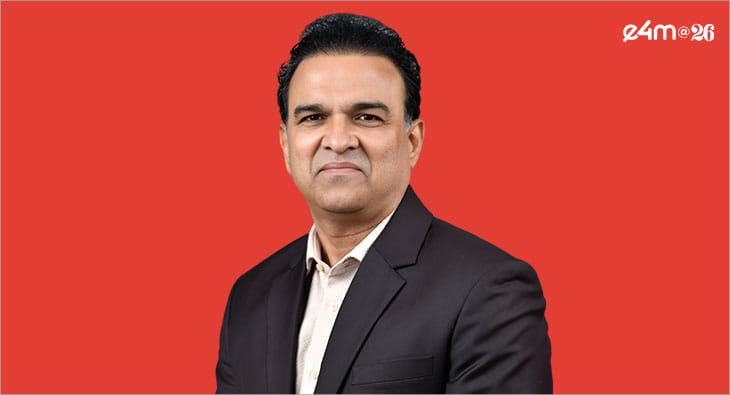

At a time when life insurance penetration in India continues to lag despite rising awareness, Kamlesh Rao, MD & CEO, Aditya Birla Sun Life Insurance, is pushing for a shift in how the category is designed, marketed and consumed - moving from distributor-led thinking to a more customer-first approach.
That shift is also reflected in how the company is approaching marketing, with a clear move towards digital-first, influencer-led and conversation-driven strategies.
The company is increasingly leaning on digital platforms, video formats and influencers, with media mix varying sharply depending on the audience cohort and product being marketed. While high-impact properties like the IPL or global sporting events continue to be leveraged for reach and salience, Rao said most product-led campaigns today are built with a digital-first mindset, prioritising platforms where consumers are actively discovering and evaluating financial products.
“Wherever we can start conversations, that is where we want to be present,” Rao said.
He added that influencers are playing a critical role in this shift, particularly for category-building campaigns. Instead of focusing on product specifics, influencer-led content is being used to drive awareness, shape perception and initiate discussion, especially in a highly regulated category like life insurance where product-level communication comes with constraints.

At the same time, traditional media such as television and print are being used more selectively. While television continues to play a role during large-scale moments, print is now largely tactical, deployed in specific contexts or markets rather than as a primary medium.
This evolving media mix is evident in its recent ‘Her Insurance’ campaign, which looks to build a dedicated category around women, a segment Rao believes remains underrepresented in policy ownership despite growing financial participation.
The campaign also adopted a contextual media strategy, extending communication beyond clutter-heavy moments like Women’s Day and exploring multiple touchpoints, including digital content, social platforms and on-ground integrations, to sustain engagement over a longer period.
Women-focused category signals shift in product thinking
Rao said the idea behind creating a dedicated category stemmed from a clear gap in ownership. While women account for nearly half the population and are increasingly involved in financial decisions, policy ownership and payment by women remain disproportionately low.
“Women are part of the discussion but not necessarily the final decision-makers. The attempt is to engage them directly and encourage them to buy and pay for insurance themselves,” he said.
Instead of creating “pink versions” of existing products, the company is looking at lifecycle-driven design. This includes features such as premium waivers during maternity phases, partial payouts for illnesses like breast or cervical cancer, and integrated child planning components.
The broader aim, Rao noted, is to use the category as a trigger to build more tailored products over time, rather than a one-off campaign play.
Distribution-led design remains a core industry problem
Beyond gender, Rao pointed to a deeper structural issue in the industry, with products still largely designed around distribution channels rather than end consumers.
Nearly 98% of insurance sales in India are intermediated through banks or agents, leading to product design that caters to what distributors can sell rather than what customers need.
“The issue is not the product itself, but how we think about and deliver it,” he said, adding that customer-led innovation, such as positioning long-term insurance products as fixed deposit equivalents remains underutilised.
Awareness high, conversion still a challenge
While awareness of life insurance has improved, conversion remains a bottleneck. Rao attributed this to behavioural factors such as delayed decision-making and lack of urgency, especially among younger consumers.
“The biggest gap is between awareness and purchase consideration. People believe they have time or don’t see immediate need,” he said.
He also highlighted the cost disadvantage of late entry into insurance, noting that consumers often realise their coverage needs only as they age, by which time premiums become significantly higher.
Rao suggested that the industry could do more to communicate the benefits of early entry, which remains a factor in the gap between awareness and conversion. He also noted that misconceptions around term insurance continue to hinder adoption, with many consumers assuming premiums are lost if no claim is made, despite the availability of products that return premiums, highlighting a gap in communication at the consideration stage.
Digital transformation improving trust and persistency
Rao said digitalisation has been a key enabler in improving both transparency and customer trust, fundamentally reshaping how life insurance is sold and serviced.
From digital onboarding and video-based verification to AI-led servicing, the entire customer journey has become more streamlined and auditable. with recorded confirmations helping ensure customers understand what they are buying.
This shift has had a direct impact on long-standing industry challenges. Rao noted that complaint ratios have declined over the past few years, while persistency levels have improved as customers have greater clarity on what they are buying.
“Customers today understand much more about what they are buying compared to earlier,” he said.
He added that digitalisation has also changed the nature of sales itself, moving away from tele-calling and manual verification towards more transparent, self-driven journeys, discovery and evaluation are increasingly enabled online.
At the same time, AI is playing a growing role in customer servicing, helping resolve queries faster and improving turnaround times, while also enabling more personalised interactions across languages and channels.
Together, these shifts are helping address concerns around mis-selling that have historically impacted the category, while strengthening long-term customer engagement.
Gen Z driving product innovation
Changing consumer behaviour, particularly among younger cohorts, is also shaping product strategy. Rao pointed to the success of a five-year protection product among Gen Z consumers, who are less inclined to commit to long-term financial products.
“Gen Z does not resonate with 30- or 40-year commitments. We have to adapt to their mindset,” he said. This shift is expected to influence future product formats, with shorter-tenure offerings and more flexible structures gaining traction.
Emerging markets require distribution overhaul
Rao acknowledged that growth in “Bharat” markets remains constrained by distribution challenges rather than product limitations.
Low-ticket policies often fail to incentivise intermediaries, creating a gap in coverage for lower-income segments. To address this, the industry needs alternative distribution models, including partnerships with government-backed networks such as CSCs and self-help groups.
“The product design is improving, but distribution remains the bigger challenge in emerging markets,” he said.
Rao said addressing this gap will be critical to achieving the industry’s broader goal of “Insurance for All by 2047”, with regulators and insurers increasingly focusing on improving penetration at a state and even gram panchayat level.
He added that while the journey is long-term, early signs of traction are likely to emerge over the next 2–3 years, which could then accelerate progress towards the 2047 target.
AI becoming central to operations and customer experience
The company is also investing heavily in AI across customer service, training, underwriting and collections, with Rao positioning it as a key driver of efficiency and personalisation.
AI-led systems now handle a large share of customer queries, improving turnaround times, while contact centres use AI to enable real-time language adaptation during interactions.
AI is also being used in sales training, allowing agents to simulate customer conversations and prepare for competitive scenarios.
On the collections side, a conversational bot contributes over 10% of premium collections, particularly among customers who prefer not to engage with human agents.
Rao added that the next phase will focus on AI-led execution with human oversight, especially in underwriting and policy issuance.
Industry’s next growth hinges on discovery and simplicity
Looking ahead, Rao emphasised that improving discovery and simplifying products will be critical to driving adoption.
Platforms that allow customers to compare, understand and purchase policies independently, such as Bima Sugam, the government-backed industry-wide digital infrastructure, could play a key role in reducing reliance on intermediaries.
At the same time, he identified two key growth segments: younger consumers entering the workforce and individuals above 50, where retirement and income security needs are rising.
“The shift has to be towards simpler, customer-led products and better discovery. That is what will unlock the next phase of growth for the industry,” he concluded.
Read more news about Marketing News, Advertising News, PR and Corporate Communication News, Digital News, People Movement News
For more updates, be socially connected with us onInstagram, LinkedIn, Twitter, Facebook, YouTube & Google News