FMCG Last Mile 2.0: Turning India’s 14 mn stores into intelligent platforms
Peshwa Acharya: Senior CXO, Business Strategist, and Consultant writes on how FMCG stores are sitting on a data goldmine and how most aren’t aware
 by
by
Published: Mar 2, 2026 9:24 AM | 5 min read
 Follow Us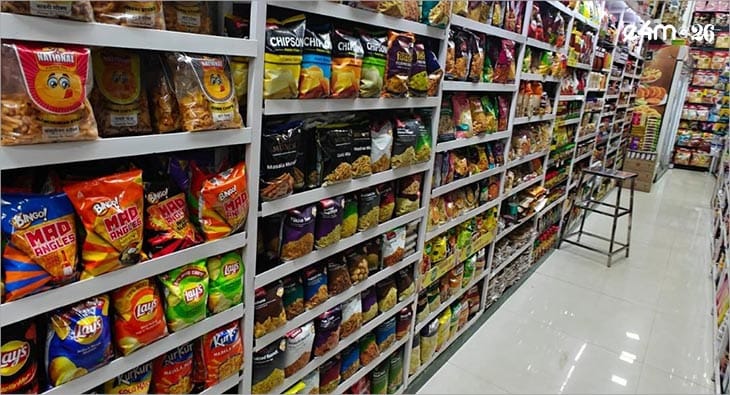

Step into a well-stocked kirana in Mumbai, Bengaluru or Delhi. The layout may look traditional, but the assortment tells another story. A single snacks section can easily feature 80 to 120 SKUs within a narrow aisle. Multiply that across categories, and the sheer volume of choice becomes staggering.
For shoppers, this abundance often translates into hesitation.
For emerging DTC brands, it translates into a costly fight for visibility.
By 2026, India is estimated to have 12 to 14 million FMCG retail outlets, of which roughly 4 to 5 million are in urban India, with the balance spread across rural markets. This fragmented and highly distributed retail backbone is both India’s strength and its structural constraint.
The next chapter of FMCG retail will not be defined by adding more stores or expanding shelf width. It will be defined by intelligence layered onto those shelves.
Across markets such as Japan, the United States and Western Europe, retail spaces are steadily evolving from passive inventory holders into digitally enabled decision environments. India, with its digitally fluent consumers and booming DTC ecosystem, is poised for an accelerated version of this transition.
Below are ten structural shifts that could redefine the FMCG last mile, evaluated through one lens: Thinking as the consumer ( need for clarity and simplicity ) .
- Programmable Shelf Labels
The humble price tag is being reimagined.
Next-generation digital labels can display far more than price. They can integrate QR, NFC and small interactive displays.
What this enables:
- Ingredient transparency at a tap
- Live discount windows
- Nutritional comparisons
- Real-time promotional messaging
For brands, shelves become dynamic communication channels. Messaging can change by geography, time band or demand cycle. Shelf real estate becomes performance media.
- AI-Based Choice Navigation
When consumers face excessive choice, decision quality declines. In FMCG aisles, this is commonplace.
Imagine a small in-aisle interface where a shopper specifies:
“Under ₹50. High protein. Not fried.”
An AI engine instantly narrows options.
This shifts competitive advantage away from eye-level positioning and toward data accuracy. Product metadata becomes as important as packaging design.
- Inclusive Retail Media Models
Retail media networks are expanding rapidly worldwide. However, in most markets they remain skewed toward large advertisers.
A more inclusive structure could include:
- Auction-based digital placements
- Pay-per-engagement shelf promotions
- Hyperlocal targeting
This lowers entry barriers for new-age brands and increases product diversity for consumers.
- Intelligent Sampling Infrastructure
Traditional sampling lacks accountability and targeting precision.
Digitally enabled sampling stations can:
- Screen consumers through quick preference inputs
- Deliver sachets aligned with demographics
- Track repeat purchases post-trial
Sampling transforms from brand visibility exercise to measurable acquisition strategy.
- The Endless Aisle Model
Physical shelf space will always be finite. Consumer curiosity is not.
Stores can introduce digital catalog access points that allow shoppers to browse extended assortments and place hyperlocal delivery orders.
This reduces listing costs for emerging brands while expanding assortment breadth without crowding shelves.
- Embedded Micro-Fulfillment
Compact robotic picking systems located within stores can support deliveries within 30 to 60 minutes inside a limited radius.
For consumers, this bridges offline familiarity with online speed.
For brands, it creates faster access without national distributor negotiations.
The last mile becomes an on-demand service layer, not a backend function.
- Ingredient Intelligence & Health Indicators
As scrutiny around ultra-processed food increases, transparency becomes non-negotiable.
Advanced scanning tools can decode:
- Additives
- Oil types
- Sugar concentration
- Environmental impact markers
Brands built on clean formulations stand to gain algorithmic advantage. The market begins rewarding substance over slogan.
- Contextualized Personalization
With opt-in consent, store ecosystems can tailor visibility.
A fitness-oriented shopper sees protein-rich options highlighted.
A parent browsing for children encounters nutrition-forward alternatives.
Physical stores begin mirroring the personalization logic of digital platforms.
- Adaptive Pricing Engines
Rather than blanket discounting, AI-driven micro-pricing windows can target slow-moving SKUs toward relevant buyers.
Benefits include:
- Reduced inventory stagnation
- Controlled margin management
- Smart deal delivery to price-sensitive shoppers
Pricing becomes fluid, not static.
- Discovery-Led Retailing
Today’s stores optimize for stock rotation. Tomorrow’s stores may optimize for discovery.
Interactive recommendation engines can surface:
- Emerging regional brands
- Trending health categories
- Niche alternatives aligned with purchase history
In a market witnessing rapid DTC proliferation, curated discovery could become the primary differentiator.
The Structural Implication for India
India’s FMCG market is approaching ₹25 lakh crore in retail (MRP) value, with approximately 55 percent in Food & Beverages and 45 percent in Non-Food categories. The sector is projected to grow at an estimated 12 to 15 percent CAGR over the next several years, supported by premiumisation, rural revival and digitization.
The implications are clear:
If physical retail remains analog:
- DTC brands will increasingly prioritise quick commerce
- Store loyalty will erode
- Shelf space will commoditize
If retail digitizes intelligently:
- Shelves become programmable
- Discovery becomes data-driven
- Stores evolve into distributed consumer platforms
In that scenario, the 14 million outlets across India become nodes in a connected commerce network rather than isolated trade points.
What the Consumer Ultimately Seeks
Across all innovation layers, the consumer mandate remains consistent:
- Reduced complexity
- Faster checkout
- Transparent product information
- Relevant pricing
- Immediate access
Technology that does not materially reduce friction will remain ornamental.
The future of FMCG in India will not be determined solely in manufacturing plants or marketing war rooms. It will be shaped in the aisle, where attention is scarce, choice is abundant and intelligence can tilt decisions.
Retailers who grasp this shift will not merely withstand the DTC surge. They will curate it.
And the startups building solutions around these ten friction points may well carve meaningful value within India’s ₹25 lakh crore FMCG ecosystem.
Disclaimer: The views expressed here are solely those of the author and do not in any way represent the views of exchange4media.com.
Read more news about Marketing News, Advertising News, PR and Corporate Communication News, Digital News, People Movement News
For more updates, be socially connected with us onInstagram, LinkedIn, Twitter, Facebook, YouTube & Google News