Tyre industry's media spends are now more balanced: Lakshmi Narayanan B, CEAT
Lakshmi Narayanan B, Chief Marketing Officer at CEAT Limited, said digital allocations have risen significantly from roughly 25% a few years ago
 by
by
Published: Feb 25, 2026 9:17 AM | 5 min read
 Follow Us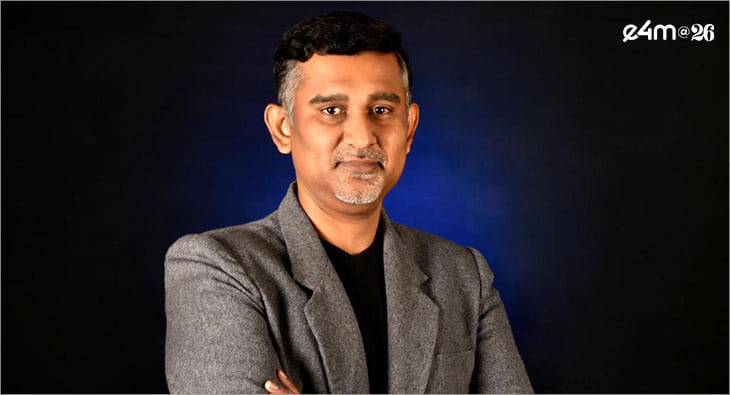

Marketing spends in the tyre category are becoming more balanced and accountable, with digital now commanding a larger share of media allocations than traditional channels. At the same time, brands are recalibrating positioning away from episodic performance claims towards longer-term platforms built on trust and predictability.
Lakshmi Narayanan B, Chief Marketing Officer at CEAT Limited, said digital allocations have risen significantly from roughly 25 per cent a few years ago and, depending on campaign timing, can now outweigh traditional media. OTT and connected TV form part of that digital mix.
On the media front, spends are now “more balanced and more accountable”, while he also added that mass media continues to play an important role. He outlined “two fundamental philosophies” guiding investments: high-attention environments and powerful digital storytelling. Digital storytelling, he noted, goes beyond visibility and is about delivering nuance, with clarity on the role of each channel.
Influencer marketing is also evolving in its application. Rather than functioning purely as amplification tools, influencers are expected to contribute to broader storytelling and generate authentic word of mouth based on product experience. “For us, influencers are still somebody who is a customer for us and also happens to be an influencer,” Narayanan said.
From Performance Claims to ‘Control’
Beyond media allocation, brand articulation within the category is also shifting. High-decibel, performance-heavy advertising is giving way to platforms anchored in consistency and accumulated trust.
CEAT’s latest campaign, ‘Built for Grip’, anchored in the thought “Every Little Counts”, reflects what Narayanan described as a “very conscious move” in that direction.
“In a category like tyres, accumulated trust works more importantly and more powerfully than episodic entertainment. Performance really matters. But what consumers value are small, repeated advantages,” he said.
The articulation focuses on micro advantages such as braking slightly earlier, holding a lane better and maintaining composure during uncertainty. These incremental gains contribute to what he describes as control.
“We see control as a higher-order consumer requirement,” Narayanan said. “Mileage and durability are outcomes. Control is the experience which stands behind.”
Dealer Influence and Pre-Belief
Tyre purchases in India continue to be significantly influenced by dealers. However, brand pull is playing a stronger role in shaping in-store recommendations.
“Stronger brands shape the recommendation and considerations,” he highlighted, emphasising the need to create belief before consumers enter a store.
Dealer education and product immersion remain important in aligning retail experience with brand communication.
EV Shift Raises the Bar
The growing adoption of electric vehicles is influencing expectations within the category. Higher torque, altered weight distribution and lower noise tolerance are changing how consumers experience vehicles.
He explained, “Electric vehicle pushes consumers to experience the vehicle in a very different format.”
This, he noted, translates into demand for precision, calm and predictability. He described the alignment between EV characteristics and tyre performance as “a beautiful integration”, with increasing emphasis on adaptability across vehicle types.
Premiumisation and Micro-Segmentation
Premiumisation is also being interpreted through the lens of rising consumer expectations rather than price alone.
“For us, premiumisation is not just a higher price point. It is a higher expectation from consumers,” Narayanan said.
Within SUVs, terrain-based applications and purpose-led products are contributing to micro-segmentation. “Consumers would really want to have tyres which are truly matching the capabilities of the vehicle,” he added, pointing to evolving requirements across highway, multi-terrain and luxury segments.
Gen Z is becoming more visible in high-performance motorcycle categories and early luxury adoption, indicating gradual shifts in future demand cohorts.
Regional Differences and Brand Expression
Consumer behaviour continues to vary across metros and emerging markets. According to Narayanan, metros respond strongly to technology-led narratives, while developing markets rely more on practical validation and peer influence.
While expressions may differ, the emphasis remains on propagating a single brand idea across channels and regions.
Global Salience and Credibility
Internationally, brand-building efforts are structured around salience and credibility. CEAT traces its origins to Turin, Italy, and maintains sports associations with Torino Football Club and Bayer Leverkusen to build visibility.
At the same time, independent magazine ratings and performance tests in Europe serve as proof points.
“The fundamental biggest learning is humility,” Narayanan said. “What works very well in Europe does not translate internationally to other markets. International markets demand a very sharp positioning and very strong proof.”
AI and the Road Ahead
Artificial intelligence is currently being deployed for personalisation and lifecycle engagement, particularly to strengthen engagement beyond the point of purchase.
Looking ahead, Narayanan expressed optimism about 2026.
“2026 looks exciting and promising for two reasons. One, we are seeing a very good positive consumer sentiment. And the second thing that we also really, truly appreciate is the kind of infrastructure that the country has built today. That allows consumers to travel much more, which technically is pretty good for an industry like tyres.”
Read more news about Marketing News, Advertising News, PR and Corporate Communication News, Digital News, People Movement News
For more updates, be socially connected with us onInstagram, LinkedIn, Twitter, Facebook, YouTube & Google News
