40-45% of gamers are women: Seddharth Merrotra, Krafton
Speaking to e4m, Seddharth Merrotra, Head of Business Development at Krafton India, offered a deep dive into the company’s strategy, brand collaborations, & more
 by
by
Published: Aug 4, 2025 9:15 AM | 6 min read
 Follow Us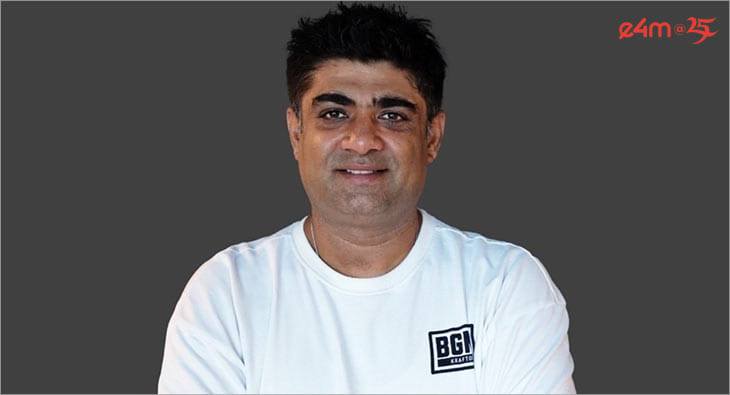

In a rapidly evolving digital landscape, gaming has emerged as a mainstream entertainment avenue in India, transcending age, gender, and geography. Krafton India, the publisher of Battlegrounds Mobile India (BGMI), is emerging as a key player in this evolving landscape.
According to a report by Statista, revenue from in-game advertising in India is projected to reach USD 772.7 million in 2025, with a compound annual growth rate (CAGR) of 9.52% expected through 2030. By the end of the forecast period, the market is anticipated to reach USD 1.22 billion. The average revenue per user (ARPU) is estimated at USD 5.65. The report further stated that in India, the rapid growth of mobile gaming continues to attract brands, positioning in-game advertising as a strategic channel to engage younger, digital-first audiences.
Speaking to exchange4media, Seddharth Merrotra, Head of Business Development at Krafton India, offered a deep dive into the company’s strategy, brand collaborations, esports roadmap, and the increasing fusion of real-world and in-game experiences.
While Krafton did not disclose specific marketing spends or user acquisition costs, the company is continuing to invest strategically across platforms where its audiences are most active. The overall approach remains agile, reflecting the dynamic nature of India’s gaming ecosystem. Rather than following a standardised marketing model, Krafton is relying on player insights to guide its strategy, focusing on what resonates with its growing and evolving community.
The company’s marketing mix has diverged notably from conventional brand strategies. A significant portion of Krafton’s budget is allocated to influencers, far exceeding typical industry norms. These influencers play a central role in the brand’s outreach, each cultivating micro-communities and often drawing streaming audiences in the range of one to two million.
Krafton’s media spending is also primarily focused on digital platforms such as Google and Meta, aligning with its digital-first philosophy. At the same time, the brand is actively experimenting with other avenues, including OTT platforms, affiliate marketing, and a few investments in television, due to declining cost efficiency in terms of reach.
Merging physical products with digital play
Krafton’s collaborations blur the lines between digital and real-world experiences, an approach especially resonant with Gen Z audiences who expect immersive, meaningful interactions with brands.
“Whether it’s Jio’s gaming pack, Gillette razors, or Orion’s ChocoPie, the idea is always to embed brands into our players’ universe in a natural, engaging way,” Merrotra explained. He cited the BGMI x Gillette tie-up, where branded razors were sold across India, particularly gaining traction in Tier 2, 3, and 4 cities.
More recently, Krafton partnered with Orion’s ChocoPie for in-game and offline activations, while energy drink Sting featured the game’s “lone survivor” character on its bottles and was also integrated directly into gameplay.
“These integrations turn everyday brands into emotional extensions of a gamer’s identity,” he said. “When a player sees a product tied to their favorite game in a real-world aisle, it triggers instant recall and often, purchase.”
Krafton’s collaborations aren’t limited to youth-oriented brands. The Gillette campaign, for instance, was aimed at an audience that skewed male, a reflection of BGMI’s early demographic. “But today, 40–44% of players are women,” Merrotra noted, “which opens the door for a wide range of brand associations.”
The company tailors its partnerships to meet evolving user profiles while still maintaining alignment with gaming culture. “If a product is a daily-use essential and can connect meaningfully through our game, it works.”
At a time when gamers are more sensitive than ever to intrusive ads, Krafton has taken a different route, prioritizing value-driven collaborations over transactional advertising.
“Our in-game brand placements aren’t treated as ad slots,” Merrotra clarified. “We don’t sell inventory or define CPMs. Instead, we co-create branded experiences.”
This has resulted in highly immersive integrations, including Mahindra’s B6 SUV, which was placed inside BGMI as a playable vehicle. The campaign culminated in a contest where a player in Kerala won a real BGMI-branded Mahindra car.
Looking ahead, Krafton has finalised a partnership with Hero MotoCorp, which will bring BGMI-branded bikes to life. “It’s about creating real-world pride for in-game achievements,” Merrotra added.
As brand interest in gaming increases, Krafton has positioned itself as a resource for companies looking to understand the medium. It works with FMCG, tech, and auto brands to highlight gaming’s interactive nature compared to more passive formats like OTT or music. The company offers in-game assets such as billboards, airplane tail banners, and limited-time challenges, including a 60-day campaign with Sting as advertising opportunities. On social media, the Mahindra collaboration video surpassed 400 million views, and contests often prompted user-generated content.
From a technology standpoint, Krafton continues to innovate. Recent milestones include Dolby Atmos integration, bi-monthly updates with community-driven features, and the launch of non-violent ‘Wow Maps’ designed for casual, social play.
Esports
Esports is another critical pillar in Krafton’s strategy. The brand operates two flagship tournaments: BGIS (grassroots level) and BMPS (pro level), each offering high visibility for sponsors.
“BMPS had Realme, Kia Motors, and Monster Energy on board,” Merrotra shared. “We’re also moving into franchise-based leagues now, which will expand monetization opportunities through sponsorships and community content.”
Balancing global vision with local relevance
Though Krafton’s core vision is global, Merrotra emphasized that execution is deeply local. “BGMI is made for India. Every element, from our partnerships with Hero and Mahindra to India-specific avatars in games like Bullet Echo is crafted for cultural resonance.”
This localization extends to long-term ambassador strategies as well. Krafton has introduced playable characters with voiceovers from celebrities like Deepika Padukone, Ranveer Singh, and Hardik Pandya, while maintaining a wide influencer network for campaign-specific spikes.
As gaming regulations evolve in India, Krafton has taken a proactive, transparent stance. “We’ve introduced responsible gaming tools, screen time limits, visual tweaks like changing blood colors, and we remain engaged with regulators,” Merrotra said. “Our content decisions aren’t dictated by regulation but are made with sensitivity to the broader ecosystem.”
India is a priority market for Krafton, and the focus is now on regional content, brand partnerships, and esports expansion to deepen engagement and monetization. “We’re also exploring regional franchise models for esports and developing content with hyperlocal flavors,” Merrotra revealed.
As gaming continues to evolve as a key part of India’s entertainment landscape, Krafton has emerged as a notable player shaping how brands engage with this growing audience. Through a combination of strategic partnerships, cultural localisation, and platform innovation, the company is working to expand the scope of what gaming can offer both players and marketers.
Read more news about Marketing News, Advertising News, PR and Corporate Communication News, Digital News, People Movement News
For more updates, be socially connected with us onInstagram, LinkedIn, Twitter, Facebook, YouTube & Google News