IPL marketing shifts gears as community-building emerges as key KPI
Brands from tech to quick commerce have shifted from match exposure to total fan immersion, embedding themselves across the entire fan journey to build sustained relationships, say industry players
 by
by
Published: May 5, 2026 8:20 AM | 6 min read
 Follow Us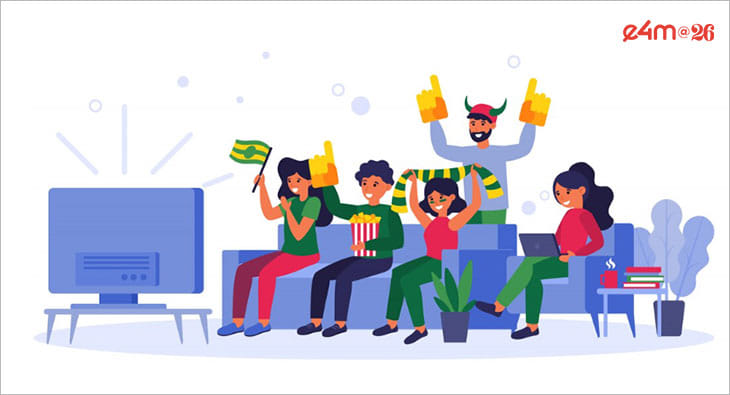

- Brands are shifting their focus during the Indian Premier League (IPL) from traditional metrics like reach and impressions to community-building and sustained engagement through conversations and digital interactions.
- Marketers are recognizing that IPL viewership has evolved into an active, participatory experience, with fans engaging on social media, fantasy sports, and other platforms in real time.
- Companies such as Birla Opus Paints and Malaysia Airlines are emphasizing deeper relationships with consumers through culturally relevant campaigns and ongoing digital engagement, rather than just maximizing visibility during the tournament.
- The industry is grappling with the complexities of measuring community impact, as there are no standardized metrics, leading to a focus on engagement depth and ongoing interactions rather than one-time visibility.
As the Indian Premier League continues to dominate India’s attention economy, a quieter shift is underway in how brands evaluate success during the tournament. While traditional metrics such as reach, impressions and share of voice remain relevant, marketers are increasingly prioritising community-building, measuring impact through conversations, fandom and sustained engagement across digital platforms.
This shift is being driven by evolving audience behaviour. IPL viewership today is no longer confined to passive, linear consumption. Fans are actively participating across social media, fantasy sports, short-video platforms and messaging groups, reacting to match moments in real time. For brands, this has expanded the playing field from ad spots to always-on engagement ecosystems.
Read more: Non-endemic categories build IPL footprint
Shubha Pai, Head of Sales, YouTube, told e4m, “One month into the IPL, a clear pattern has emerged: brand strategies have shifted from simple match exposure to total fan immersion. The goal is no longer just reach, but building a relationship that acts as a sustainable moat, driving affinity long after the trophy is lifted.”
She added that this shift reflects how fans experience the game today, on demand, at their own pace, and across multiple screens. This behaviour is especially visible on YouTube, where brands across sectors, from tech to quick commerce, are embedding themselves across the entire fan journey, from pre-match anticipation and live second-screen chatter to post-match memes and analysis that extend relevance well beyond the game.
IPL 2026: The AI game is afoot
Adding a brand perspective, Inderpreet Singh, Head – Marketing, Birla Opus Paints said, “Indian Premier League is not just a high-reach media property, it is a cultural moment that brings together diverse audiences across regions and languages. For us at Birla Opus Paints, the focus is on building deeper, more sustained relationships with consumers through a platform like IPL.”
Singh said the ‘Main Bhi…’ campaign, launched during IPL, was designed to drive deeper relevance by moving beyond a one-size-fits-all approach. By featuring 10 cricketers across teams and languages, the campaign leaned into regional and hyperlocal storytelling.
Read more on impact on linear TV in IPL 2026
He added that this strategy helps build recall, relatability and sustained affinity, moving beyond one-time visibility, which is crucial in a category like paints with longer consideration cycles.
A spokesperson from Malaysia Airlines stated, “For Malaysia Airlines, the League is a strategic platform for building sustained audience engagement, not just amplifying reach. It allows us to connect with a highly passionate and diverse audience in India in a culturally resonant setting that naturally drives strong emotional connection with the brand.”
The airline said the partnership is part of a broader long-term brand and travel narrative aligned with its India growth ambitions. By spanning content, digital engagement and on-ground activations, the collaboration aims to build stronger affinity among younger, experience-driven travellers while reinforcing its premium positioning in the market.
The airline added that success today is measured less by reach alone and more by sustained community engagement. Through culturally relevant experiences and ongoing digital conversations beyond the tournament window, the focus is on driving stronger emotional connection, brand recall and long-term loyalty.
“Ultimately, success is measured through a balanced view of reach, engagement depth, and the ability to translate audience interaction into sustained brand preference over time,” they added.
Visibility v/s sustained engagement
This shift in thinking is also reshaping campaign objectives. Instead of optimising purely for visibility during high-impact moments such as strategic timeouts or final overs, brands are investing in formats that encourage interaction, including polls, memes, influencer collaborations, fan contests and reactive content tied to live match moments.
The rise of creator-led amplification has further accelerated this shift. Influencers and fan pages now act as cultural intermediaries, shaping narratives around teams, players and match events. Brands are increasingly collaborating with these communities rather than broadcasting to them, recognising that authenticity and relatability drive higher engagement than polished creatives.
Quick commerce and food delivery platforms, for instance, are leaning heavily into moment marketing, using humour and immediacy to insert themselves into fan conversations. Meanwhile, fintech and gaming brands are building deeper engagement loops through prediction games, rewards and second-screen experiences.
Pai noted that by partnering with creators through established IPs and Creator Partnership Ads, brands are moving beyond visibility to enable conversations. Leveraging formats across Shorts and connected TV, they are also driving measurable business impact.
“This shift is measured in results that go far beyond impressions– from awareness and consideration lift to incremental RoAS, higher conversion rates, increased order frequency, and growth in app downloads - all tailored to their specific campaign goals,” Pai added.
Reinforcing this, Singh noted that community-building and sustained engagement have become central to their IPL strategy. He said, “While visibility and impressions remain important, they are now just the starting point. The real value lies in how meaningfully a brand can participate in the larger cultural conversation.”
He added that the focus is on creating content that audiences actively engage with and talk about, with the ‘Main Bhi…’ narrative turning individual endorsements into a collective voice that consumers can relate to and feel part of. This sense of shared participation helps build a stronger brand community over time and drives engagement beyond the IPL window.
Adding a broader industry perspective, Shradha Agarwal, Co-founder and Global CEO at Grapes Worldwide, said that while reach and impressions remain important given the IPL’s scale, brands are increasingly focusing on how audiences engage with content, tracking repeat interactions, shares and conversations rather than one-time visibility. This shift is particularly relevant for digital-first and D2C brands, though in many cases, the narrative is still ahead of reality.
However, this approach comes with its own challenges. Measuring community impact remains complex, with no standardised metrics across platforms. Engagement rates, sentiment analysis, shareability and follower growth are often used as proxies, but linking these to business outcomes such as sales or brand lift is still evolving.
Agarwal said, “While marketers talk about community-building, not all have fully reworked their measurement frameworks or budgets to reflect it. The ones seeing real value are those treating IPL as an always-on conversation, not just a burst campaign, and actively designing for participation rather than passive visibility.”
She further noted that this season, the focus is on measuring community through depth of interaction rather than scale, tracking metrics such as repeat engagement, comment-to-impression ratios, shares, saves and the quality of user-generated content, along with conversation velocity during live match moments, creator-led participation and repeat engagement across multiple touchpoints.
“Beyond that, we’re mapping sentiment and tracking how communities sustain beyond match days, which tells us whether we’re building a loyal audience or just driving momentary spikes,” she concluded.
Read more news about (internet advertising India, internet advertising, advertising India, digital advertising India, media advertising India)
For more updates, be socially connected with us onInstagram, LinkedIn, Twitter, Facebook YouTube & Whatsapp