The rise of stand-up comedians as India’s creative backbone - what it means for agencies
Industry data shows that brands are increasingly investing in creator-based humour because audiences respond to conversational, unpolished, culturally fluent voices over traditional ad copy
 by
by
Published: Nov 17, 2025 8:28 AM | 6 min read
 Follow Us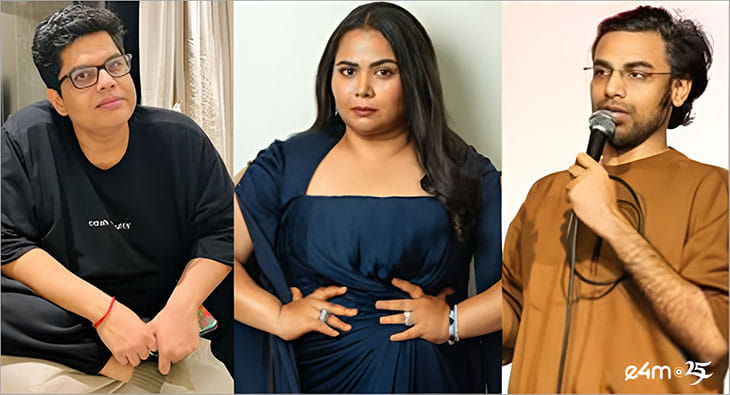

From Piyush Pandey’s Fevicol-era lessons in “everyday truth + humour” to today’s meme-ready, reel-first playbooks, Indian advertising has circled back to one simple insight: humour that feels lived-in spreads. Over the last five years brands have moved beyond casting comedians as talking heads, they’re hiring them to write lines, shape tone, and sometimes run entire creative studios. The result is a distinct pivot: ads that sound like a punchline, not a pitch. This piece maps that shift with data, campaign examples and expert voices from India’s agency and media community.
Comedians As Collaborators
Across agencies, comedians are increasingly entering the process long before the camera rolls. Studios led by creators, from Tanmay Bhat’s Moonshot to Vishal Dayama’s Braindad, now handle end-to-end brand films, signalling that comics are no longer “talent” but embedded creative partners. This mirrors a wider movement where writers like Rohan Joshi, Sumukhi Suresh, Biswa Kalyan Rath, Kenny Sebastian, Shreeja Chaturvedi and Aishwarya Mohanraj are consulted not just for performance but for structure, tone and platform fluency.
View this post on Instagram
As Russell Barrett, Chief Creative Experience Officer at TBWA\India, puts it, comedians and advertisers share more process than it appears: “Their sets are carefully written and painstakingly researched. They evolve material based on audience response, when advertising works well, we do exactly that.” The shift is pushing agencies towards more conversational, iterative scripting, with comics sharpening the cultural edge while agencies protect the strategic core.
Read On: Kunal Kamra makes YouTube content ‘members-only’, launches subscription amid ad limits
Avoiding Sameness
With so many brands leaning on stand-up voices, the biggest creative fear is a homogenised “comic IRL” tone flooding the ecosystem. Agencies acknowledge that the risk is real: when the comedian becomes the idea, the work starts to feel like recycled meme-templates rather than brand thinking. Neville Shah, Chief Creative Officer at FCB Kinnect, warns that the moment the comedian is the proposition, “you’re relying on personality, not the idea,” and only the first brand to use a comedian cleverly gains true distinction. The safeguard, he says, is keeping brand-first humour intact so each script reflects category nuance, not influencer tonality.
View this post on Instagram
Companies like Schbang emphasise this internally, ensuring that Gen Z-led writers stress voice, value proposition and context before layering in the comedian’s language. That discipline is what keeps humour relevant without letting every campaign sound like the same clip from the same creator.
Trust, Tone and Storytelling
The rise of comedians in ads isn’t simply about perceived “trust”; it is about relatability. Industry data shows that brands are increasingly investing in creator-based humour because audiences respond to conversational, unpolished, culturally fluent voices over traditional ad copy. This shift is visible across the content economy, creators aren’t just breaking the fourth wall, they’re rewriting it. Campaigns featuring Sumukhi Suresh for Myntra, Vishal Dayama’s direction for major platforms, or Biswa Kalyan Rath’s recurring brand sketches demonstrate this move towards real-world speech patterns and micro-behavioural humour.
View this post on Instagram
As Deepshikha Bhardwaj, National Lead - Media Strategy at Schbang, explains, “Audiences like conversational, human voices over polished brand language. It signals that storytelling today must feel real, self-aware and culturally fluent.” The challenge for brands is ensuring that this authenticity strengthens, rather than replaces, their strategic identity.
Read On: From Sharon Verma to Samay Raina: Stand-up comedians rising as top brand picks this season
Beyond Virality
The tension between long-term equity and short-term virality sits at the centre of the current comedian boom. Comic-led ads often take off quickly on social media, but sustainability depends on the intention behind the collaboration. India has seen this play out before, Fevicol became an iconic brand not because of momentary hits but because its humour was rooted in a single, long-term truth. Modern creator-led pieces sometimes generate huge engagement but limited follow-through if the humour isn't tied back to the brand’s promise. Neville Shah cautions, “Virality is fine, but virality to what end? If it does not build preference, memorability, or equity, then it is just noise.” With brands increasingly planning comedy collaborations, agencies are beginning to measure not just reach but repeat recall, equity lift and narrative cohesion across touchpoints. The comedian brings cultural currency; the brand must ensure it compounds into brand capital.
A parallel shift reshaping the landscape is the rise of independent writers and comedians opening their own creative shops, signalling that humour is no longer a “layer” added to advertising but a full-fledged content discipline. The most visible example is Tanmay Bhat’s Moonshot, a creator-led studio that treats meme logic and online humour as strategic inputs, not afterthoughts, and now works with mainstream brands across categories.
Similarly, Vishal Dayama’s Braindad has become a go-to for culturally sharp digital films, while writers like Rohan Joshi and Sumukhi Suresh frequently collaborate on scripts, punch-ups and narrative shaping for platform-first campaigns. This rise of comic-run studios shows that comedians aren’t just collaborating with agencies, they’re becoming parallel creative forces, building agile, culturally native shops that move at the speed of the internet and often set the tone for digital humour advertising.
View this post on Instagram
Comedians are already functioning as writers, performers, dialogue polishers, cultural consultants and, increasingly, brand voice architects. Tanmay Bhat’s Moonshot works like a creator-driven creative shop; Vishal Dayama has emerged as one of the industry’s most prolific writer-directors; Rohan Joshi, Sumukhi Suresh, Kenny Sebastian and Aishwarya Mohanraj shape scripts across categories; while Rahul Subramanian and Shreeja Chaturvedi bring niche formats, from corporate satire to deadpan minimalism, to branded storytelling. Russell Barrett sees this as an opportunity for the industry to learn faster: “To me, the joke is the outcome, of insight, research and life learnings. So is the best of advertising.”
Read On: Has ‘quirk’ lost its edge? The changing role of ‘weird’ in Indian advertising
Looking ahead, comedians will likely sit even earlier in the process, helping decode shifting youth culture, designing tonal frameworks and shaping how brands sound in the era of reels. Their influence won’t be limited to punchlines; it will seep into brand language itself.
Read more news about Influence Zone, Marketing, PR and Corporate Communication, Internet Advertising, People Movement
For more updates, be socially connected with us onInstagram, LinkedIn, Twitter, Facebook, YouTube & Google News
