Bacardi has always been about lifestyle; focused on being a social brand: Ashish Jha
Ashish Jha, Sr. Brand Manager for Bacardi Rums and Breezer, shares about the marketing strategies, observing consumer behaviour and more
 by
by
Published: Jul 10, 2025 2:53 PM | 4 min read
 Follow Us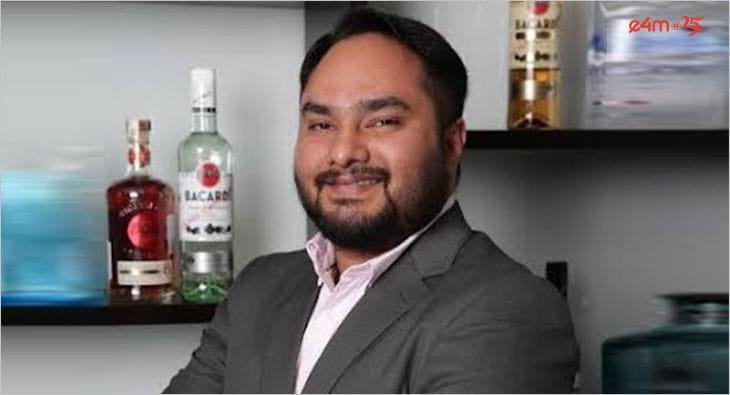

As rum steadily gains popularity beyond India’s major metropolitan areas, Bacardi India is sharpening its focus on tier 2 and tier 3 cities to drive growth. The brand’s recent summer campaign—centered on the launch of a new mango chili flavour—aims to challenge the long-held perception of rum as a winter-only beverage and position it as a vibrant choice for everyday summer socialising.
Ashish Jha, Senior Brand Manager for Bacardi Rums and Breezer, says, “India has always been a flavour-driven market. One of our biggest selling SKUs within Bacardi Rums is Bacardi Limon, because consumers here like citrus notes, something sweet and sour that complements their taste.”
Bacardi’s growth is increasingly being driven by consumers in smaller cities, with Odisha and Uttar Pradesh emerging as particularly important markets. “Odisha is one of our biggest markets, which surprises many,” Jha explained.
“The East has a strong affinity toward rum and flavours, and that aligns with our portfolio. While metros remain important, business is increasingly driven by these markets.” The cultural preference in these regions for bold, flavourful drinks fits well with Bacardi’s offerings.
He also stressed the importance of longer-term brand relevance, adding, “Being culturally relevant in moments that matter to consumers leads to consumption over time.”
Surrogate advertising remains a challenge but also drives innovation. “Bacardi has always been about lifestyle, not just the product. Since its launch in 1997, we’ve focused on being a social brand,” Jha said. He noted that restrictions have pushed the brand to strengthen its social media presence and experiential marketing, which “actually gives us more reach and relevance.”
Advertising restrictions continue to shape Bacardi’s marketing strategy. “We don’t create experiences for consumers; we go where they already are,” Jha said. The brand focuses on spaces like tattoo parlors, ice cream shops, and street fairs venues where consumers naturally express themselves.
“We provide the platform for that expression, and most of the content comes from consumers themselves.” This approach helps Bacardi stay culturally relevant while respecting surrogate advertising rules.
Social media and user-generated content amplify this effect. “Most of the product advertising is now done by consumers. You see someone in Bombay experiencing an ice cream parlor campaign, and others in Delhi watching and thinking, ‘That looks cool,’” Jha said.
Regarding technology, Bacardi remains cautious about AI. “We’re still observing consumer behavior. We haven’t used generative AI because alcohol marketing has restrictions and guardrails. We don’t want to risk irresponsible messaging,” Jha explained.
Instead, the company uses technology mainly for consumer insights and trend tracking. “Our move into tattoo parlors came from social listening data, not internal assumptions.”
The decision to create a mango chili flavor came naturally. “We love mangoes, and every 155 kilometers the mango changes, but generally, we just love mangoes. It was only right that we blend that with a spicy note to create mango chili.”
The campaign not only introduces a new flavor but also reflects a broader shift in drinking culture. “It’s not that people are not drinking, they’re choosing when and how to drink. The number of drinking occasions has increased, but the volume per occasion has become more moderate,” Jha noted. Socializing now includes smaller, everyday gatherings alongside larger parties. “We want to be part of those day-in, day-out moments,” he said.
On the growing conversation around sobriety, Jha observed that it has not reduced drinking overall. “People are drinking less in moderation, but the frequency of occasions is increasing.” This explains Bacardi’s effort to integrate into everyday social moments beyond just parties.
Effectiveness is measured through multiple metrics including user engagement, influencer amplification, and third-party data like IWSR. “Mango chili has already doubled our target sales according to IWSR data,” Jha said.
Ready-to-drink beverages are also a key focus, although regulatory and taxation challenges remain. “RTDs didn’t exist legally in India until we worked with excise departments to create the category,” Jha said. “The permissible alcohol limit was initially 5 percent, which is why Breezer stays below that. Later, it was raised to 8 percent for products like Bacardi Plus.”
Despite these advances, RTDs face higher taxes because they do not fit neatly into beer or spirits categories, making cost and consumer pricing a challenge. Nonetheless, Jha highlighted a “huge shift” in consumer acceptance, especially for wine-based RTDs, but emphasized that further policy reform is needed.
Overall, Bacardi’s strategy combines flavour innovation, cultural relevance, digital engagement and on-ground experiences to align with the evolving Indian consumer landscape. According to Jha, this approach helps the brand stay ahead of changing tastes, social behaviours and regulatory dynamics.
Read more news about Industry Briefing, Internet Advertising, Marketing, PR & Corporate Communication, Television Media
For more updates, be socially connected with us onInstagram, LinkedIn, Twitter, Facebook YouTube & Google News