25th SCO Summit: India gains strategic alignment amid global tensions
The SCO remains an essential geopolitical tool as it enables engagement with Eurasia on its own terms
.png) by
by
Published: Sep 2, 2025 4:45 PM | 5 min read
 Follow Us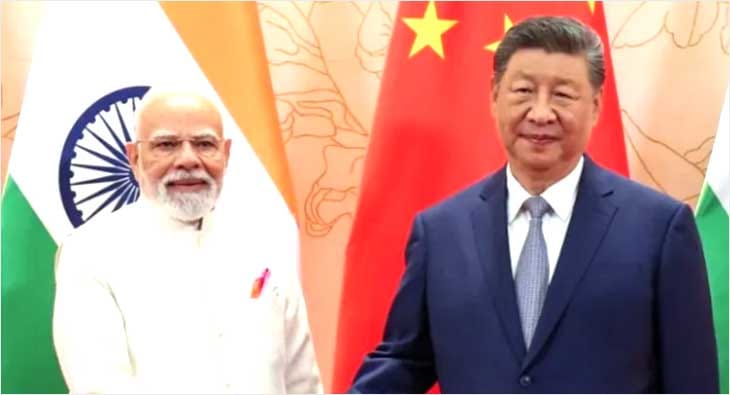

India's participation in the 25th Shanghai Cooperation Organisation (SCO) Summit, held in Tianjin, China on 1 September 2025, came at a crucial geopolitical juncture. With escalating tensions between global powers, India's presence was strategic and assertive. The summit, attended by Prime Minister Narendra Modi and leaders from member and observer states, focused on key issues such as terrorism, unilateral trade sanctions, energy security, and regional cooperation. For India, this summit was more than symbolic; it was a platform to solidify its position on global issues while reinforcing old alliances and expanding new ones.
Condemnation of Unilateral Sanctions
One of the key highlights of the summit was the joint declaration by SCO members opposing “unilateral coercive measures,” particularly of an economic nature. These measures, which violate the UN Charter and World Trade Organisation principles, were criticised for undermining international law and hampering global cooperation. The subtext was clear, this was a direct rebuke of U.S. tariffs, particularly the 50 per cent duties imposed by the Trump administration on several nations, including punitive tariffs for buying Russian oil.
For India, this declaration provided a crucial platform to align with other economic powers, especially China and Russia, and push back against Western dominance in global trade narratives. With India being the fourth-largest economy and a major buyer of Russian oil, this united stance signals New Delhi’s refusal to be cornered or dictated to on issues of energy policy and trade decisions.
Strong Statement on Terrorism
While the consensus on trade was strong, the stance on terrorism was mixed but noteworthy. India, which has been vocal about cross-border terrorism, particularly emanating from Pakistan, used the summit to highlight recent attacks. The joint declaration specifically mentioned the terror attack in Pahalgam on 22 April and the Jaffer Express bombing on 11 March, which India blamed on Pakistan-based groups.
Though the language used was not as forceful as India would have preferred, expected due to Pakistan’s presence in the grouping, the fact that these incidents were acknowledged in a multilateral forum marks a small diplomatic win. Member states expressed condolences and emphasised that perpetrators and sponsors of such attacks must be brought to justice. This provides India a moral and political edge in international forums.
Deepening Strategic Ties with Russia and China
Beyond declarations, the summit allowed India to advance strategic bilateral conversations. The most significant outcomes came from interactions with Russia and China. Modi's meeting with President Putin was warm and strategic, reaffirming the "special and privileged partnership" between the two nations. In the backdrop of Western allegations branding India as tacitly supportive of Russia in the Ukraine conflict, Modi’s visible camaraderie with Putin sent a strong signal of sovereign foreign policy continuity.
Further, Modi proposed a “Civilizational Dialogue Forum,” rooted in India's ethos of cultural pluralism and regional cooperation. This was intended to enhance people-to-people contacts and create a soft-power bridge across Eurasian nations. It received positive responses, particularly from Russia, and is expected to evolve into a recurring platform of cultural diplomacy.
India’s Message to Washington
By engaging proactively with China and Russia, and highlighting its resistance to economic bullying, India subtly countered America’s narrative of its role in global diplomacy. The SCO platform enabled India to project a multi-alignment strategy, working with Western powers when beneficial but not shying away from strategic autonomy.
India’s stand on not bowing down to U.S. tariffs, especially related to Russian oil purchases, was reinforced at the summit. China and India being the biggest buyers of Russian oil, made it evident that they won’t compromise their energy security due to U.S. pressure. This SCO message, while not hostile, was assertively clear that the world’s largest democracies and economies will not operate under coercion.
Mixed but Maturing Group Dynamics
The summit also highlighted that while the SCO has diverse political systems, ranging from China’s authoritarian regime to India’s robust democracy, it is evolving as a mature platform that can accommodate varied interests. Though some observers criticise the SCO for being fractured or symbolic, the Tianjin summit showed that it can produce workable compromises. While Ukraine was a no-go topic in the formal resolution, informal discussions were reported to have covered ground, suggesting that SCO is becoming more functional even in contentious times.
Bilateral Progress and Future Outlook
India-China relations saw a cautious thaw, with both Modi and Xi Jinping reaffirming the importance of a development-focused partnership and avoiding disputes. Their reference to the “positive momentum” since their last meeting in Kazan in October 2024 signalled intent, though skepticism remains on ground-level disengagement along the Line of Actual Control.
India-Russia bilateralism was more fruitful. Putin praised India’s role in aiding peace efforts in Ukraine and acknowledged India’s consistent neutrality. With Putin’s visit to India later this year, the summit has laid the groundwork for deeper cooperation in energy, infrastructure, defense manufacturing, and cross-border payment systems.
Conclusion
The 25th SCO Summit offered India a timely stage to amplify its voice in global affairs without choosing sides. It allowed New Delhi to balance strategic autonomy with regional engagement, to counter terrorism narratives without being confrontational, and to pursue deeper energy and trade alliances without succumbing to Western dictates. While tangible outcomes may take time to materialise, India’s assertive yet balanced diplomacy was visible throughout the summit.
The SCO is not yet a perfect or cohesive bloc, but for India, it remains an essential geopolitical tool, one that enables engagement with Eurasia on its own terms. The Tianjin summit proved that even amid rising global fragmentation, India can walk its own path and invite others to walk with it.
Disclaimer: The views expressed in this article are those of the author and do not necessarily reflect the views of the publication.
Read more news about Industry Briefing, Internet Advertising, Marketing, PR & Corporate Communication, Television Media
For more updates, be socially connected with us onInstagram, LinkedIn, Twitter, Facebook YouTube & Google News