YaaP’s IPO signals a turning point for India’s independent agencies
As Atul Hegde takes his digital firm to the public markets, the broader economics of homegrown advertising companies has come under focus
 by
by
Published: Mar 4, 2026 8:45 AM | 5 min read
 Follow Us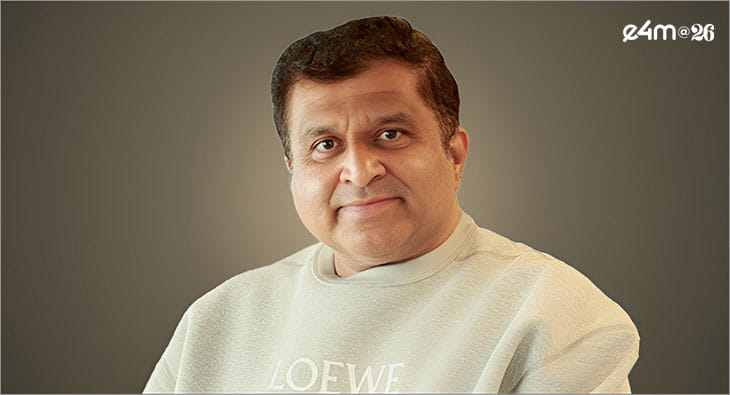

At a time when India’s advertising market is undergoing structural change, digital agency YAAP is preparing to enter the public markets, positioning itself among a small group of independent firms attempting to scale beyond the founder-led model.
The proposed listing marks a significant moment for founder Atul Hegde, who moved into digital advertising in the early 2000s when the segment accounted for a marginal share of brand spending. Today, digital represents more than half of India’s total advertising expenditure, according to industry estimates, and agencies built around online platforms are competing directly with established network firms.
Hegde, who has spent over 25 years in media and marketing, founded YAAP in 2016 after holding senior roles in digital and creative agencies. The company was structured from the outset as an integrated offering rather than a niche social media shop. Its operating framework rests on three pillars described internally as design, discovery and distribution, combining brand and content creation, influencer and audience strategy, and paid media execution.
Unlike traditional agency hierarchies, YAAP has adopted a partnership model. Senior partners oversee verticals or geographies, including leaders from companies acquired by the firm. The structure does not include a conventional CEO layer beneath the founder. Industry analysts note that such models are often used by independent firms to retain senior talent and align long term incentives, particularly in a sector characterised by frequent leadership churn.
Since its launch, YAAP has expanded across India, Singapore and the Middle East. India remains its largest market, contributing roughly 70 to 75 per cent of revenue. The company entered overseas markets primarily through acquisitions, including firms in Singapore and Dubai, rather than through greenfield expansion. Management has indicated that West Asia and parts of Southeast Asia present growth opportunities as digital adoption increases and local brands seek integrated marketing services.
Over the past three years, YAAP has reported average annual growth of around 50 per cent, outpacing broader industry growth estimates of under 20 per cent. In the last financial year, the company recorded double digit revenue growth along with a sharp rise in profitability, attributing the improvement to tighter financial controls and a focus on higher margin mandates. The firm has stated that it aims to continue expanding through acquisitions, particularly in marketing analytics, content production and creator technology platforms.
The client portfolio includes brands across technology, automotive, financial services and public sector institutions. Over time, the agency has worked with Apple, Maruti Suzuki, Adani Group, ITC, Dubai Tourism, SBI Cards, RuPay and NITI Aayog. Industry executives say such accounts have helped the firm compete for larger mandates typically associated with multinational networks.
YAAP’s IPO plans come at a time when independent agencies are seeking more structured access to capital. While global advertising networks continue to dominate large corporate accounts, domestic digital firms have expanded rapidly over the past decade. However, many remain privately held and reliant on promoter capital, which can limit their ability to invest in technology, talent and acquisitions at scale.
The broader context is a digital advertising market that has matured significantly. What began as an experimental extension of mainline agencies in the early 2000s now commands the largest share of ad budgets. The growth of influencer marketing, performance advertising and data driven planning has reshaped agency revenue models.
Influencer marketing, in particular, has emerged as a sizeable segment over the past five years. However, it is also facing concerns around over concentration among leading creators and questions about measurable effectiveness. YAAP has indicated that it intends to deepen its focus on analytics driven influencer programs and technology platforms capable of managing large creator networks.
Artificial intelligence is another area the company has identified for expansion. While generative AI tools have gained attention for content creation, YAAP has stated that its emphasis will be on applying AI to marketing analytics, workflow automation and performance optimisation. The company is evaluating potential acquisitions in AI driven analytics, particularly in sectors such as fast moving consumer goods, where granular data analysis is becoming critical.
Market participants say the transition from a privately held entrepreneurial firm to a publicly listed company will introduce new requirements around governance, disclosure and earnings consistency. Public markets typically demand predictable margins and transparent reporting, which can alter operational priorities for high growth firms.
Hegde’s parallel role as co-founder of Rainmaker Ventures, an investment firm focused on technology startups, has exposed him to capital markets and valuation cycles. Analysts note that this experience may assist in navigating investor expectations, though the demands of quarterly reporting will represent a new phase for the agency.
The proposed listing is being closely watched within the advertising community. A successful market debut could encourage other independent agencies to consider similar paths, particularly those that have achieved scale but require capital for further expansion. Conversely, the move will test whether a creative services business can sustain high growth while meeting public market benchmarks.
YAAP’s trajectory from a 2016 startup to an IPO candidate reflects the broader evolution of India’s advertising landscape. Digital agencies that once operated on the margins now compete for strategic mandates across sectors and geographies. As the company prepares its next chapter, its performance will be viewed not only as a corporate milestone but also as an indicator of how India’s independent digital firms adapt to a more capital intensive and regulated environment.
Read more news about Digital Media, Internet Advertising, Marketing News, Television Media, Radio Media
For more updates, be socially connected with us onInstagram, LinkedIn, Twitter, Facebook, YouTube & Google News