e4m Video Story: ‘Pratilipi-RKF union stands out in its ability to combine creative intuition with data’
Siddharth Roy Kapur, Founder and MD of Roy Kapur Films, and Pratilipi Co-founder and CEO-Ranjeet Pratap Singh tell e4m how their alliance aims to democratize storytelling
 by
by
Published: Jun 3, 2025 9:00 AM | 7 min read
 Follow Us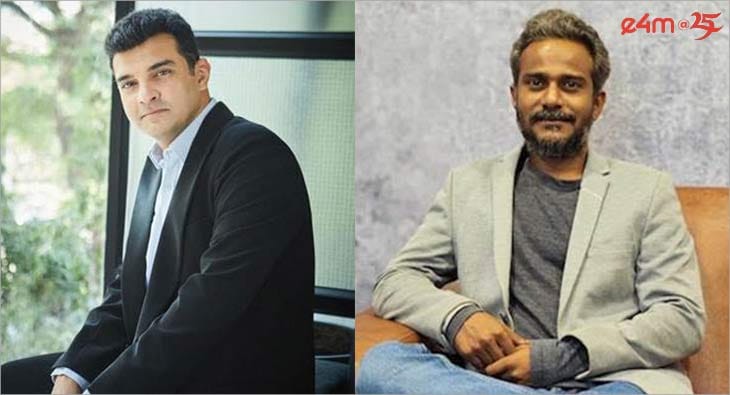

In a world where streaming wars rage and formulaic content often floods our screens, a quiet revolution is taking shape—one that begins not in a writers' room in Mumbai, but in the fingertips of everyday Indians typing stories in Tamil, Bengali, Marathi, and Hindi from towns you’ve never heard of.
Pratilipi, a digital storytelling platform, has partnered with production house Roy Kapur Films (RKF) to co-develop and produce a slate of films and web series. The collaboration aims to spotlight India’s rich regional narratives, many of which have remained buried under layers of inaccessibility and industry gatekeeping. This alliance brings together the power of grassroots storytelling and cinematic scale, with the first project—Charitraheen, a courtroom drama that has already amassed over 21 million reads on Pratilipi—set to go into production soon.
The partnership was “destined to happen,” says Siddharth Roy Kapur, Founder and MD of Roy Kapur Films, in an interview with exchange4media.
“We’re in the business of storytelling. But there’s always a mismatch between the number of people who have compelling stories and those who have the means to bring them to life. What we love about Pratilipi is that it gives access to storytellers from across India—rural, semi-urban, small towns—people we may never have encountered otherwise,” said Roy Kapur.
Echoing the sentiment, Ranjeet Pratap Singh, Co-founder and CEO of Pratilipi, highlighted what made this alliance different.
“With most partnerships, studios still rely on individual judgment—‘I think this story is good’. But Siddharth stands out in his ability to combine creative intuition with data. That’s a rare blend. And that’s what makes this so powerful,” said Singh.
From Data to Development: How Stories Will Be Chosen
With over 1.6 million writers and stories in 12 Indian languages, Pratilipi is no stranger to the long tail of content. But what’s unique is the algorithmic backbone that identifies which stories are not just popular—but emotionally resonant and cinematically viable.
“We don’t just look at the number of reads,” Singh explained. “We track completion rates, repeat reads, and even conduct semantic analysis on reviews. A story that’s reread multiple times or sparks extreme emotional reactions is often more powerful than one that’s just ‘liked’.”
Once shortlisted, RKF steps in to evaluate which narratives can translate effectively into the audio-visual format. “It’s like passing the baton,” said Roy Kapur. “Pratilipi helps surface stories that matter. We then figure out how best to bring them alive on screen.”
Democratization of Writers’ Room
The Indian film industry has long been shaped by writers with lived experiences that reflected the country’s complexities—legends like K.A. Abbas, Salim-Javed, and Rajkumar Hirani.
Now, RKF is attempting to institutionalize grassroots storytelling at scale—turning India’s narrative pyramid upside down.
“There are thousands of writers with incredible stories who have never had access to the industry. This collaboration increases the odds that more of those voices will now be heard,” said Roy Kapur. “And who knows what diamonds in the rough we might find?”
Both leaders are clear that while the stories will be adapted, their authenticity will remain sacrosanct.
“We can embellish the story along the way, but the spine should remain pure,” said Roy Kapur.
Singh agreed: “Eighty percent of a story’s value lies in its soul. The rest is adaptation—respecting the language of the format. And here, we rely heavily on feedback from our readers—what characters they love, what plotlines they felt connected to. That kind of data-driven creative feedback is a goldmine.”
As for how writers will benefit from this collaboration, Singh was clear: revenue sharing is non-negotiable. “Writers will always have a share in the earnings. When we acquire rights to a story, we offer a mix of upfront payment and royalties. The structure is flexible based on what the writer needs and how popular the story already is. But in every case, if Pratilipi earns, the writer earns—no exceptions.”
Target Audience
When asked about the target audience for their jointly produced content—and whether Pratilipi’s core readership overlaps with the typical film and OTT viewer—Singh offered a pointed response.
“As of today, about 3 crore people read on Pratilipi every month,” Singh stated, debunking the common perception that “people don’t read in India.” While he admitted that 3 crore is not a massive number in a country of over a billion, he emphasized that it’s hardly negligible—and growing rapidly. “Give it a few more years, and we expect to see significantly higher engagement.”
He also pushed back on the idea of different audiences, asserting that great stories always transcend platforms and formats. “I’ve always said the best stories are universal. Just look at Iron Man. It started as a comic for kids in the US. But is it just a comic book anymore? Or only for kids? Or just in English? The best stories outgrow their formats—they travel.”
Whether Pratilipi and Roy Kapur Films will be able to consistently identify and adapt these stories well is something Singh approached with humility: “We’ll try our best. But if we’re truly picking the best stories and doing justice to them, then they will resonate—no matter the medium.”
Siddharth Roy Kapur, Founder and MD of Roy Kapur Films, agreed wholeheartedly. “For all the noise we make as a film industry, 3 crore is pretty much the number of people who watch our biggest blockbusters in theatres. In fact, many more consume content on TV and streaming,” he noted, reinforcing the overlap in audience scale.
Drawing from experience, he pointed to Dangal—a film he produced during his time at Disney—as proof that hyperlocal stories can go global. “What could be more specific than a story about a Haryanvi wrestler and his daughters? Yet, it became a massive hit in China. We didn’t plan it that way—it just struck a chord. That’s the magic of being authentic. The more rooted a story is, the more it can connect universally.”
On the funding side, Roy Kapur emphasized that they weren’t looking to constrain themselves. “We haven’t set a fixed capital limit or a quota of projects. The demand for compelling stories is massive—there are plenty of platforms and audiences waiting. The only limitation we want to impose is our imagination.”
What’s Coming Next?
The duo plans to co-produce at least six projects—films and web series—over the next three years. The first, Charitraheen, a gritty courtroom drama, is already in development. The rest of the slate is currently being curated, with input from both teams.
When asked about timelines and genres, Roy Kapur said, “We’re working on it actively. Some stories are high-concept, some are intimate dramas. The unifying thread is emotional resonance.”
Read more news about Digital Media, Internet Advertising, Marketing News, Television Media, Radio Media
For more updates, be socially connected with us onInstagram, LinkedIn, Twitter, Facebook, YouTube & Google News