WPP Creative in India: A structural shift towards integration
Hepzibah Pathak’s appointment to lead WPP Creative India is a natural progression & not a sudden change, writes senior editor Ruhail Amin
 by
by
Published: Apr 21, 2026 12:47 PM | 4 min read
 Follow Us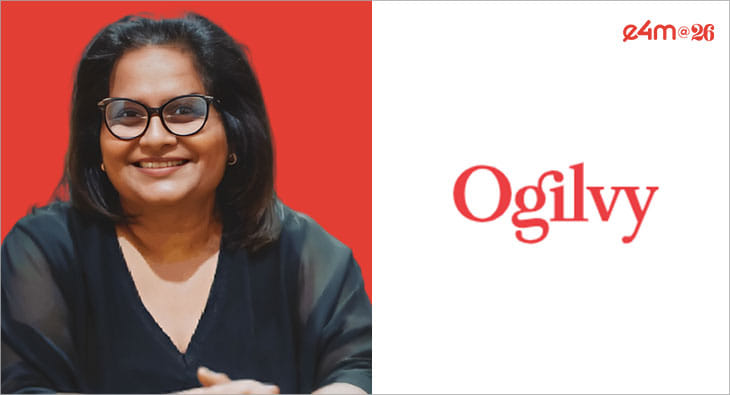

Hepzibah Pathak has been appointed as the CEO of WPP Creative India, marking a significant step in WPP’s effort to bring its creative businesses closer together. Having spent over three decades at Ogilvy, she knows the system from the inside out—its strengths, its silos, and where it needs to evolve. Her appointment feels less like a sudden change and more like a natural progression for someone who has grown within the network.
This move is part of a larger shift within WPP globally. The company is simplifying how it operates—broadly into two key areas: media, led by GroupM, and creative, now grouped under what is being called WPP Creative. India, being a key market, is clearly central to this transition.
From Full-Service to Fragmented
If you go back 20–25 years, agencies in India were built very differently. One agency handled everything—creative, media, strategy. Over time, media spun off into its own specialised business, and that’s how large media networks like GroupM came into being.
While this separation brought scale and efficiency, it also created distance. Clients started working with multiple partners—one for creative, another for media, others for digital or tech. The upside was specialisation. The downside was fragmentation.
Today, many brands struggle with consistency across platforms, slower decision-making, and too many moving parts. WPP Creative is, in many ways, an attempt to fix that.
So, What Is WPP Creative Really?
It’s not a new agency. And it’s not replacing existing ones either.
Think of it more as a layer that sits above agencies like Ogilvy and VML, helping them come together when needed. These agencies will still run independently, keep their leadership, and manage their own clients. That’s not changing.
What is changing is how WPP presents itself to clients—especially large ones. Instead of multiple entry points, there’s now an effort to create a more unified front, where capabilities across agencies can be stitched together more easily.
The Big Question: Who Owns the Creative Standard?
This is where things can get tricky.
Traditionally, each agency has been fiercely protective of its creative standards. Ogilvy has its own way of thinking, its own benchmarks. That won’t disappear.
But with WPP Creative in place, there will be more visibility across agencies—especially when they are working on the same client or pitch. So, while the agencies will still own their work, there will be a layer of oversight to ensure consistency.
In simple terms: the responsibility stays with the agency, but the spotlight gets wider.
What Changes for Clients?
For most clients, nothing dramatic will change overnight.
They will continue to work with their existing agency teams. Day-to-day operations will remain largely the same.
Where they might see a difference is in larger mandates or pitches. Instead of coordinating between multiple agencies themselves, they may now see WPP coming in with a more integrated solution—creative, tech, commerce, all bundled together.
For large advertisers, this is a clear advantage. For smaller clients, the change may feel less visible.
There is, however, one concern that often comes up—will agencies start to feel the same? Clients who chose an agency for its unique voice will want to ensure that individuality doesn’t get diluted in the process.
How Long Before It All Works Smoothly?
This kind of change doesn’t settle overnight.
The first few months will be about alignment—roles, processes, internal clarity. After that comes the real test: working together on actual business.
Realistically, it could take anywhere between 18 months to 2–3 years before these starts feeling seamless. A lot depends on how well teams collaborate and how open they are to change.
Why This Move, now?
The pressure isn’t just internal—it’s coming from outside.
Consulting firms and tech players are now competing in spaces that used to belong to agencies. They offer integrated solutions—strategy, technology, execution—all under one roof.
WPP’s response is clear: simplify, integrate, and scale.
GroupM handles the media side at scale. WPP Creative is expected to do something similar for ideas, content, and experience.
Final Thoughts
This is not a dramatic overhaul. It’s a gradual shift in how WPP wants to operate.
The intent is clear—to reduce fragmentation and offer clients a more connected solution. But the success of this model will depend less on structure and more on behaviour.
If agencies collaborate without losing their identity, it could work well. If not, it risks becoming just another layer.
For now, Hepzibah Pathak’s appointment brings stability and familiarity to a moment of change. What happens next will depend on how this structure is brought to life on the ground.
Read more news about Internet Advertising India, Marketing News, PR and Corporate Communication News, Digital Media News, Television Media News
For more updates, be socially connected with us onInstagram, LinkedIn, Twitter, Facebook YouTube & Google News