#e4mExclusive: ‘No courage to undo it’: Srinivasan Swamy on why reverse auctions continue despite flaws
The AAAI Chief's remarks come amid growing scrutiny of PSUs, which industry insiders say continue to increasingly drive the adoption of reverse auctions during agency pitches
 by
by
Published: Apr 11, 2026 8:37 AM | 3 min read
 Follow Us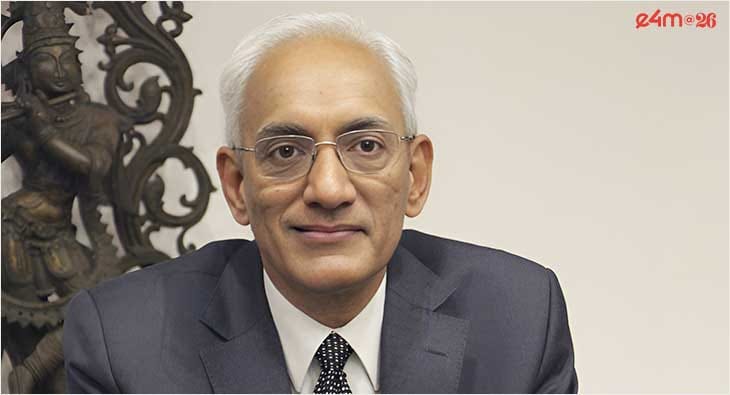

As pricing pressures intensify across the advertising ecosystem, Srinivasan Swamy, Executive Group Chairman of RK Swamy and President of the Advertising Agencies Association of India (AAAI), has issued a sharp critique of continued trend of reverse auction practices, calling them “demeaning” and structurally damaging to client-agency relationships.
His remarks, shared in an exclusive interview to e4m, come amid growing scrutiny of Public Sector Undertakings (PSUs), which industry insiders say continue to increasingly drive the adoption of reverse auctions in agency pitches. These auctions flip the traditional agency selection process on its head — shifting the focus away from strategy, creativity and long-term value to aggressive price undercutting.
According to industry estimates, PSUs account for roughly 5–7% of India’s total advertising expenditure, translating to over Rs 7,500 crore. Some of the largest advertisers in this segment include Life Insurance Corporation of India (LIC), State Bank of India (SBI), Oil and Natural Gas Corporation (ONGC), National Thermal Power Corporation (NTPC), Indian Oil Corporation (IOCL), Bharat Sanchar Nigam Limited (BSNL), and Gas Authority of India Limited (GAIL).
Swamy warned that reverse auctions — where agencies are forced to repeatedly lower bids to secure business — erode pricing integrity and undermine service quality. “It’s a very unfortunate way of doing business,” he said, describing the process as inherently demeaning for agencies.
He argued that such models distort the foundation of client-agency partnerships. When mandates are won on unsustainably low fees, agencies struggle to deliver the level of service expected. “If people are going to give you so little, how can you sustain that relationship?” he asked, pointing to the long-term risks for both sides.
Calling for a gradual phase-out, Swamy said reverse auctions should “see a slow death,” noting that they represent one of the weakest frameworks for evaluating agency capability. Instead of rewarding strategic thinking or creative excellence, the system disproportionately prioritises cost.
Despite widespread criticism, the practice persists—particularly within PSU-led pitches. Swamy acknowledged that while many stakeholders recognise its drawbacks, there is limited appetite to reverse course. “Once somebody has started, nobody has the courage to undo it,” he said.
For industry bodies like AAAI, the ability to intervene remains constrained. Swamy noted that while the association can advise agencies to avoid such processes, it cannot dictate market behaviour.
“You can at best tell our members not to participate, but you can’t restrict competitive forces,” he said, urging agencies to take a cautious view.
The growing reliance on reverse auctions has triggered calls within the industry for ethical reforms and more balanced procurement frameworks. As cost pressures mount and procurement teams gain greater control over marketing spends, Swamy’s comments reflect a deeper concern: that relentless price competition could ultimately erode the value, sustainability and creative standards of India’s advertising industry.
Read more news about Internet Advertising India, Marketing News, PR and Corporate Communication News, Digital Media News, Television Media News
For more updates, be socially connected with us onInstagram, LinkedIn, Twitter, Facebook YouTube & Google News