As media complexity rises, agencies must learn to ‘conduct the orchestra’: Navin Khemka
Khemka, WPP Media’s President–Client Solutions says India’s agency ecosystem is undergoing a structural reset as data, tech & evolving client mandates redefine talent, capabilities and growth models
 by
by
Published: Feb 26, 2026 9:07 AM | 6 min read
 Follow Us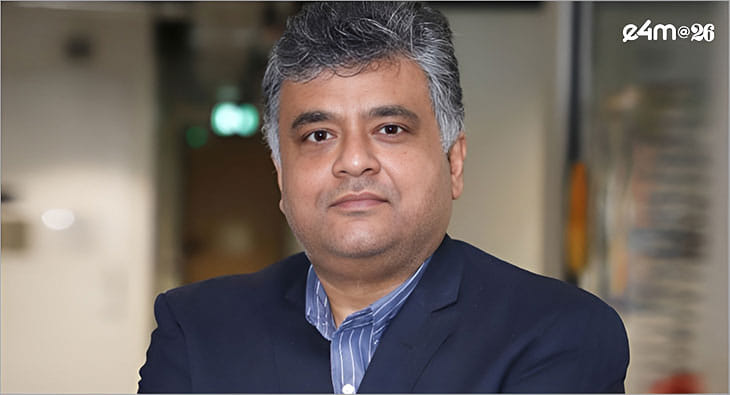

India’s advertising industry may be expanding steadily, but beneath that growth lies a deeper structural reset—one that is quietly redefining how agencies operate, hire talent and position themselves within client organisations.
At a time when marketing complexity is rising faster than budgets, agencies are being forced to evolve from execution partners into integrated business enablers. The shift, industry leaders say, is altering not only service models but also long-standing perceptions around agency relevance and career attractiveness.
In an exclusive conversation with exchange4media on the sidelines of WPP Media’s TYNY report launch in Mumbai last week, Navin Khemka, President – Client Solutions, WPP Media, described an advertising ecosystem that continues to grow, even as it fundamentally reinvents itself.
“The industry is expanding, but the way agencies create value has changed dramatically,” Khemka said. “Today, success is less about the scale of media deployment and more about intelligence—how effectively data, technology and insights are used to drive business outcomes.”
Growth Masks A Structural Transformation
India remains one of the world’s fastest-growing advertising markets, powered by digital consumption, commerce expansion and platform proliferation. Yet, according to Khemka, headline growth numbers conceal a deeper transition underway.
Traditional distinctions between media, commerce, content and performance are rapidly dissolving, pushing agencies toward integrated operating models.
“Clients today are dealing with fragmented consumer journeys across platforms, retail ecosystems and content environments,” he noted. “They increasingly expect agencies to connect these ecosystems and solve business challenges—not just deliver campaigns.”
As marketing decisions grow more data-led and outcome-focused, agencies are moving closer to enterprise strategy discussions. “We are increasingly becoming transformation partners,” Khemka said. “The mandate now extends beyond marketing execution to business problem-solving.”
The New Currency Of Agency Talent
If talent dynamics are changing, the definition of capability itself is undergoing an even sharper reset.
Asked about the skill sets required for the next generation of media professionals, Khemka was characteristically clear and pragmatic during the interaction—stripping away industry jargon to arrive at what he believes is the single most critical capability today.
“The most important capability is the ability to unlearn and relearn,” he said. “Flexibility matters more than hierarchy. Solutions can come from younger team members as much as from senior leaders.”
The observation reflects a broader shift underway across agencies as media ecosystems fragment across retail platforms, connected TV, creator economies, commerce environments and data-led planning systems.
“The opportunity today is huge because the media is fragmenting,” Khemka explained. “That fragmentation demands deep expertise across retail, strategy, content, planning, buying, analytics and more. The challenge for agency leaders is orchestration—bringing all those specialists together to deliver one cohesive solution.”
In many ways, he suggested, modern agency leadership increasingly resembles conducting an orchestra rather than managing linear workflows.
“Twenty-five years ago, you had a media planner and a servicing executive,” he said. “Today, a client meeting may involve a retail expert, a strategy lead, a content specialist, a buying head and a data analyst. Individually, everyone may be strong. The real skill lies in conducting the orchestra.”
The shift explains why agencies are simultaneously becoming more specialised and more collaborative—requiring leaders who can integrate expertise rather than operate within silos.
Talent Migration Narrative Begins To Shift
For years, the industry grappled with a persistent concern: experienced professionals moving from agencies to brand-side roles in search of stability and influence.
Khemka believes that narrative is beginning to evolve. “Talent drift to client side is changing. We’ve seen people return to agencies,” he said.
The reversal, he explained, reflects how agency roles themselves have expanded. Exposure to multiple industries, platforms and transformation mandates is once again making agency careers intellectually and professionally compelling.
“Agencies today offer opportunities to work across categories and solve diverse business challenges,” he added. “That breadth of experience is difficult to replicate within a single organisation.”
Observers note that as agencies increasingly resemble consulting-led environments, strategic ownership within agency roles has strengthened—reshaping talent perceptions across the ecosystem.
The Rise Of The Data-And-Tech Agency
The most visible manifestation of this shift is emerging in hiring priorities.
“We are hiring more data scientists, statisticians and tech specialists than before,” Khemka said, underlining how agency workforce composition is undergoing rapid change.
Signal loss, privacy regulations and platform automation have significantly increased reliance on advanced analytics and modelling capabilities. As a result, agencies are investing heavily in technology-first talent pools.
“The industry has moved into a phase where decision-making must be deeply data-driven,” he explained. “Analytical capability is now central to delivering effectiveness.”
Technology literacy, Khemka added, is no longer confined to specialised teams but is becoming foundational across planning, strategy and client leadership roles.
“The future agency professional will combine business understanding, data fluency and strategic thinking,” he said.
AI Moves Agencies Up The Value Chain
Artificial Intelligence is accelerating this reinvention cycle, fundamentally reshaping workflows across the marketing ecosystem.
Rather than displacing talent, Khemka views AI as enabling agencies to transition toward higher-value strategic functions. “AI allows us to operate faster and smarter,” he said. “Automation removes repetitive processes, allowing teams to focus on insight, creativity and decision-making.”
As operational efficiencies improve, agencies are increasingly positioned to influence upstream marketing strategy rather than downstream execution.
“The role of agencies is moving up the value chain,” Khemka noted. “Technology delivers scale; human expertise drives interpretation and impact.”
Agencies Reclaim Strategic Relevance
The convergence of consulting, commerce and media capabilities is also redefining agency-client relationships.
Marketers navigating retail media growth, creator economies and connected platforms now require partners capable of simplifying complexity at scale. “In today’s environment, clients need integrated thinking,” Khemka said. “Agencies that can unify data, platforms and creativity become far more central to business decisions.”
This expanding strategic role, he suggested, is also contributing to renewed talent interest. “When professionals see the scale of transformation they can influence across businesses, agencies become exciting environments again,” he said.
Reinvention, Not Disruption
For Khemka, the industry’s current phase represents evolution rather than existential disruption. “The agency model is not disappearing—it is evolving,” he said. “And with that evolution, talent, capabilities and client expectations are all being redefined.”
As India’s advertising market enters its next growth cycle, the gradual return of talent to agencies may signal something larger: a recalibration of the agency’s role within modern marketing—less intermediary, more strategic growth partner.
In many ways, the industry’s future may depend not on how fast advertising grows, but on how successfully agencies continue to reinvent themselves alongside it.
Read more news about Internet Advertising India, Marketing News, PR and Corporate Communication News, Digital Media News, Television Media News
For more updates, be socially connected with us onInstagram, LinkedIn, Twitter, Facebook YouTube & Google News