When we solve challenges for India, we can solve for any other country: Salim Ali, Gupshup
Salim Ali, CMO, Gupshup, shares insights into AI agents and how they redefine the AdTech capabilities that Indian brands can deploy to engage customers
 by
by
Published: Feb 19, 2025 12:07 PM | 3 min read
 Follow Us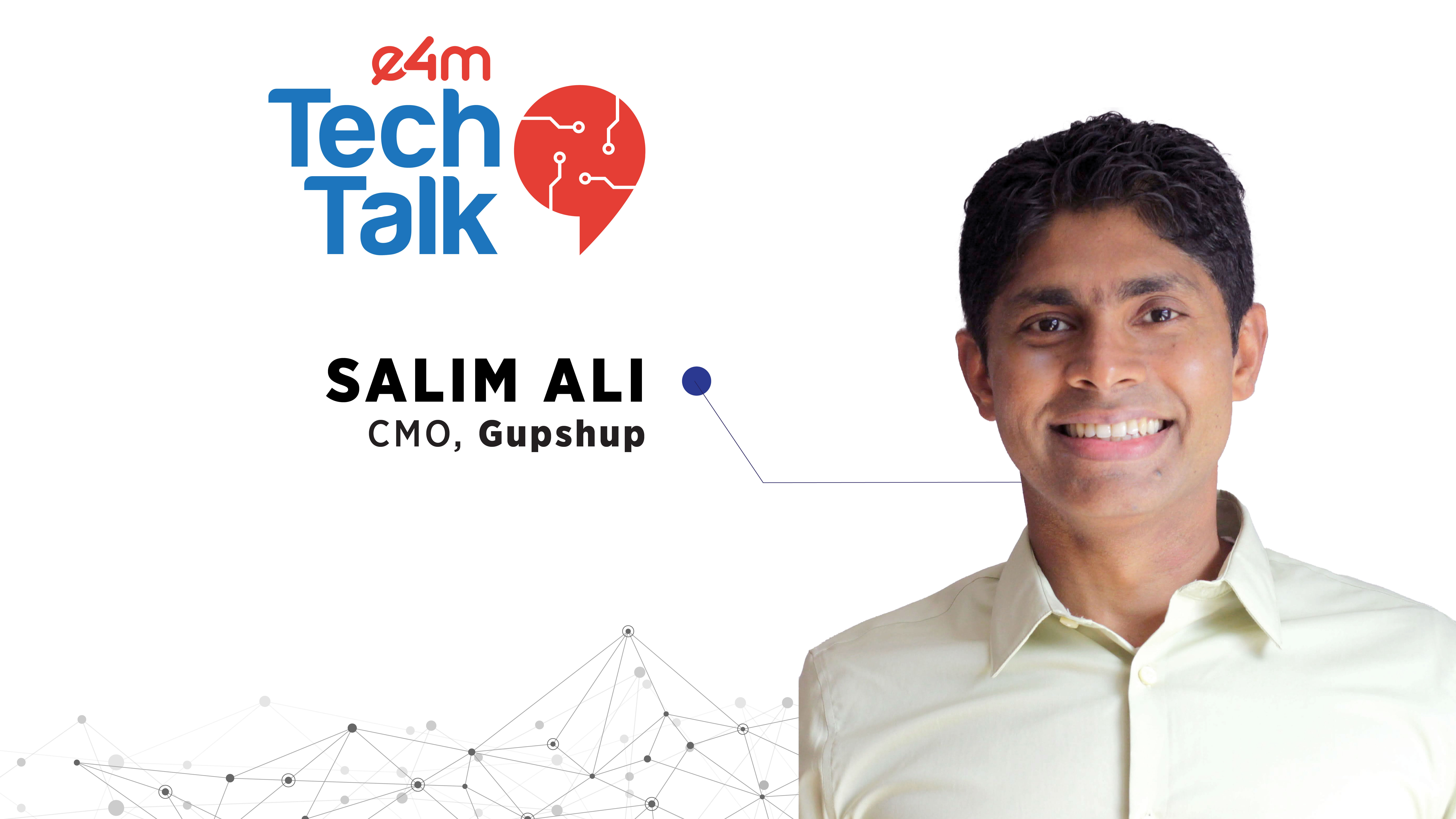

Early adopters of AI are typically those with the resources to experiment — individuals and organisations willing to take risks on emerging technology. But true transformation happens in the next wave when AI becomes more accessible, affordable, and user-friendly. Once larger organisations solve the initial challenges, the groundwork is laid. The same tools and processes can then be refined, streamlined, and scaled to empower smaller businesses, making innovation available to all. This is what Gupshup, a conversational engagement platform, is striving to achieve by launching conversational AI agents.
“If you had to buy a complex system, it would cost you tonnes of money and resources to deploy. That meant you were automatically mid-market and above,” says Salim Ali, CMO of Gupshup, adding that agents are democratizing access to AI for smaller businesses.
He explains, “Agents are task-oriented. So, you are not buying the whole platform. You are buying a contained task. It’s a pre-built agent, which can go live in a matter of hours or days. The moment you do that, you're automatically saying any business on the planet can acquire an agent and go live. That's the biggest change.”
Owing to language and geographic barriers, a real estate company in Dubai was until recently only selling to buyers in the Middle East region. With the help of AI agents, the company was able to sell to people in India. It unlocked new selling capabilities for the company, which could now onboard more properties and earn higher commissions.
“Businesses can tap into bigger opportunities using agents without having to necessarily hire more people. If you want to grow your business, an AI agent can help you grow faster because it’s an investment that pays off pretty quickly,” Ali shares.
He shares another example: A banking company in India was facing an overwhelming volume of customer inquiries, most of which didn’t require a human agent. Queries about account balances, loan details, and credit card statements flooded the call centre daily, slowing response times and increasing operational costs. With AI agents, the bank automated these routine interactions while maintaining a human-like conversational experience.
A leading retailer, too, saw the potential. Customers frequently inquired about product availability, sizes, or offers, information already available in the product catalogue but not always easy to navigate. AI agents bridged this gap, making product discovery seamless.
“AI agents go much deeper than traditional chatbots. Instead of just responding to predefined inputs, they understand the customer’s intent and engage in a human-like way,” he explains.
Beyond transforming digital interactions, AI is bringing intelligence to physical spaces and traditional advertising mediums as well. “The moment you put a conversational QR code in a store, on television or a physical ad in a newspaper, you make it conversational. The ads are no longer static. With embedded AI, they become interactive touchpoints, allowing businesses to know their customers better and engage them deeply across platforms,” Ali explains.
This shift is particularly significant in a market like India. With its vast population, diverse languages, and a pronounced digital divide across tier-one, tier-two, and tier-three cities, India presents unique challenges — and opportunities. “When we solve for India, we can solve for any other country. The scale is unparalleled. Billions of messages go out. The complexity of languages here is unlike anywhere else," Ali concludes.
Read more news about Tech Talk, Marketing, PR and Corporate Communication, Internet Advertising, People Movement
For more updates, be socially connected with us onInstagram, LinkedIn, Twitter, Facebook, YouTube & Google News