The Defining Moments of 2025: Making Sense of a Shifting World
Guest Article: Anya Geraldine D’Souza, Global Fractional Strategic Marketing Consultant, shares the key defining moments transforming the way brands build trust, drive growth, and exert influence
 by
by
Published: Nov 21, 2025 11:26 AM | 6 min read
 Follow Us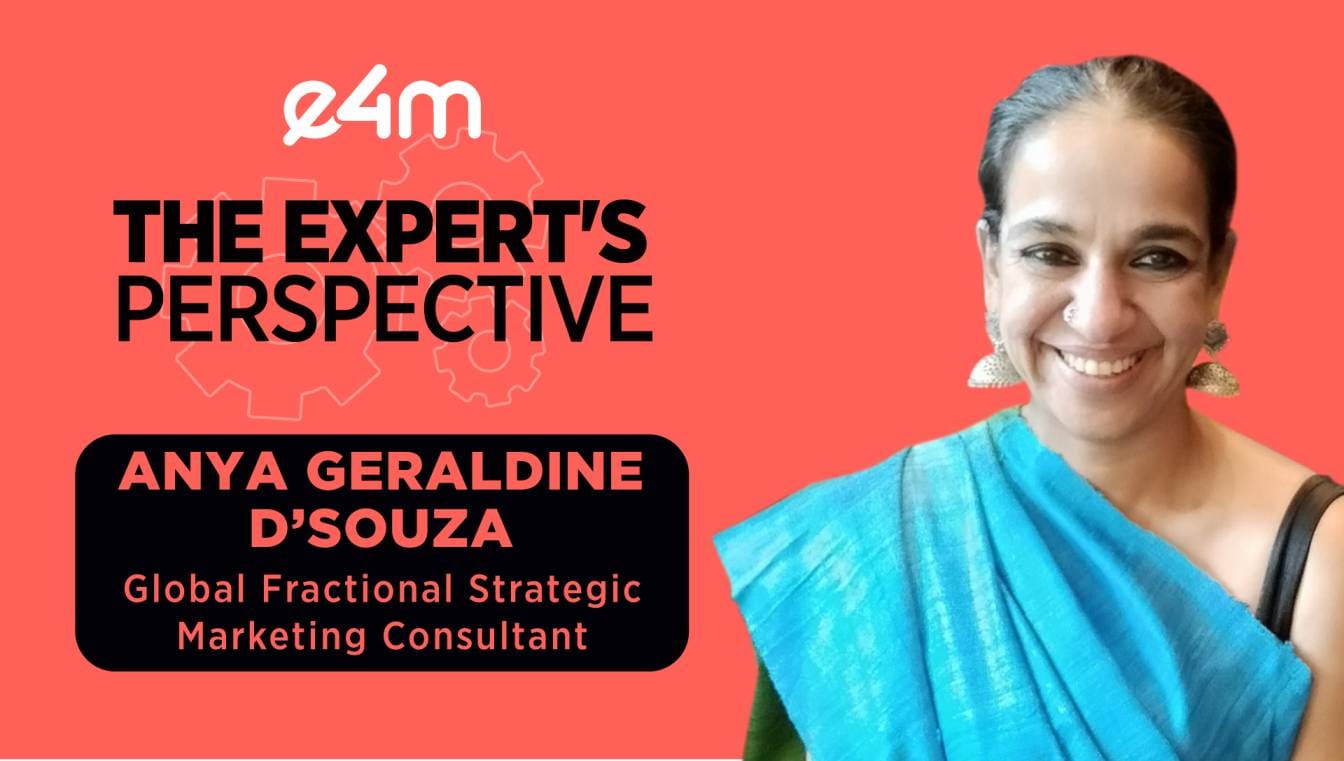

2025 has been a year of realignment. A year where markets, technology, and leadership converged — sometimes uneasily, often unpredictably — to redefine how we create value. From political upheavals to planetary discoveries, from AI breakthroughs to cultural victories, every headline this year has reshaped our world narrative. And as far as I’ve observed through my work as a Fractional Marketing Strategist — working across global enterprises and Indian growth brands — the future will belong to those who can connect paradoxes, build trust and calm in the midst of chaos, and turn intelligence into impact.
Let’s take a look at how some of the defining moments of 2025 are transforming the way brands build trust, drive growth, and exert influence.
- The Brand–Performance Rebalance
For decades, marketing teams have swung between two extremes: brand storytelling versus performance marketing, and emotion versus efficiency. 2025 has finally forced a truce. The most successful organizations this year didn’t choose sides – but instead learned that brand equity amplifies performance efficiency, and that performance data strengthens brand storytelling. Brands that obsessed over click-throughs but neglected connection are fading into irrelevance. Equally, those that inspired emotion without driving measurable action will be forgotten faster than the next algorithm update. “Brand through performance” is the new emerging formula — using storytelling as a strategic driver of measurable behavior. Data will no longer quantify marketing’s success; it will, however, validate its soul.
- AI: From Automation to Attribution
If 2024 was the year of AI hype, 2025 became the year of AI horsepower. Generative AI matured into agentic AI — systems that don’t just generate ideas but decide, optimize, and orchestrate campaigns in real time. While over 40% of global brands already use GenAI tools, and 70% plan to expand their investment before 2026. The biggest shift isn’t creative automation — it’s attribution. AI is helping marketers see what was once invisible: how a single consumer journey unfolds across dozens of micro-interactions — a social view, a search click, a WhatsApp query, a store visit. And at last, CMOs can answer the question that has haunted them for decades: “Which touchpoint truly drives conversion?” This 360° visibility will transform how leaders allocate budgets, evaluate agencies, and measure success.
- Geopolitics and Brand Diplomacy
This was the year politics re-entered the marketing boardroom. With the U.S. reversing international alliances and Europe recalibrating trade priorities, brands have had to reimagine their roles as global citizens. Welcome to the era of corporate diplomacy — where brands needed to step up (almost overnight) and behave like micro-nations. They needed to almost overnight, manage narratives about sustainability, supply chains, and ethics overnight with the same rigor once reserved for crises. Marketeers needed to learn to communicate with resilience, realism, and restraint — transparent enough to earn trust, but neutral enough to stay credible. As some Western economies turn inward, global investors and consumers are looking eastward for stability and scale. Indian and Asian brands have a rare opportunity to claim their position — not as the alternative, but as THE answer.
- India’s Global Confidence
No year in recent memory has showcased India’s brand power quite like 2025. From India’s visible diplomacy at the SCO Summit to India hosting the Women’s Cricket World Cup, the country projected confidence across politics, technology, and sport. The moment can be redefined as “Glocal storytelling.” And Indian companies need to merge cultural depth with global design — exporting not just products, but perspective. The Women’s World Cup win has also accelerated a much-needed transformation in sports marketing. Female athletes are no longer footnotes, but frontlines of brand storytelling, and the shift toward female-forward, inclusive narratives is a competitive advantage. As India scales to become a world leader in manufacturing and tech, its marketing voice is becoming one of the world’s most distinctive — equal parts disciplined and daring.
- Omnichannel Becomes the Operating System
In 2025, it became increasingly evident that consumers no longer think in channels. They expect continuity. The circular customer journey — where awareness, action, and advocacy coexist — has become the standard for marketing maturity. Leading organizations have built unified data ecosystems that merge CRM, retail, automation, and digital platforms, enabling real-time personalization at every stage, from discovery to repurchase. But omnichannel today isn’t about being everywhere — it’s about being consistent everywhere. Whether it’s a push notification, an online checkout, or a physical event experience, every moment must reinforce the same identity. For Indian firms expanding globally, this coherence is the new competitive edge. A unified brand story — told with local nuance but global consistency — will separate the emerging players from enduring brands.
- Purpose Reimagined: From Virtue to Value
Consumers, fatigued by political extremism and performative activism, now seek quiet integrity from the brands they choose. Purpose has evolved from virtue signaling to value creation. In 2025, purpose-driven companies have seen measurable upside — stronger pricing power, higher loyalty, and lower churn. The data is clear: alignment between corporate behavior and consumer belief is directly correlated with business performance. Purpose will no longer be a paragraph in a sustainability report. It’s a metric of trust — and trust is the most profitable asset in modern marketing.
- The Rise of Fractional Leadership
If 2025 had a leadership headline, it would be this: flexibility beats permanence. Amid volatility, companies are increasingly realizing they don’t need full-time executives — they need full-time clarity and depth of experience on tap. Fractional leaders across functions are filling that gap, offering senior-level insight without structural inertia. These leaders embed within organizations to architect growth systems — from strategy to execution — while aligning brand, performance, and purpose. It’s modular leadership for a modular economy: outcome-driven, agile, and cost-efficient. What’s encouraging is witnessing first-mover organizations embracing this model and already reaping rewards — faster decisions, sharper focus, and scalable impact.
Moving towards 2026, the future will not belong to those brands that shout the loudest, spend the most, or automate the fastest. Instead, it will belong to those who translate complexity into clarity, scale trust faster than technology, and balance empathy, values, intelligence, and performance with precision. They’ll also treat purpose as a lever for growth, use AI to strengthen intuition — not replace it — and build global narratives grounded in local truth.
The world has had its fill of noise. 2026 will herald a certain coherence to the chaos, with the right amount of conviction to drive towards change and growth.
Read more news about PR and Corporate Communication News, Internet Advertising, Marketing News, Digital Media News, People Movement News
For more updates, be socially connected with us onInstagram, LinkedIn, Twitter, Facebook YouTube & Google News