Passion, Innovation and Impact: How Goldee Patnaik leads the way in communications
In this feature, we explore Goldee Patnaik, Head of Brand & PR Comms, Oppo journey from telecom trenches to global smartphone leadership, the trends he foresees in PR and Comms, key lessons, and more
 by
by
Published: Nov 20, 2025 11:46 AM | 12 min read
 Follow Us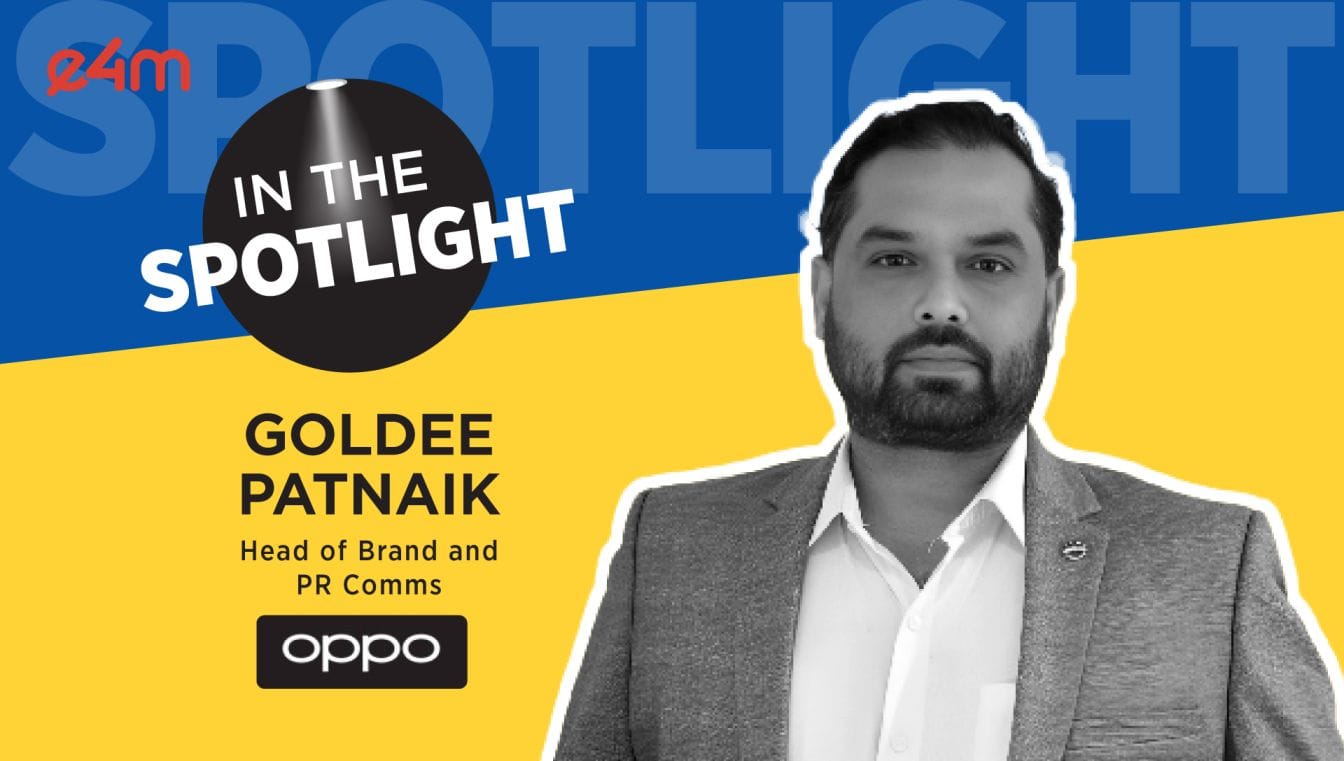

Goldee Patnaik defies fear; he oozes confidence and is a visible, impactful force to reckon with in the communications space. From curating stories in the fast-paced telecom sector to spearheading Brand, Marketing and PR Communications for one of the world’s most dynamic sectors - he leads with innovation, empathy, and agility. In over two decades of experience, he has assumed pivotal roles at some of the industry giants like Airtel, Reliance, Telenor India, and Transsion India, with stints in Top PR firms like Perfect Relations, Clea PR often as part of their foundation teams, helping to define their communication strategies from the ground up. Now, at OPPO, he heads PR and Communications function, where his leadership is central to driving brand storytelling & awareness, drive loyalty across consumer segments, and create compelling product narratives.
Goldee is an avid learner and mentor who invests as much in mentoring and upskilling his team as he does in shaping communication strategies. It wouldn't be wrong, if we dub him as a ‘rockstar of building relationships and curating brand transformation stories’ across diverse industries.
We take a deep dive into his journey as a communications leader, and find out:
- How he entered the communications world
- The experiences that fuelled his growth
- His secret of building unique communications strategies
- The impact of his work on organizations, industries, and communities
- Trends he foresees in the communications space
- Lessons for aspiring professionals
Excerpts:
When did you realize that communication was your true calling, and how did you begin your journey in the industry?
I think way back in 2000, I started my first job in a PR agency and joined Clea public relations. Even during my school and college days, my friends always said, ‘You’re a PR guy,’ probably because I knew what to say, when to say, and where to say it.
After spending over 3 memorable years with Perfect Relations and Clea PR, I had brief stints with The Times of India and a regional television channel, before stepping into the most remarkable part of my career when I joined the core team that launched Airtel in Odisha, part of supporting team devising launch support for Bihar, Jharkhand, and NESA launches. This was during the iconic era when Sachin Tendulkar and Shah Rukh Khan were brand ambassadors for Airtel. That’s when my real journey with communication for a brand began. It was an extremely exhilarating moment to see people's excitement as they welcomed the brand and made it a leader in a very short span of launch.
From handling events and promotions to leading internal communications, PR, and then marcom, my role evolved naturally with learning at every step. The journey later took me to Reliance Communications, Telenor, Transsion India before I took on my current role at OPPO India in the Brand and PR team.
Joining OPPO India was also another defining moment. I’ve been a big fan of the kind of products OPPO has been working on, extremely high in innovation keeping smart technology in the forefront. As a brand, we aspire to be tech innovators, with a defining DNA of ‘make your moment’.
You’ve witnessed significant transformations in the industry over the past decade, and you’ve worked on both the agency and brand sides. How have these experiences shaped your evolution as a communications leader?
At a very early stage, I realized that communication isn’t just one form—it has multiple facets. There’s internal communication with employees, which drives engagement, efficiency and leader connect programmes for greater motivation; external communication that builds brand reputation and perception; and trade communication that strengthens relationships with retailers and distributors. I follow an inclusive and comprehensive strategy that also includes rural outreach communication to reach tier 3, 4, and 5 markets meaningfully with emotional connect.
In some firms, Brand, Marketing and Corp Communication are all separate functions but I have been lucky and privileged to be handling all of those under one unit during my tenure so far. This helped me get a complete perspective of the brand, consumers, channel and the business simultaneously.
I have been fascinated by every layer of communication, from internal messaging to rural outreach. This has helped me evolve and understand how stories must adapt to different audiences, yet stay true to a brand’s core.
How do you define the role of communication evolving in the telecom sector?
Communication is a very integral part of business. A good product with bad promotion will never yield results. What you communicate to consumers, how you create demand, and how you tell the right story makes all the difference.
It’s about creating positive brand equity, stronger word-of-mouth, and higher recommendations from retailers and distributors to a large extent. All of these work cohesively for not only brand awareness but also consideration and subsequently conversions.
The sector is undergoing a dynamic transformation driven by younger audiences – Gen Alpha, Gen Z, Millennials and probably many more. As communicators, we need to be part of their daily journey through simplicity, relatability and emotional strong narratives. The youth are value-driven, not price-driven, and connecting with them requires emotional narratives rather than transactional messaging. There should be a strong sense of social purpose or meaning in every communication that brands build to be a part of their loyalty club.
Storytelling has become indispensable and content is king. There has been a shift towards visual, vertical, and diverse content formats like reels, podcasts, and influencer collaborations. A well-balanced marketing- communication mix that targets the right audience at the right channels is important.
Consumers are increasingly researching online and purchasing offline, hence it becomes imperative to be present across key online and offline touch points to strike their attention and be visible. They see you, research you and then come to the point of sale for purchase, that’s when retail recommendation also acts as a bonus for brands. So, understanding this journey and adapting communication strategies accordingly is central to driving both brand relevance and business success.
How do you plan and strategize your communications strategies to resonate with the different audiences and genres?
When strategizing communications for Gen Z and millennials, local connect is crucial. One biggest mistake we tend to do as marketers by instinct is plan the way we perceive would look at a product or communication, ignoring the fact that consumers would want to hear it differently basis their regional eco system and culture. Building the right consumer narrative requires understanding the regions that contribute to your business, get deep into understanding cultural insights, ethos, trends and then create moments of happiness while being high on emotions. whether it’s tier 1, 2, or 3 cities.
In India – we have 12 months 24 festivals, which is how dynamic the culture is and how robust it is to understand them and the people locally. Whether its Onam in Kerala, Pongal in Tamil Nadu, Rath Yatra in Odisha, Gudi Padwa in Maharashtra, Bihu in Assam, Shravani Mela for Bihar or a Baisakhi/Lohri for Punjab, we need to plan our go to market well keeping all such celebratory period to connect well, engage well and foster high brand consideration. Even media receptiveness and publications are different for diff regions, so there can’t be one standard formula for success, closer we are to consumer’s culture, closer we will bring our brand to him or her.
The value-driven approach is important. Product mix always helps; the right pricing matters a lot. Understanding the cultural ethos of every region becomes equally important, that helps in targeting consumers with right precision and defining moment led buzz.
How do you see technologies like AI evolving the communications industry, and more importantly, how is OPPO leveraging it in its communication strategies?
The complex has to be made simple for the consumers. There are a lot of myths attached to AI, but, AI also needs somebody to navigate in the right way and extract the best of creative output, drive higher efficiency, so human interface and knowledge becomes critical to driving better results or desired output from AI.
Brands should take steps in educating consumers about AI, its subsequent benefits, how it drives a better efficient life so that more adoption takes place and when we witness massification of AI, then there would be a great resurgence for AI led devices, sharper innovations around them and then brands would have more options to build a tech led meaningful eco system making it widely accessible. It is more important to tell consumers how AI is adding value to their life or can improve their efficiency. AI is transforming imaging and camera technology and OPPO is utilizing it to give the best experience to its customers. The more consumers get to know about it quickly, the hungrier they are going to be to learn AI and use AI.
I see AI as a tool for creative freedom and efficiency, especially in visual storytelling. Imaging and camera will always be at the top because the kind of creative liberty you get in that is going to be amazing. I believe that AI, when simplified and communicated properly, will spark a positive revolution, making technology intuitive, accessible, and valuable for everyday consumers.
What advice would you pass on to the aspiring professionals entering into the industry?
When you're young, when you are ready to learn and experience, you don't have any inhibitions, you’re only there to learn. Trust me, after two decades, I still feel there is a lot for me to learn in this space.
There are three key principles for aspiring professionals:
Ask “Why” Fearlessly: Be fearless, ask why four, five times: why you're doing this, why this is happening. It enhances your knowledge. Curiosity or inquisitiveness is the foundation of learning and also many a times helps in driving a right result oriented approach. There’s no good question or bad question ever.
Be Assertive: Being assertive and saying the things you feel is important in key forums. Don’t get embarrassed to share your thoughts or ideas – you never know when idea gets approved or improvised in what stage, so speak it out as much as possible.
Connect Your Work to Business Impact: Even if you’re a communicator, always see how your work links to business outcomes. Awareness, consideration, and measurable impact make your work meaningful and boost your confidence.
Visibility Matters: Doing good work is step one. Step two is knowing how to showcase it. Step three is getting credit for it. When these align, you feel you’ve done justice to your effort.
There is nothing called good luck – when its decoded, for me it means better preparation and desire to grab it when you get a chance. Be sharp in preparing yourself and mastering your craft better than anyone and wait for the right opportunity to grab it in both hands. When you have it be restless till you do justice to it, be your best version in whatever tasks you do and suddenly you feel there is divine intervention if your intent and purpose is right. As they say God helps those who help themselves!
What trends do you think transform the communications landscape in the coming years?
I see three trends shaping the industry. Content is going to be a very, very important pillar of communication strategy – Video content, Vertical content, Moment Marketing keep you in high engagement books of customers, be sharp in curating them with simplicity, relevance and a narrative which is emotionally appealing. With the rise of content creators and influencers across categories, the brands will increasingly depend on regional content creators and influencers as primary facilitators of communication. Brands will encourage own workforce to become mini creators or influencers, effectively building brand evangelists from within. This also would foster a strong community of admirers.
The second trend is the hands-on use of AI tools by communicators. If you learn to use AI tools, you’re faster, more consistent, and can become very creative. Enhancing your knowledge through AI gives you an edge over others.
Finally, the importance of resurgence of in-house capability building. Many brands are setting up internal design and shooting studios to accelerate content creation and reduce dependency on external partners. Your time to market has to be very fast, and for that, you need to build it in-house. This approach will give companies a strategic advantage in the evolving communications landscape
Outside of work, what inspires you? Any personal passions or hobbies?
Music is a part of me. I spend my weekend jamming, singing, as I’m part of many karaoke clubs nationally. My musical tastes span generations from Kishore Kumar, Mohammed Rafi, Mukesh, to modern voices like Arijit Singh, Jubin Nautiyal, Vishal Mishra. I love all form and genres of Hindi music. If not a communications leader, I would have been trying hard to become a Performer for sure in music space a great DJ or a singer holding a guitar, may be performing at concerts that was my dream as a child. But with time – as professional career took off, passion got transformed into a hobby and big interest. There’s a lot of music madness inside me, and it makes me more energetic, passionate, and chirpy he says with a big smile as I still do it when I have some free time with my friends and other amateur singers.
Read more news about PR and Corporate Communication News, Internet Advertising, Marketing News, Digital Media News, People Movement News
For more updates, be socially connected with us onInstagram, LinkedIn, Twitter, Facebook YouTube & Google News