"The shift from observer to participant shaped my path in reputation and public affairs"
This ‘In the Spotlight’ series features how Gaurav Bhagowati, Public Policy & Corporate Reputation Advisor, spent three decades shaping the stories that move companies, policymakers, and culture
 by
by
Published: Nov 17, 2025 2:38 PM | 8 min read
 Follow Us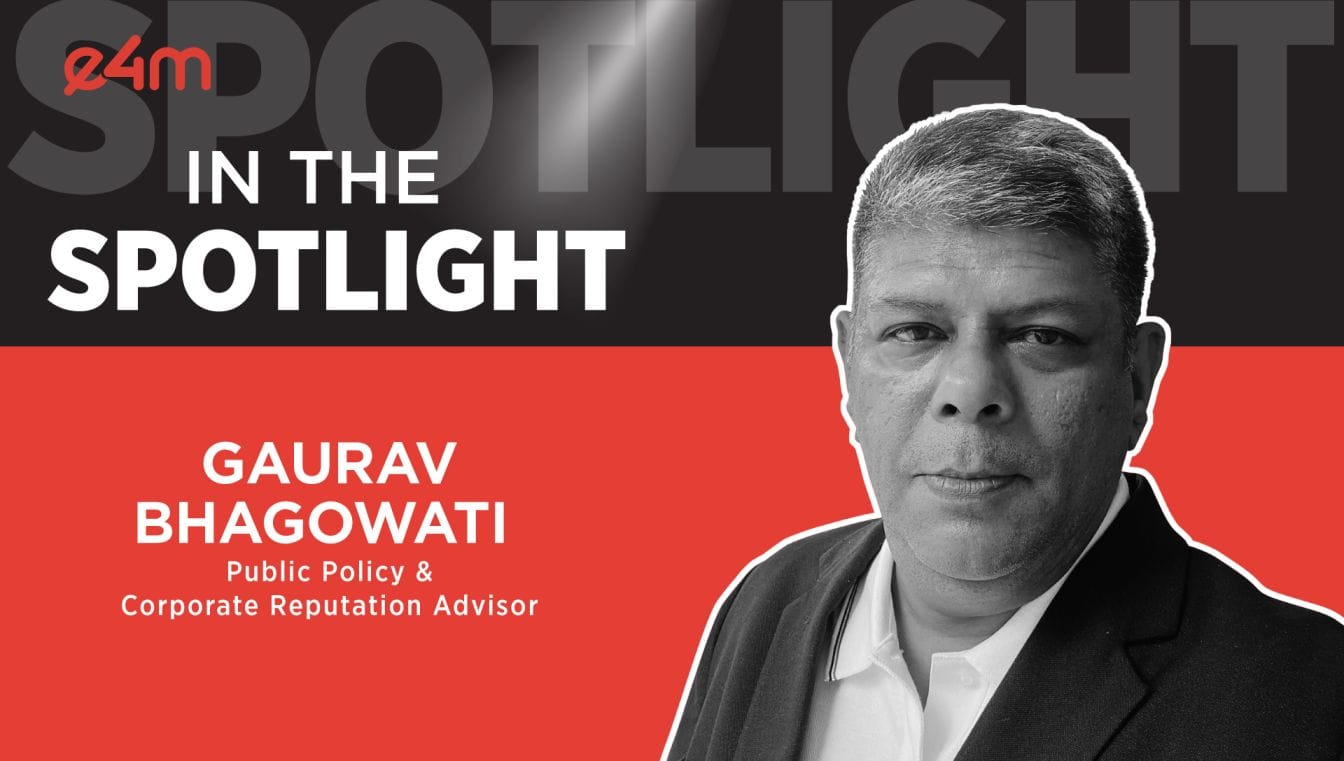

Gaurav Bhagowati is an expert leader and industry stalwart who stands at the frontline of India’s shifting communication landscape. For three decades, he has worked in the spaces where policy, business, and public sentiment collide. He is a former journalist who crossed into communications and public affairs and even after three decades, his compass remains curiosity. He is drawn to the ideas that move people, the stories that shift perception, and the truth that sits beneath noise. Over the years, he has built message architectures for Fortune 500 companies, shaped the leadership voice of founders steering high-stakes growth, and helped organizations articulate their purpose.
In this edition of ‘In the Spotlight’, we trace Gaurav Bhagowati’s path from journalist to one of India’s most trusted public policy and communication strategists. We unpack the turning point that inspired his shift out of the newsroom, revisit standout communication campaigns he’s shaped, and examine how he believes the communicator’s role in India has transformed. We also dig into the blind spots he frequently sees in leadership teams, the toughest crisis challenges today, the next disruption he predicts for the industry, and what lies ahead in his own next chapter.
Excerpts:
1. How did you start your career and what was that turning point that led you to make the shift from newsroom to public affairs and communications?
I started out in the newsroom and then news bureaus — a space where curiosity met the pulse of change every day. First as a news desk editor and then as a technology correspondent in the late 90s and 2000s, I had the privilege of speaking to leaders who were shaping India’s emerging digital economy and its emergence as a powerhouse at the heart of the global move to offshore.
Over time, I realized that beyond reporting stories and editing newspapers, I wanted to help shape them — to play a more integral role in the way narratives influence policy, public trust, and corporate action.
The turning point came when I moved from covering technology to public relations and policy advocacy with organizations like the International Aids Vaccine Initiative – IAVI, the International Finance Corporation – IFC, several leading communications firms and later, through them, large Indian and multinational corporations. It was no longer about “what happened” but “why it mattered” and “how it could shape behavior.” That shift — from observer to participant — set the course for my next two decades in reputation management and public affairs.
2. What was your first big communications project that made you realise, “This is my space”?
It was during my time with the International Aids Vaccine Initiative - IAVI, where, under the direction of our country head, we played key policy setting efforts to create what was a-one-of-its-kind global partnership to set up then one of the only seven global translational health sciences research labs in India in collaboration with the Department of Biotechnology, Ministry of Science and Technology, Government of India.
The challenge wasn’t just about science communication — it was about building trust between policymakers, global researchers, and the public on why vaccine R&D mattered for India’s future.
That experience made me realize that communication, when done right, isn’t peripheral to science or policy — it is central to trust and progress.
Of course, prior to this, campaigns with my first agency client Qualcomm’s BWA spectrum advocacy and it’s Fisher Friend program seeking to empower coastal fishermen and communities had already reaffirmed my belief that public relations and communications can drive both reputation and real impact.
3. You’ve worked at the intersection of business, government, and public trust — a complex triad. How do you balance these narratives with authenticity and transparency?
The balance begins with intent. Every narrative must answer a fundamental question: Who benefits when the truth is told clearly?
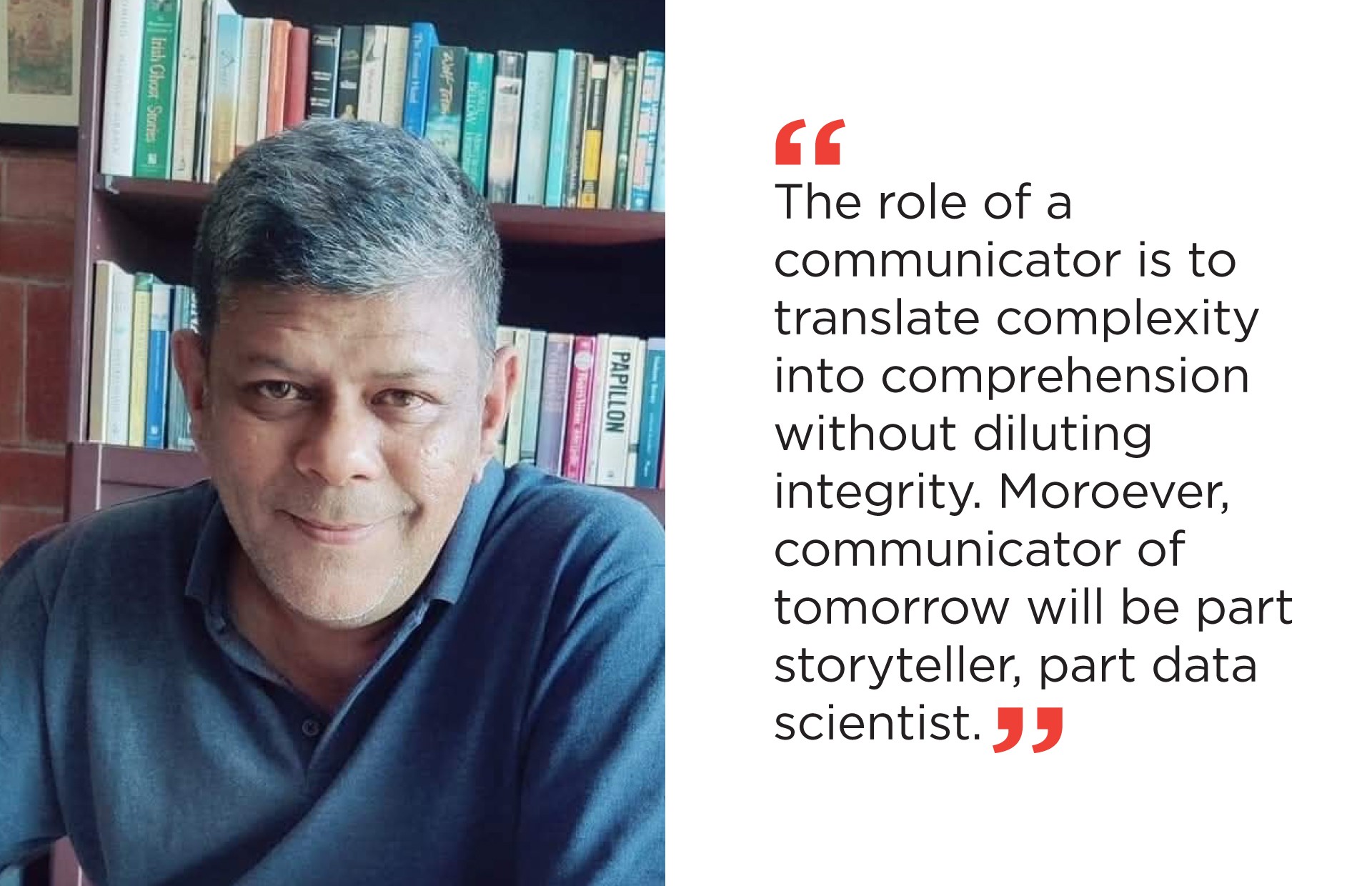
At the intersection of business, government, and society, transparency can’t mean overexposure — it means clarity of motive and accountability in message. The role of a communicator is to translate complexity into comprehension without diluting integrity. Whether it’s a regulatory crisis or a sustainability disclosure, authenticity stems from consistent storytelling, even when the message is uncomfortable.
As someone who’s moved between newsroom objectivity and corporate counsel, I’ve learned that influence without ethics is noise. Trust is built not in press releases but in patterns of honesty.
4. Over the years, how have you seen the role of corporate communicators evolve in India?
Communicators in India have moved from being amplifiers to architects. The shift has been from managing information to managing intelligence.
Earlier, success was measured by media coverage; now it’s measured by credibility, engagement, and business impact. As I have often said, much like marketing’s journey from awareness to attribution, the real leap is linking reputation to revenue.
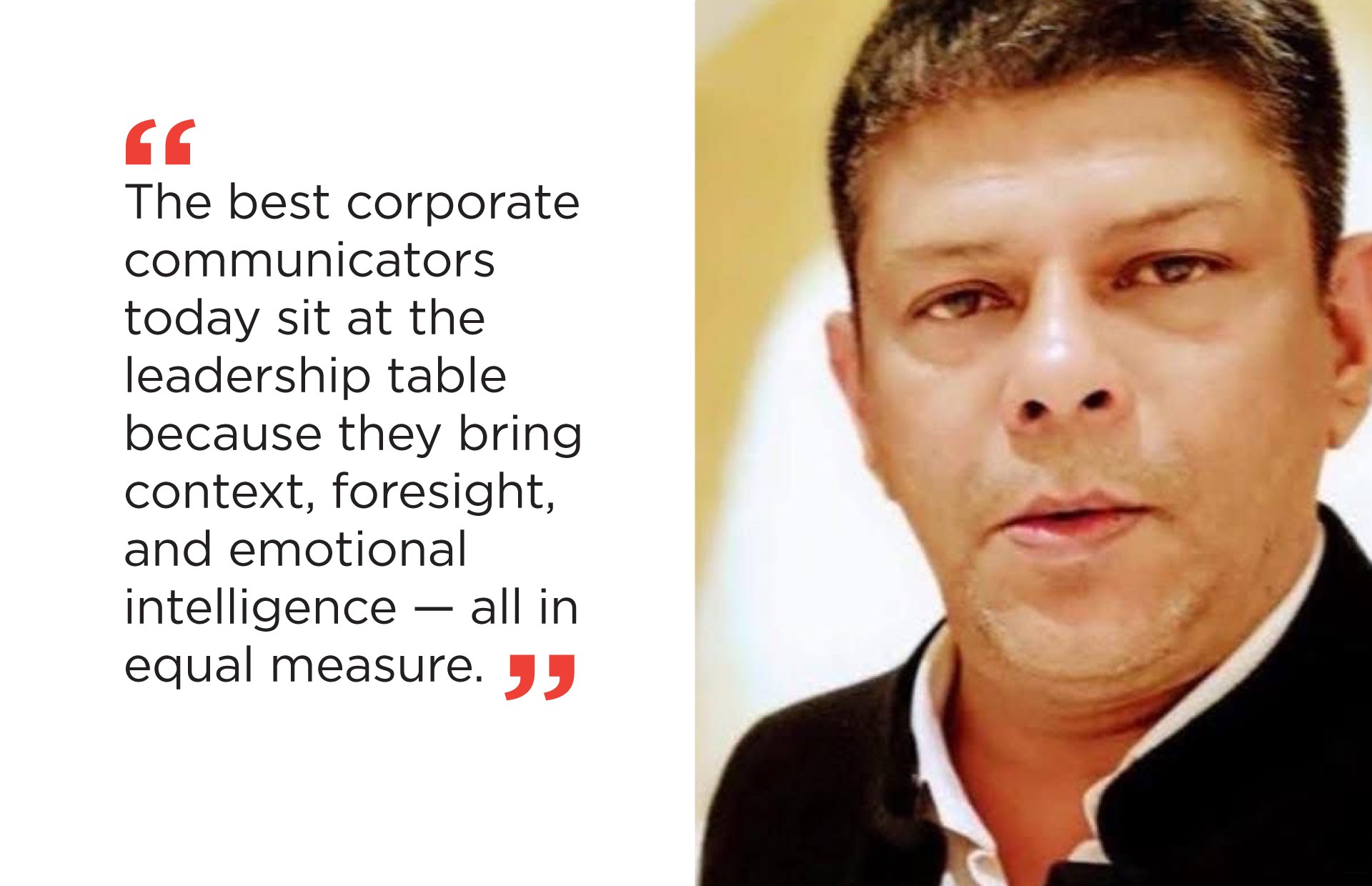
Corporate communicators are now expected to be strategists — understanding regulation, sentiment, and digital ecosystems with equal fluency. The best ones today sit at the leadership table because they bring context, foresight, and emotional intelligence — all in equal measure.
5. What are the most common communication blind spots you’ve observed among leadership teams?
Two stand out:
Underestimating the long tail of reputation: Many leaders treat reputation as episodic — something to be “managed” during crises or product launches. But trust accrues through continuity, not moments.
Over-reliance on internal echo chambers: Often, leadership teams assume their message has landed because it’s been “issued.” But communication is not transmission — it’s translation. The best leaders test for understanding, not applause.
6. What’s been the most challenging crisis communication situation you’ve handled, and what lessons did you learn?
It’ll be difficult to single out any one. But the one with no clear winners until today was my experience while working on the Facebook–Cambridge Analytica crisis, a client of an agency I was consulting with. It taught me two things. One, that the speed of a response matters less than the sincerity of it. Two, that in an era of surveillance capitalism, silence can look like guilt.
We worked to navigate complex questions of data ethics and accountability — not with over-polished statements, but with consistent, values-led engagement. The lesson: reputation recovery isn’t about optics, it’s about restitution.
7. From your vantage point, how do you see emerging technologies like AI and data analytics transforming the communications landscape?
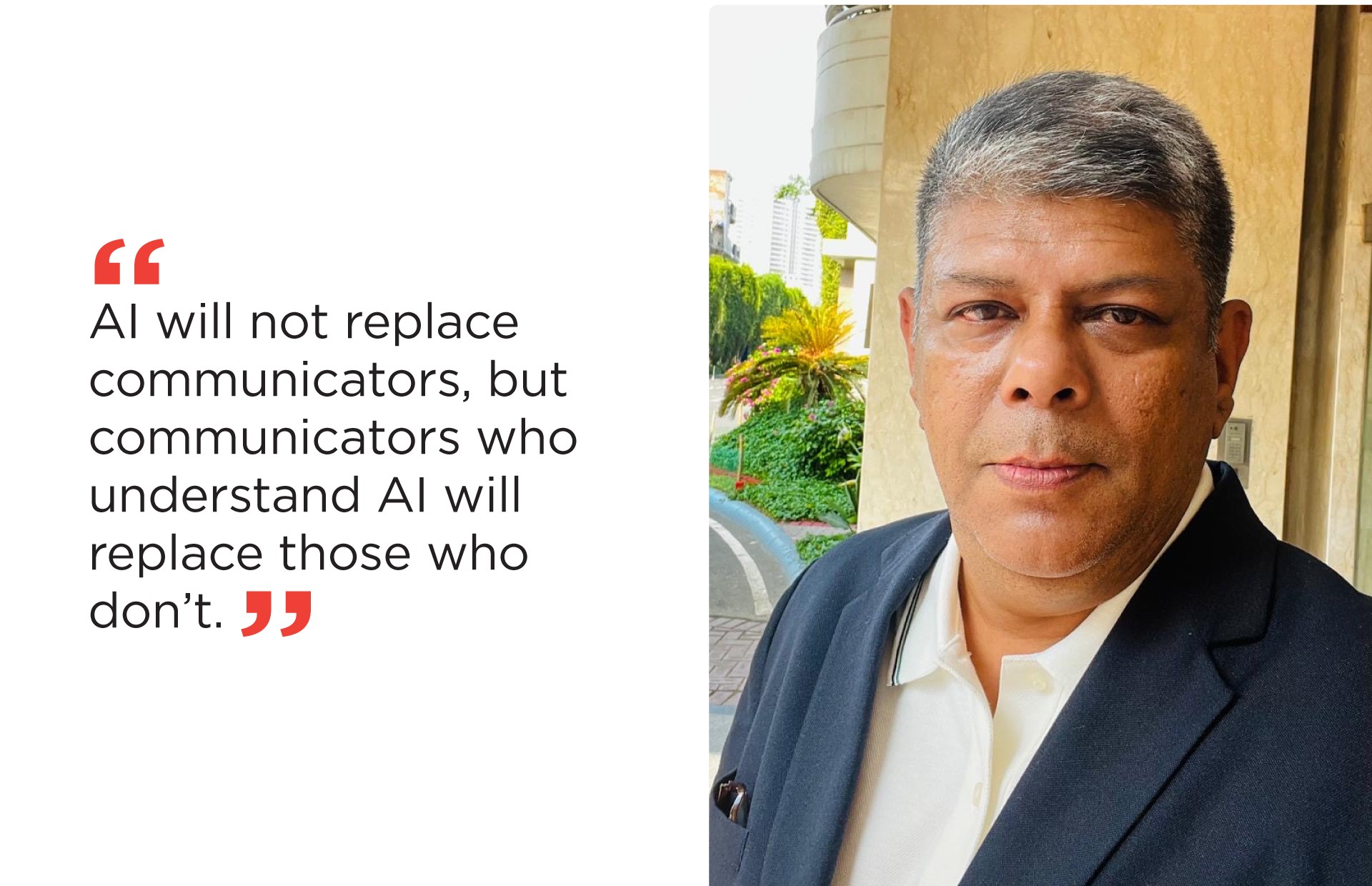
AI will not replace communicators, but communicators who understand AI will replace those who don’t. Data is helping us map narratives with precision — understanding stakeholder sentiment, policy mood, and media velocity. But the real opportunity lies in using AI for foresight, not just efficiency. We’re moving toward a world where communications strategy is powered by human intuition and machine insight working together — where pattern recognition becomes a tool for empathy.
In many ways, the communicator of tomorrow will be part storyteller, part data scientist.
8. What do you think is the biggest gap in how organisations currently approach reputation and public trust?
Most organizations still treat reputation as a lagging indicator rather than a leading driver of business performance. They measure trust reactively — after the event, after the crisis, after the loss.
The real opportunity lies in designing reputation-forward cultures — where governance, purpose, and communication are not three separate silos but part of one continuum. The brands that thrive will be those that turn trust into an operating principle, not a PR function.
9. What’s your prediction for the next big disruption in the communications industry?
I believe the next big disruption will be “contextual influence” — where brands and institutions communicate through ecosystems, not just channels. Influencers won’t just be creators — they’ll be category voices, regulators, even employees. Reputation will be decentralized, co-owned by multiple storytellers.
As trust becomes distributed, the communicator’s role will be to orchestrate coherence — to ensure truth scales faster than misinformation.
.jpg)
10. What’s next for Gaurav Bhagowati?
After years of advising others or consulting, I’m now assessing the merit in building a framework that combines policy insight, leadership communication, and public trust into one advisory platform. There is clearly a lag or a lack of focus or a business approach to establish knowledge-centric service offerings and products. But I am hopeful because the market is beginning to set the tone in the right direction.
My next chapter could most ideally be about helping boards and CXOs navigate influence responsibly — especially as technology, governance, and ethics collide. I’ve also lately expanded my portfolio to advise and consult as independent director and advisor for CXOs, boards, corporations and government on remits where reputation is treated as both a risk and a strategic asset.
11. What skills will define the next generation of communicators and strategists?
Three, very simply:
Systems Thinking: Understanding how policy, society, and technology intersect.
Cultural Literacy: The ability to interpret sentiment and behavior beyond data points.
Integrity: Because in an AI-driven world, human trust will be the final currency.
Read more news about PR and Corporate Communication News, Internet Advertising, Marketing News, Digital Media News, People Movement News
For more updates, be socially connected with us onInstagram, LinkedIn, Twitter, Facebook YouTube & Google News