‘Companies should move from intent to structure to bring more women into leadership’
Kanica Sharma reflects on her exciting professional journey, transformations she has witnessed as a women leader, and what she feels about her win at the e4m PR & Comms Women Achievers Awards
 by
by
Published: Jul 24, 2025 4:55 PM | 7 min read
 Follow Us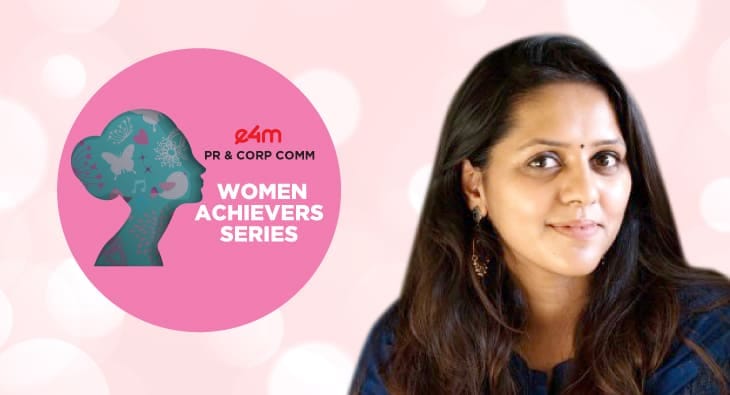

Women have played a huge role in shaping the communications industry, even if their stories haven't always been at front. The industry has several remarkable women whose talent shape our world, often blending empathy with innovation in ways that make communication more real, more inclusive, and more powerful for everyone.
In this Women Achievers series, we honour and celebrate the achievements and innovation of an emerging comms professional, Kanica Sharma, Manager, Communications & Outreach, Dasra who is shaping the industry’s narrative, driving meaningful change, and creating positive impact. She was bestowed with the ‘Emerging Leader in Corp Comm’ award at the 5th edition of e4m PR & Corp Comm Women Achievers' Awards 2024.
Excerpts:
1. How has been your journey in the communications industry, share your experiences and challenges as a woman leader?
My journey in communications has been far from linear. Like many women, I have had to navigate unfamiliar spaces without a clear map but what made the road easier were the right advocates and leaders I worked with. People who believed in me, opened doors, and nudged me forward when I wasn’t always sure if I belonged in the room.
What has significantly influenced my journey is the presence of women leaders who led by example — embodying clarity of thought, a bias for action, and an unshakeable commitment to people. Watching them lead helped me cultivate a strategic mindset, take bold decisions, and still stay rooted in empathy.
One of the ongoing challenges has been helping others recognise the value of strategic communication. It’s often misunderstood as a support function, rather than a catalyst for change. But when done well, narrative building can unlock funding, influence policy, and bring attention to voices that are otherwise ignored. That’s something I’ve had to consistently champion — sometimes quietly, at other times persistently to ensure communication is seen as central, not peripheral.
What has also shaped my experience is the constant need to translate complex realities from the ground into stories that resonate with decision-makers, funders, and institutions, all without losing authenticity. That’s where storytelling becomes not just powerful, but deeply consequential. And that’s where I’ve had to stand my ground the most.
This space has taught me that leadership isn’t just about speaking up — it’s also about listening, building trust, and creating space for others to lead. It’s a journey of resilience and clarity, shaped by those who walk alongside you and grounded in the purpose that keeps you moving forward. And above all, it’s a learning journey; one that evolves with every project, every partnership, and continues for as long as you choose to show up and do the work.
2. What shifts and transformations have you observed for women in the workplace over the last few decades, and what do you think still needs improvement?
Over the years in my career, I have had the chance to work with women leaders in boardrooms and around policy tables — and just as importantly, I have seen leadership thrive at the grassroots. Women who may not always have the title, but are leading change in their communities — tackling issues that directly affect their lives, whether it's access to sanitation, climate resilience, or economic independence. Their leadership is action-oriented, deeply rooted in lived experience, and often the missing voice in larger conversations.
While there has been a definite increase in platforms supporting women’s leadership, especially in the last decade, the gap still remains in enabling these women, particularly at the grassroots — to be heard by the right stakeholders. Supporting them to voice their priorities, challenges, and solutions in spaces of influence is something I have seen make a real difference, yet it is still not happening at scale required.
Even today, women’s workforce participation in India hovers around 10.8%, which speaks volumes about the structural and cultural barriers that continue to persist. I’ve seen first-hand how hard it can be to push through these, especially for women juggling care work, safety concerns, and lack of networks. What is encouraging, though, is the rise of women who are building their own ecosystems of support and showing what leadership looks like beyond traditional definitions.
3. What are the most important skills and qualities that women leaders need to succeed in the PR and comms industry?
Resilience, paired with clarity of purpose, goes a long way. In communications, it’s never just about putting out a message — it’s about creating meaning that moves people and systems. Over the years, I’ve learned that emotional intelligence, strategic thinking, and the ability to translate complexity into something relatable are non-negotiable. Whether it was working with local governments on inclusive sanitation or spotlighting ground-level climate action with philanthropists, it has always come down to connecting dots across stakeholders — and doing it with intent.
Women leaders often bring a unique kind of narrative foresight, the ability to read the room, sense timing, and hold space for nuance. And just as important is the ability to say no to tokenism, to performative campaigns, to stories that lack depth.
I have been fortunate to have women leaders around me who led by example — mentoring, lifting others, sharing credit. That shaped how I show up, too. Because in this ecosystem, success isn’t just individual, it’s collective. And when we lead with that mindset, the impact is deeper and far more lasting.
4. What suggestions would you give to companies who want to attract and retain more women in leadership positions?
If companies are serious about bringing more women into leadership, they need to move from intent to structure — designing systems that reflect the realities of women’s careers, especially in the Indian context.
What I have observed across my work is that women don’t drop out because of a lack of ambition. They drop out when workplaces aren’t built to accommodate different life stages. So instead of one-size-fits-all policies, we need tailored interventions — structured re-entry pathways, mid-career sponsorship, and conversations around transitions, not just policies on paper.
Small shifts can have outsized impact — like equipping managers to hold pre-maternity transition discussions, or rethinking how performance is assessed during periods of flexible work. These changes show women that they are seen and supported, not just accommodated.
It also helps when organisations look beyond themselves. Inclusion is not just an internal HR challenge — it's an ecosystem opportunity. Collaborative platforms, where organisations share learnings and co-create DEI strategies that make sense in the Indian context, are already showing results. We need more of that.
5. What advice would you offer to young women who are starting their careers in the communications industry?
Start with curiosity, and stay close to your “why.” In communications, it’s easy to get swept up in buzzwords or polished campaigns, but what really keeps you going is working on things that align with what you care about. Pick platforms, causes, or clients that help you grow, stretch, and stay grounded in purpose.
And don’t hold back till you feel “ready.” Fresh perspectives often bring the sharpest insights. Speak up. Ask questions. Write things down, even if it’s just for yourself. Above all, you don’t have to fit a mould to be “professional.” Bring your lens. It counts.
6. Lastly, how do you feel as a winner of the 5th edition e4m PR & Corp Comm Women Achievers Awards 2024?
It feels special, not just as a personal milestone, but as a quiet acknowledgement of everyone who’s been part of the journey. For me, it’s not really about the title, but about what it encourages you to keep doing: using communication to make real, meaningful shifts. When done with intention, I truly believe our work can open doors and move things forward — even in small but lasting ways.
Read more news about PR and Corporate Communication News, Internet Advertising, Marketing News, Digital Media News, People Movement News
For more updates, be socially connected with us onInstagram, LinkedIn, Twitter, Facebook YouTube & Google News