Communications sits at the intersection of business strategy, technology and perception
In this ‘In the Spotlight’ series, Abhilasha Gupta, Tech Mahindra discusses her journey as a communicator, leading comms at a global scale, impact of technology, and more
 by
by
Published: May 29, 2026 4:54 PM | 7 min read
 Follow Us

- Abhilasha Gupta, Head of Global Corporate Communications & Public Affairs at Tech Mahindra, emphasizes the evolving role of communicators as strategists and reputation custodians in today’s corporate landscape.
- Gupta highlights the importance of aligning communication strategies with organizational priorities and adapting messages to regional contexts while maintaining a consistent global narrative.
- She notes that the rapid advancements in technology, such as AI and digital transformation, are reshaping communication, requiring clarity and relevance in messaging to meet stakeholder expectations.
- Key skills for modern communicators include strategic thinking, digital fluency, and the ability to simplify complex information, while empathy and authenticity remain crucial for building trust in narratives.
In today’s rapidly evolving corporate landscape, communicators are expected to be far more than storytellers. They are strategists, reputation custodians, crisis navigators, and architects of trust. Few embody this multifaceted role as seamlessly as Abhilasha Gupta.
With a career spanning global corporations, media houses, and leading communications consultancies, Gupta has built a reputation for crafting impactful narratives at the intersection of brand, business, and public perception. As Head - Global Corporate Communications & Public Affairs at Tech Mahindra, she leads the organisation’s media relations and public affairs strategy across markets, steering brand reputation for a company with over 152,000 professionals operating in more than 90 countries.
From shaping leadership visibility and managing reputational risks to driving strategic campaigns in an increasingly tech-driven world, Gupta has been at the forefront of modern corporate communications.
In e4m’s PR & Corp Comm ‘In the Spotlight’ series, Abhilasha Gupta opens up about her journey as a communicator, leading communications at a global scale, the growing impact of technology on the profession, emerging global trends shaping the industry, what it truly takes for modern communicators to stay relevant in India’s new-age corporate environment and more.
Excerpts:
- You’ve had a journey from the newsroom to leading global communications for some of India’s top corporations. What inspired your transition from media to corporate communications?
While newsroom teaches you how to find and deliver compelling stories to audiences, corporate communication helps in shaping these narratives from a business standpoint. Both mediums represent different sides of communication spectrum, yet, both are aimed towards reaching the right stakeholders with the right messages at the right time. My endeavour as a communications professional has always been to leverage the power of communication to solve complex problems, and both these experiences have added to my learnings.
- At Tech Mahindra, you lead communications at a global scale. What’s your core philosophy for building narratives that align with business and reputation goals across India and globally?
Communication for us, begins with a clear understanding of organisational priorities and building narratives that reflect both intent and tangible outcomes. While we anchor ourselves in a consistent global narrative, we are equally mindful of regional context. What resonates in one market may not translate the same way in another, so we adapt our messaging to ensure it remains relevant and authentic.
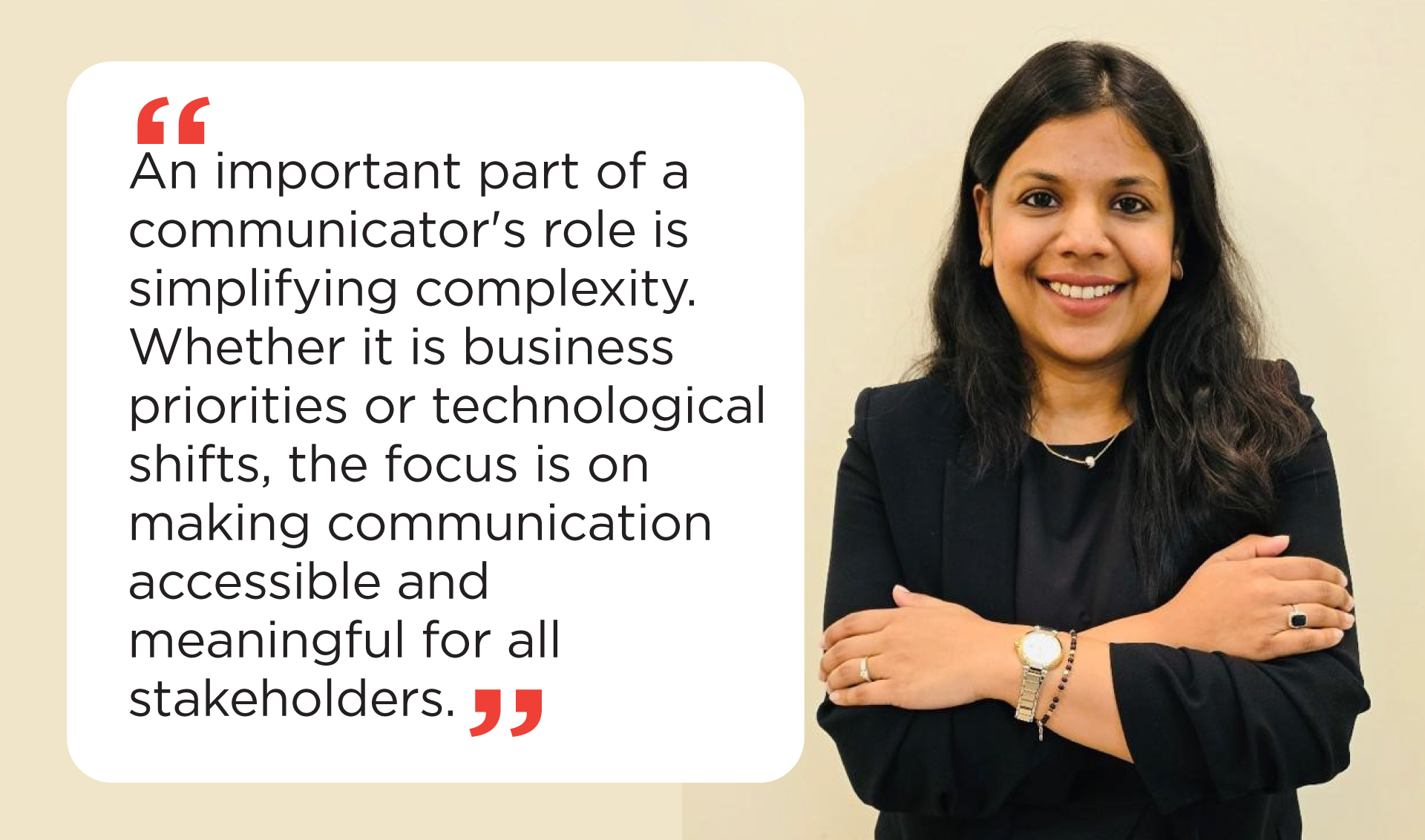
An important part of our role is simplifying complexity. Whether it is business priorities or technological shifts, the focus is on making communication accessible and meaningful for all stakeholders. This requires strong alignment with leadership and a deep understanding of the business. Ultimately, credibility is what sustains any narrative. Communication has to be backed by real impact, whether through client outcomes, innovation or measurable progress on ESG commitments.
- The tech industry moves faster than most. Innovations like AI, automation and digital transformation are rewriting how organizations communicate. How do you see the role of communications evolving in this space?
Communication today has moved from being a support function to becoming an integral part of business strategy. It is no longer about amplifying messages after decisions are made but about shaping how those decisions are understood from the outset.
In the technology sector, this shift is even more visible. With the pace of change accelerating, the challenge is not access to information but making sense of it. Communication plays a key role in bringing clarity and helping stakeholders focus on what truly matters.
This also raises expectations around judgement and precision. Translating complex technologies into clear, relevant narratives requires both business understanding and the ability to contextualise information effectively. While digital platforms have made communication faster and more targeted, the real value lies in presenting a clear and consistent narrative that reflects both innovation and impact. Today, communication sits at the intersection of business strategy, technology and stakeholder perception.
- What are the biggest global communications trends you are observing right now? What’s your take on the future relationship between technology and empathy in storytelling?
Storytelling has always been central to communication, but today its importance has become even more pronounced. In a landscape shaped by technology and data, what stands out is not just the message but how clearly it is expressed and how well it connects with people.
Technology has significantly expanded how we communicate, enabling real-time engagement, wider reach and more personalised interactions. At the same time, storytelling remains essential in making complex ideas easier to understand, especially in a sector like technology.
There is also a visible shift in audience expectations. Stakeholders today are more informed; and in the age of social media, it is important for communication to be not only engaging but also credible and backed by action.
Looking ahead technology will continue to shape how messages are delivered, but empathy and authenticity will determine how they are received. Communication that feels human is what ultimately builds trust.
- What do you believe defines a modern communicator in India’s new-age corporate environment and what are the key skills modern communicators must develop to stay relevant?
A modern communicator today operates at the intersection of business, technology and stakeholder expectations. The role goes beyond execution and requires a clear understanding of how communication contributes to overall business positioning. One of the most important capabilities is the ability to simplify complexity. Whether it is emerging technologies or large-scale transformation, communicators need to translate these into clear and relevant narratives.
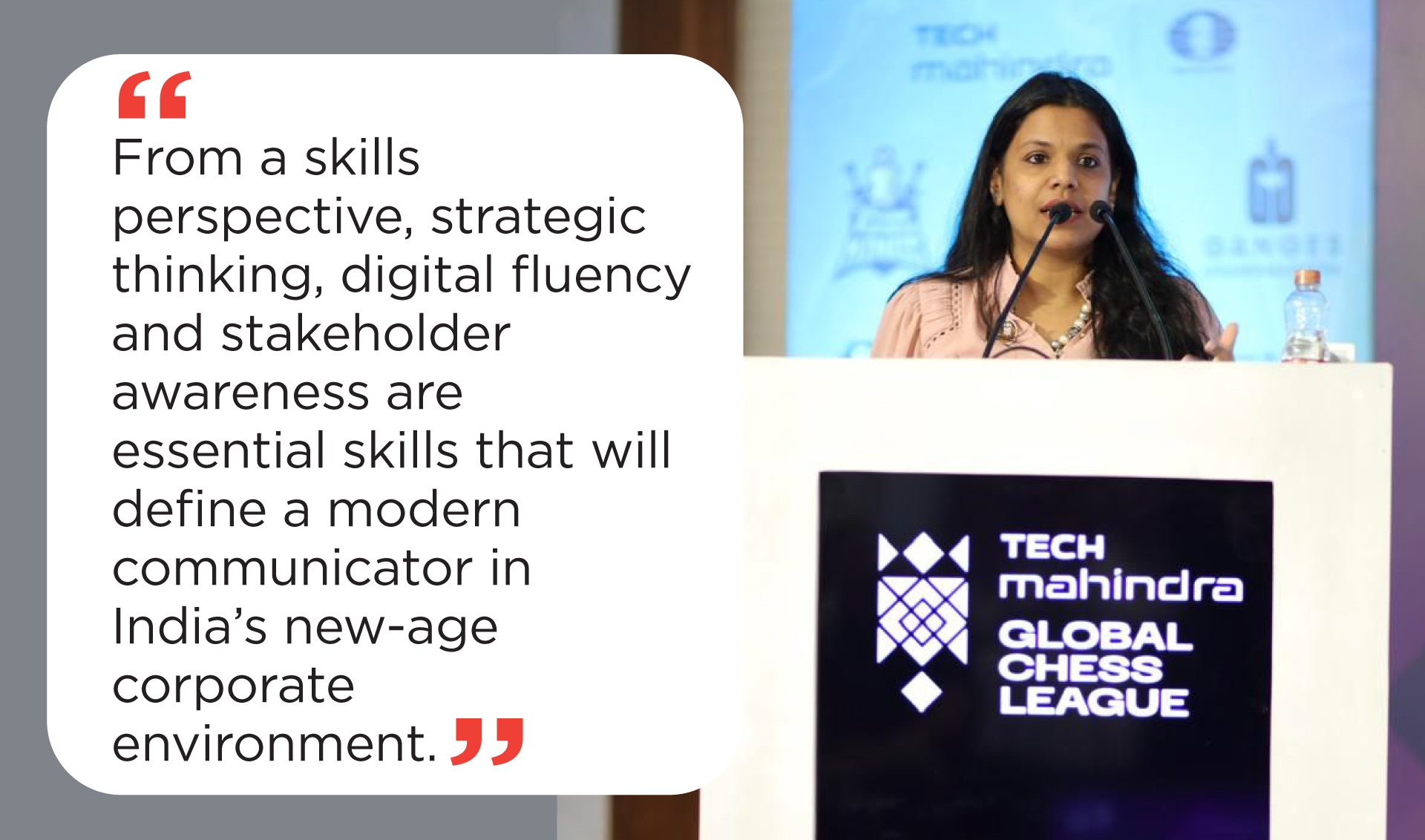
There is also a growing need for agility and sound judgement. In a fast-moving environment, knowing what to communicate, when to communicate and how to communicate is critical. From a skills perspective, strategic thinking, digital fluency and stakeholder awareness are essential. The ability to work with data while applying human insight is becoming increasingly important. Over time, relevance in this field comes from evolving into a trusted advisor who can bring clarity, context and perspective to the table.
- How do you personally stay inspired and continue to grow as a leader in such a fast-evolving industry?
In a fast-evolving industry, staying inspired comes from continuous curiosity and staying closely connected to the business. Understanding how priorities are shifting and how stakeholder expectations are evolving helps keep perspectives fresh and relevant.
Working closely with teams also plays an important role. Diverse viewpoints often challenge assumptions and bring new ways of thinking, which is essential for growth. It is equally important to create space to pause, reflect and recalibrate. In a fast-paced environment, taking a step back enables more thoughtful decision-making. From a leadership standpoint, building an environment of trust and openness is key. When teams feel empowered and supported, it encourages learning, collaboration and better outcomes. Ultimately, what sustains growth is a sense of purpose, recognising that communication plays a meaningful role in shaping understanding and driving impact.
- What areas of communication and leadership are you most excited to explore in the coming years?
What excites me most is how communication is becoming more adaptive and responsive. The ability to shape narratives in real time supported by data and AI, is opening new ways to engage with stakeholders more effectively.
Also, today storytelling is evolving across formats and platforms. As attention patterns shift, there is a clear opportunity to make communication sharper, more focused and easier to relate to. From a leadership perspective, building teams that are comfortable with change is a key priority. This means encouraging agility, cross-functional collaboration and the confidence to navigate ambiguity.
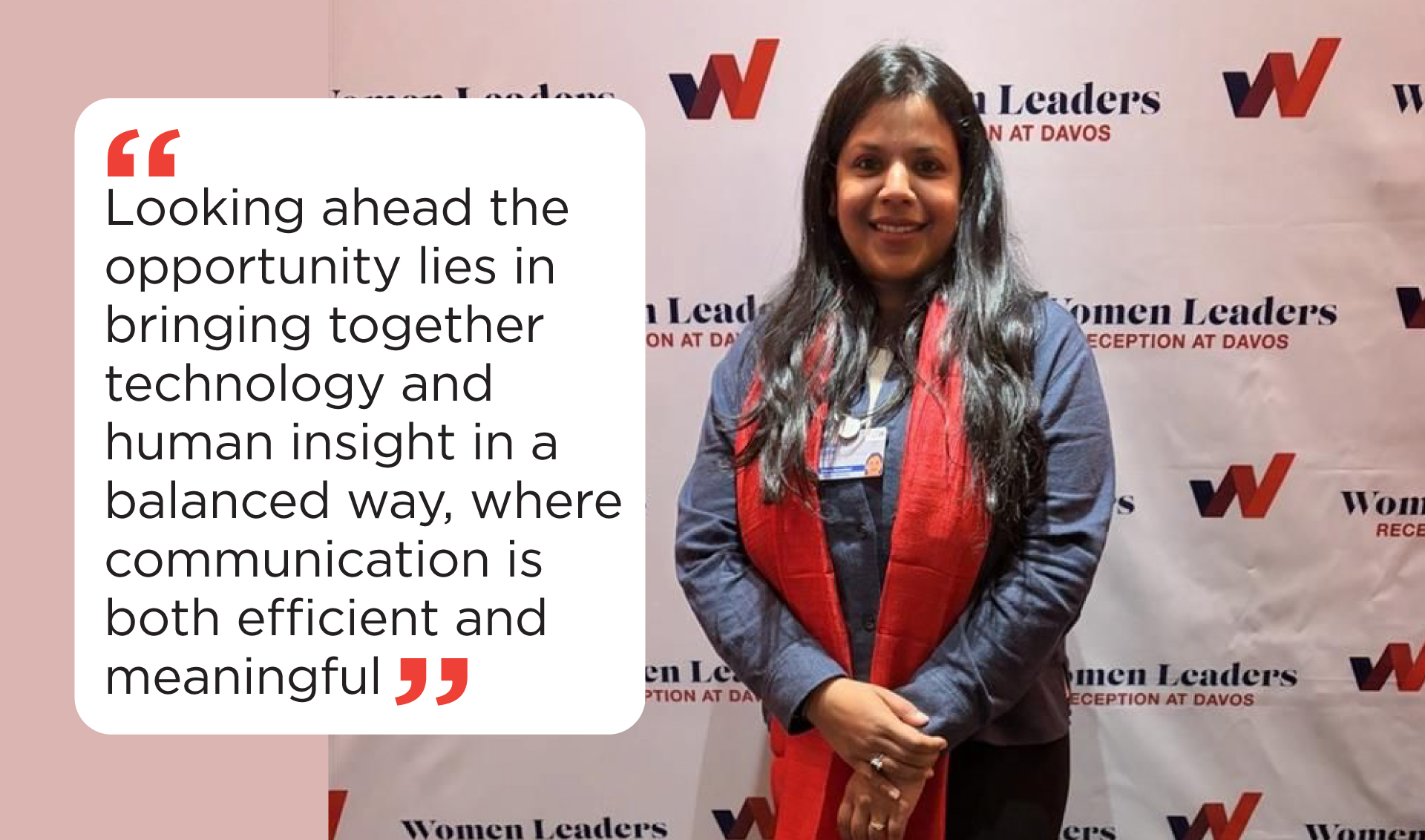
Looking ahead the opportunity lies in bringing together technology and human insight in a balanced way, where communication is both efficient and meaningful.
Read more news about PR and Corporate Communication News, Internet Advertising, Marketing News, Digital Media News, People Movement News
For more updates, be socially connected with us onInstagram, LinkedIn, Twitter, Facebook YouTube & Google News