Ted Sarandos on exiting WBD deal: We definitely wanted this asset, didn’t need it
In his first interview since exiting the race, Netflix Inc Co-CEO Ted Sarandos said in a recent interview that the decision was pre-determined
 by
by
Published: Mar 2, 2026 3:56 PM | 5 min read
 Follow Us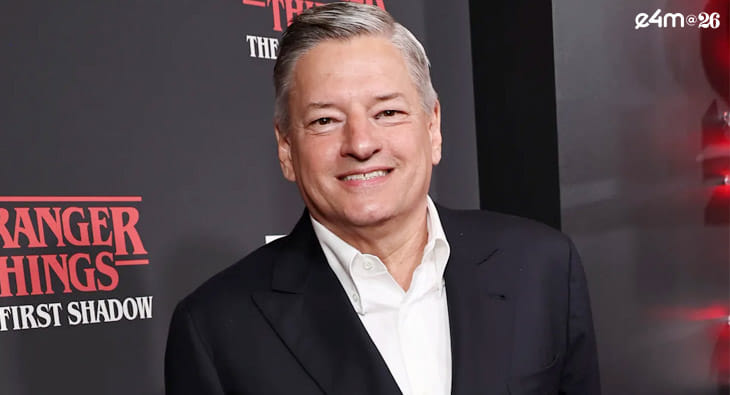

“We had a very tight range that we’d be willing to pay. I’m happy where we got in and happy where we got out, with that,” Ted Sarandos summed up why Netflix chose to walk away from its pursuit of Warner Bros. Discovery after Paramount Skydance tabled a higher offer on February 26.
In his first interview since exiting the race, Netflix Inc Co-CEO Ted Sarandos said the decision was pre-determined. “We knew right away, when we got the notice that they had a superior offer and the details of that deal, we knew exactly what we were going to do,” he said, underscoring that the retreat was disciplined rather than reactive.
Netflix had agreed in December to acquire Warner Bros.’ studio assets and the HBO Max streaming business. The company even shifted to an all-cash structure to accelerate the transaction. But Sarandos insisted there was always a firm ceiling.
“This was an incredibly unique opportunity — incredible IP, 100 years of storytelling, production capacity, the complementary businesses of HBO and Netflix creating cost savings for consumers,” he told Bloomberg. “I still believe in all the positives. I just believed in them up to $27.75 a share.”
When Paramount Skydance escalated its bid — including what Sarandos described as an unprecedented personal guarantee on a $111 billion deal — Netflix chose not to match.
“They had taken all the other issues off the table and then they additionally raised the price,” he said. “They were also very clear that they were not at last and final.”
Netflix, by contrast, had presented its December 5 agreement as final. “It was last and final. It was,” Sarandos emphasised.
‘We had done all the scenario planning’
Contrary to speculation, Sarandos said the company did not scramble to reassess its position.
“We had done all the scenario planning, so we didn’t have to go back to the board. We knew what we wanted to do.”
The decision, he suggested, was driven by valuation discipline rather than political pressure. Sarandos had been in Washington, D.C., the day Netflix withdrew, prompting questions about regulatory resistance.
“I don’t know that there was growing political resistance. It was a growing narrative of political resistance,” he said. “The president stayed completely neutral. The DOJ was doing what they do, and they had been quite diligent.”
He also dismissed reports of broader scrutiny into Netflix’s business practices. “We’re in the clear,” he said.
A highly leveraged rival
Sarandos did not shy away from questioning the sustainability of Paramount’s approach. According to him, the financing structure would necessitate sweeping cost reductions.
“This deal is dependent on a lot of cost-cutting,” he said. “There’ll be cuts in excess of $16 billion. They are telling people who lend them the money that’s going to happen in 18 months or so. It would be less production, less people working.”
He added that any such transaction should face rigorous examination. “It should be highly scrutinised the way I’m glad that ours was highly scrutinised. It should be looked at with every bit of the same microscope.”
‘We definitely wanted this asset. We didn’t need it.’
Online speculation suggested Netflix may have engineered the situation to force a rival into overpaying. Sarandos rejected that outright.
“There are easier ways to make $2.8 billion,” he said, referring to the breakup fee. “We were deep in the regulatory process with 50 regulatory bodies around the world. We had spent a lot of time and energy.”
“We met the top 200 employees of Warner Bros. Greg and I did. We definitely wanted this asset. We didn’t need it.”
He also addressed internal alignment, pushing back against suggestions that the bid was a personal initiative.
“From the beginning, Greg and I were completely aligned. Reed’s not a big fan of M&A generally, but he supported this deal from the beginning.”
Theaters back in focus
Ironically, Sarandos said the aborted deal may still reshape Netflix’s theatrical ambitions.
“Everything I talked about would require us buying that theatrical distribution entity,” he acknowledged. “But one thing that’s been great about it is getting to know and have open dialogue with the theatre owners.”
Pointing to experiments around titles like Stranger Things, KPop Demon Hunters and upcoming releases such as One Piece, he added: “I think we’re going to find a bunch of cool things to do together going forward. I could see us doing things that we haven’t done before.”
Builders, not buyers
Despite market chatter that Netflix could pivot to another acquisition, Sarandos signalled restraint.
“Unlikely. We are builders, not buyers. All that is still true.”
As for the $2.8 billion windfall, he was succinct: “Just keep investing in the business.”
Sarandos also brushed aside concerns that a combined Paramount and Warner Bros. Discovery would emerge as Netflix’s stiffest streaming rival.
“One and a half and one and a half still equals three,” he said, referencing viewing share data. The implication: scale alone does not equal dominance.
If anything, Sarandos suggested, the outcome could work in Netflix’s favour. “I’m confident in our future that we’re not impacted by all that. In fact, maybe it’s to our advantage. But I hope I’m wrong for the sake of the industry.”
Read more news about Television Media, Digital Media, Advertising India, Marketing News, PR and Corporate Communication News
For more updates, be socially connected with us onInstagram, LinkedIn, Twitter, Facebook YouTube & Google News