Rajat Sharma: A legacy of excellence in Indian journalism
On the senior journalist’s 68th birthday, we look at his contributions to the Indian media industry
 by
by
Published: Feb 18, 2025 1:53 PM | 2 min read
 Follow Us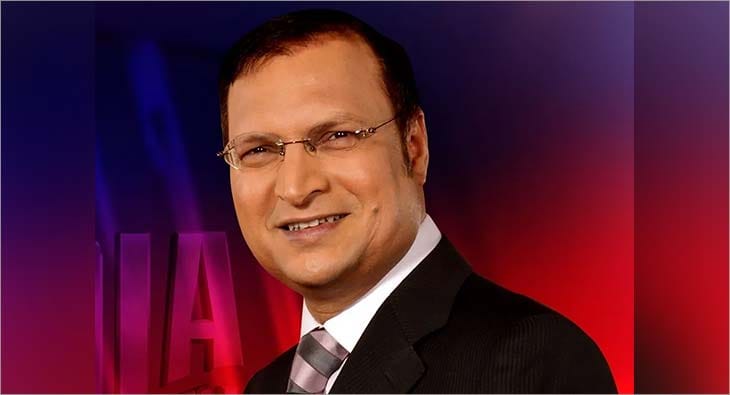

As Rajat Sharma marks his 68th birthday, his contributions to Indian journalism and media stand as a testament to his vision, leadership, and influence. From pioneering television formats to steering one of India's leading news channels, Sharma has played a pivotal role in shaping the country’s media landscape.
Born on February 18, 1957, in Delhi, Rajat Sharma pursued his education at Ramjas School before earning a Master’s degree in Commerce from Shri Ram College of Commerce (SRCC), Delhi University. His active involvement in student politics, particularly as the General Secretary of the Delhi University Students' Union (DUSU) in 1977, reflected his leadership potential early on.
Sharma began his career in journalism as a researcher under political commentator Janardan Thakur. His editorial journey gained momentum when he joined 'Onlooker' magazine as a trainee, eventually becoming its editor in 1985. He later held editorial positions at 'Sunday Observer' and 'The Daily,' establishing himself as a credible journalist.
In 1993, Sharma introduced 'Aap Ki Adalat,' a courtroom-style interview show that quickly became a landmark in Indian television journalism. Featuring high-profile guests, including politicians, celebrities, and public figures, the program redefined public discourse on television. Its unique format and Sharma’s incisive questioning contributed to its sustained success, making it one of India’s longest-running television shows.
Leveraging the success of 'Aap Ki Adalat,' Sharma co-founded India TV in 2004. Under his leadership as Chairman and Editor-in-Chief, the channel grew into one of India's most influential news networks, recognized for its journalistic rigor and innovative content. His strategic vision helped India TV establish itself as a leader in the competitive news space.
Sharma’s contributions have been widely acknowledged. In 2015, he was conferred with the Padma Bhushan, one of India’s highest civilian honors, for his impact on journalism and media. His influence extends beyond television, as evidenced by his election as the President of the News Broadcasters & Digital Association (NBDA) in July 2024.
In addition to his editorial responsibilities, Sharma has played a critical role in addressing contemporary challenges in journalism. In May 2024, he filed a public interest litigation (PIL) in the Delhi High Court against the misuse of deepfake technology, reinforcing his commitment to ethical journalism and digital media regulation.
With a career spanning over four decades, Rajat Sharma remains one of India’s most influential media figures. His ability to adapt to evolving journalistic trends while maintaining credibility and authority has set a benchmark in the industry. As he celebrates another milestone, his impact on Indian journalism continues to shape its future.
Read more news about Television Media, Digital Media, Advertising India, Marketing News, PR and Corporate Communication News
For more updates, be socially connected with us onInstagram, LinkedIn, Twitter, Facebook YouTube & Google News