Like offline retail & e-commerce, TV & digital will grow together: Alok Jain, JioStar
Alok Jain, one of the Cluster Heads for the Entertainment business at JioStar, says contrary to global narratives, in India, TV is not declining—it’s evolving and thriving
 by
by
Published: Aug 13, 2025 9:14 AM | 5 min read
 Follow Us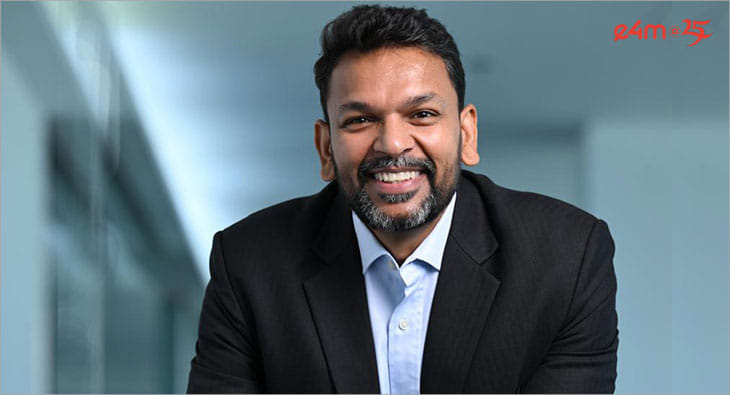

In an entertainment landscape that is shifting faster than ever before, Alok Jain, one of the Cluster Heads for the Entertainment business at JioStar, believes television is not just holding its ground, it is evolving in step with new mediums.
Jain, whose portfolio spans COLORS, Digital Hindi Originals, Youth, Music and English, Kids and Infotainment, Hindi Movies, and the Studio business, said, “In a country as diverse and large as India, TV remains extremely relevant and will continue to be so in the foreseeable future.”
“Today, 90 crore people watch television in India, consuming around three hours of content daily. While digital will certainly grow, TV’s reach and engagement remain robust. We see ourselves as platform-agnostic—serving consumers seamlessly across TV, mobile, OTT, and CTV. India’s consumption story is vast, and just as offline retail coexists with e-commerce, all mediums- TV, digital, mobile- will coexist and grow together,” he said in a chat with e4m.
Industry reports back him up. The FICCI-EY report highlights that television still reaches over 900 million viewers in India, making it the largest media platform with unmatched scale and depth.
“Contrary to global narratives, in India, TV is not declining—it’s evolving and thriving,” Jain insists.
The comfort and scale of television
For Jain, there is no data to suggest TV is losing relevance. “Ground experience reinforces this,” he adds. “TV offers advantages—family viewing, comfort, and an ‘escapism mode’—that digital can’t always replicate. Industries in India don’t die easily; instead, they adapt.”
His strategy for COLORS and JioStar’s entertainment business is clear: invest in IPs that transcend generations, platforms, and formats, bring back family viewing, and “drive home the idea that TV in India is rediscovering its strength.”
Balancing nostalgia and fresh formats
Nostalgia has played a notable role in programming trends, with old shows finding new life. Jain embraces it—but with caution. “It’s all about balance. The future isn’t equal to the past, so while we leverage successful past formats, we also take risks with new ones. For example, in August we’re running Bigg Boss alongside Pati Patni Aur Panga—mixing established fandom with fresh formats. Nostalgia is valuable, but innovation is essential.”
This blend of old and new extends across genres. While COLORS has built a formidable reputation in non-fiction, fiction also remains a core focus.
“Non-fiction is primarily on weekends, except during Bigg Boss. We stand out in non-fiction because few others have such strong franchises in both TV and digital. But fiction remains a major focus—8–10 times more hours are dedicated to fiction than non-fiction annually,” Jain explains.
Advertising dynamics and the festive push
The advertising environment has shifted, with spends now split between TV and OTT. Yet Jain remains optimistic.
“TV remains robust and the largest brand-building medium, so we encourage advertisers to leverage it alongside digital. Q1 saw some softness in TV ad revenues, but with the festive season, we’re seeing strong traction on both TV and digital. FMCG brands like Nivea and L’Oréal are coming back. Even new-age brands will need broad mediums like TV to reach beyond early adopters in metros,” he said.
The measurement challenge
With audiences increasingly screen-agnostic, measurement systems need to keep up. “Measurement is critical and must evolve with consumer behavior,” Jain says. “A major opportunity lies in measuring combined viewership of the same show across TV and digital for the same individual.”
The Pati Patni Aur Panga concept
One of COLORS’ newest formats, Pati Patni Aur Panga, exemplifies the channel’s focus on relatable, homegrown ideas. “We constantly look for fresh ideas,” Jain says. “Pati Patni Aur Pangawas inspired by the everyday banter and uniqueness of married couples, something universally relatable. We wanted a family-friendly, entertaining show in an untouched white space.”
The format features only married couples—except Avika Gor, who is engaged—and its hosts bring contrasting flavors: Sonali Bendre with grace and nostalgia, Munawar Faruqui with humor and edge, he said.
The show has already secured 11 sponsors, underscoring confidence in its appeal.
“It’s a homegrown format, rooted in desi drama, driven by Indian household sensibilities, and curated to resonate with today’s audiences,” says Jain. The aim is for Pati Patni Aur Panga to thrive on both TV and digital, with high potential for social media extensions, snackable reels, and short-form spin-offs.
COLORS’ 17-year journey
Since its 2008 launch, COLORS has been more than just a broadcaster—it has been a mirror to Indian society, said Jain.
Shows like Balika Vadhu, Uttaran, and Na Aana Is Des Laado addressed social issues, from child marriage to gender inequality, embedding societal truths into primetime entertainment.
“With Balika Vadhu, COLORS brought the issue of child marriage to primetime, not as a backdrop but as the core narrative, turning entertainment into social conscience,” Jain recalls.
Today, COLORS offers fiction rooted in societal change (Dhaakad Beera, Manpasand Ki Shaadi) alongside non-fiction juggernauts.
“Laughter Chefs redefined comedy-based reality television,” Jain says proudly. “Its distinctive combination of comedy and cooking is setting standards and continuing to delight viewers with dinner-tainment across the country.”
Jain is confident about the future. “Viewers are the key to our content strategy. Every story begins with them—their preferences, culture, and evolving realities. Our promise is to keep telling stories with heart and honesty.”
For him, the coexistence of TV, OTT, and CTV isn’t just inevitable—it’s already here. “India’s consumption story is vast,” he reiterates. “All mediums will coexist and grow together.”
Read more news about Television Media, Digital Media, Advertising India, Marketing News, PR and Corporate Communication News
For more updates, be socially connected with us onInstagram, LinkedIn, Twitter, Facebook YouTube & Google News