Why wires and cables are becoming India’s next big branded category
Guest Column: Ganapathy Viswanathan, Independent Comm. Consultant & Author, writes that wires and cables are evolving from commodities into trusted consumer brands
 by
by
Published: Sep 7, 2026 11:54 AM | 4 min read
 Follow Us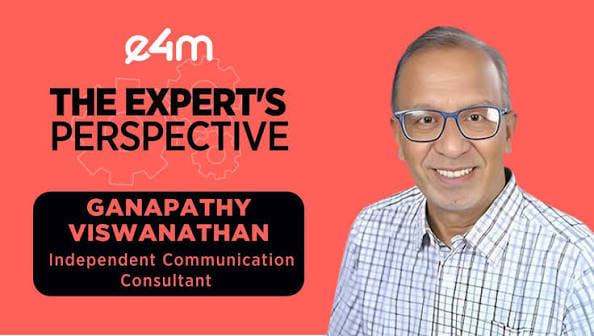

- India’s wires and cables market, valued at approximately ₹90,000 crore, is transitioning from a fragmented commodity-based industry to a more organized, brand-driven sector, with expected annual growth of 11-13%.
- Major brands like Polycab, KEI, and the newly launched Ultravolt by Aditya Birla Group are competing in this space, reflecting a shift towards consumer branding and safety awareness in construction materials.
- Celebrity endorsements, such as Shah Rukh Khan for Ultravolt, aim to enhance brand visibility and appeal to consumers who are increasingly interested in the quality and safety of hidden products in their homes.
- As consumer awareness grows, homeowners are beginning to inquire about brand choices for wires and cables, indicating a significant shift in purchasing behavior towards prioritizing reliability and safety over price.
India is building at a pace that would have been difficult to imagine a few decades ago. New homes, apartments, offices, factories and infrastructure are coming up across the country. Behind all this construction lies an essential product that hardly anyone notices once the building is complete — wires and cables.
They may be hidden behind walls, but they are the lifeline of every building. And an interesting change is now taking place in this otherwise functional category. Wires and cables, traditionally sold largely as a commodity, are beginning to emerge as brands.
From a Commodity to a Category
For decades, the wires and cables business was highly fragmented. In the earlier years, aluminium conductors were widely used, while copper gradually became more important in building wiring. Local manufacturers and regional players dominated much of the market. The electrician, contractor and dealer had considerable influence over what finally went into a building, while the consumer rarely asked too many questions about the brand.
That equation is changing. The Indian wires and cables market is now estimated at around ₹90,000 crore and is expected to grow at about 11–13% annually over the coming years. More importantly, the organised sector has been steadily gaining share. Polycab estimates that organised players accounted for about 76% of the market in FY25, compared with 61% in FY14.
The numbers tell a bigger story than just market growth. They indicate that a category once driven largely by availability and price is becoming more organised, more competitive and increasingly brand-led.
The Big Brands Move In
Polycab has established itself as the strongest national brand in the category, but it is now facing a much broader competitive field. KEI, RR Kabel, Havells, Finolex Cables, V-Guard, Anchor by Panasonic and Goldmedal are among the brands building significant positions.
And now the Aditya Birla Group has entered the business through UltraTech with Ultravolt, backed by an investment of around ₹1,800 crore. It is a significant entry into a market where the opportunity is not simply to manufacture more wire, but to create a national consumer brand.
The timing is also interesting. India's housing and infrastructure growth is creating sustained demand, while the shift towards organised construction and greater awareness of safety is creating fertile ground for established brands.
Why Shah Rukh Khan Makes Sense
The most visible part of the Ultravolt launch has been its decision to bring Shah Rukh Khan on board. At first glance, a celebrity may appear an unlikely choice for an electrical wire brand. But look at how the category actually works and the strategy becomes clearer.
The consumer who pays for the wire is not necessarily the person who chooses it. The electrician and contractor remain critical influencers. The dealer and distributor are also important links in the chain. The homeowner, however, is becoming increasingly aware and is beginning to take a greater interest in what goes behind the walls.
A celebrity gives an otherwise invisible product visibility. Shah Rukh Khan brings recognition, familiarity and stature to a brand entering a crowded market. He is not merely selling a technical product; he is helping establish Ultravolt as a serious national brand.
But advertising alone cannot win this market. The electrician still matters enormously. This is why the combination of mass advertising and electrician engagement becomes important. The celebrity creates awareness; the electrician creates recommendation.
The Consumer Is Starting to Look Behind the Wall
Perhaps the biggest change is happening with the consumer. Earlier, the question was often simply, “Which wire should the electrician use?” Increasingly, it could become, “Which brand are you putting in?”
That is an important shift. A home is often a family's largest investment, and consumers are becoming more conscious of the quality and safety of the products that go into it. They may not understand every technical specification, but they understand reliability. They understand safety. And they increasingly understand that the cheapest option is not necessarily the wisest one.
The same evolution has already taken place across other electrical categories. Switches, sockets, fans, lighting and circuit-protection products have all moved progressively from being purely functional purchases to branded propositions. Wires and cables appear to be following the same path.
There will still be a large price-sensitive and fragmented market. But the direction is clear. India's construction boom is creating the demand, the organised sector is creating the competition, and rising consumer awareness is creating the opportunity for brands.
It is an unusual branding opportunity because the product itself will remain invisible. Nobody will see the wire once the wall is painted. Nobody will show it off to a visitor. Yet consumers are beginning to care about what is hidden behind the wall.
And that may be the biggest change of all.
The next big battle in wires and cables may not be about who can make the wire. It may be about who can make the consumer trust the brand behind it.
Read more news about Marketing News, Advertising News, PR and Corporate Communication News, Digital News, People Movement News
For more updates, be socially connected with us onInstagram, LinkedIn, Twitter, Facebook, YouTube & Google News