MOFS grows 25% annually, ad spends rise in sync: Sandeep Walunj
Sandeep Walunj, Group CMO at MOFS, shares insights on brand differentiation, media balance, influencer impact, hyperlocal efforts, and evolving investor behaviour shaping future marketing strategies
 by
by
Published: Sep 8, 2025 9:07 AM | 7 min read
 Follow Us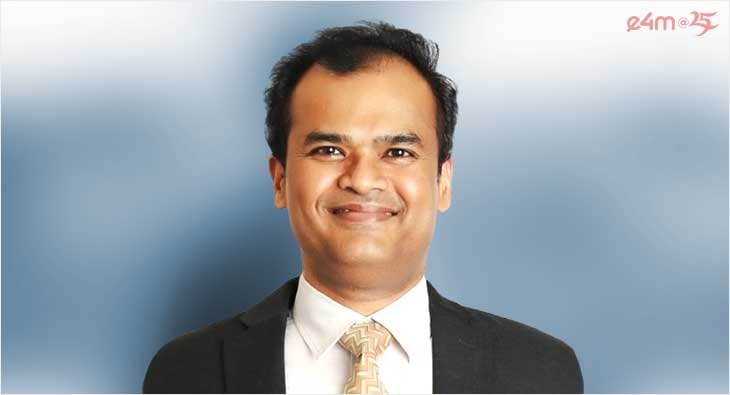

As financial awareness deepens across India, asset management brands face the dual challenge of building trust while staying relevant in a fragmented, fast-changing media landscape. For Motilal Oswal Financial Services (MOFS), the answer lies in staying true to its equity-first philosophy, backed by strong research, personalized advice, and transparent ‘skin in the game’ practices.
In an exclusive conversation with exchange4media, Sandeep Walunj, Group CMO at MOFS, discusses how the brand differentiates itself in the crowded mutual funds market, the balance between traditional and digital media, the growing role of influencers and hyperlocal activations, and the shifts in investor behaviour that are shaping marketing strategies for the future.
How does Motilal Oswal Financial Services differentiate its brand in a cluttered and competitive market?
Our strongest differentiator is our singular focus on equity as the core of our investment philosophy. Think Equity, Think Motilal Oswal works in three ways. First, equity is the most important, attractive, and high-potential asset class, and we have fully appropriated it. Second, the tagline makes the brand synonymous with equity; we have become the very definition of the category. Third, it signals undivided attention - we do not divert focus elsewhere. For instance, our AMC doesn’t even have debt funds, only equity funds. That’s how the motto itself differentiates us.
The second differentiator is research. Strong research enables us to manage stock volatility and deliver informed outcomes. The third is advice. Research alone is not enough, every investor has unique circumstances, so personalized guidance is essential. Together, focus on equity, strong research, and expert advice form our core differentiation.
What does your current media mix look like between traditional platforms and digital?
Despite media fragmentation, identity creation still largely happens through traditional mediums. For example, on one of India’s leading news channels that caters to equity market audiences, we maintain a strong presence throughout market hours. This builds brand authority, which digital channels then amplify.
We see traditional channels as establishing mediums and digital as replicating/magnifying mediums. Depending on the objective, the split shifts - brand campaigns lean more toward ATL, while performance marketing is digital-heavy.
Think of a typical investor’s day: they start with a newspaper - we are there via ads, PR, or research coverage. They may watch business TV before office - we’re strongly present there. Outdoors and office media continue that presence. On digital platforms, while transacting, we are equally visible. Essentially, we ensure presence wherever our customers are.
Do influencer collaborations, experiential activations, or community-driven campaigns play a growing role in your strategy?
Absolutely. Today’s younger investors rarely consume newspapers or TV. They follow creators on YouTube, Instagram, or X. We partner with many such content creators, not just through paid campaigns but also by providing them access to our research and experts. This creates a symbiotic relationship, lending them credibility while giving us authentic reach.
With presence in nearly all pin codes, hyperlocal visibility is critical. We use Google My Business and digital hyperlocal targeting, along with BTL activities like investor meets and local events. Local-language content and franchise-led activations help us engage deeply in each geography.
How have your advertising spends evolved in recent years?
We’ve been growing at around 25% annually, and advertising spends have grown at a similar or slightly higher rate. Interestingly, many young DIY investors burn their fingers and then turn to us for guidance, leading to strong organic traffic. This saves some ad spends, allowing us to redeploy funds into more personalized communication.
Many retail investors still find financial products complex, whether it’s mutual funds, equity, or insurance-linked offerings. How does your marketing simplify communication and build trust, especially for first-time investors?
Simplification happens through research and advice. Products can be complex, so conversations begin with financial goals, responsibilities, investable surplus, age, and risk profile. That’s financial planning, and it requires individual dialogue.
Advisors break concepts down for first-time investors, while formal content via email, WhatsApp, or social media further simplifies information. With our in-house research capability, we explain investments in easy-to-understand ways.
Motilal Oswal has built credibility on its culture of ‘skin in the game,’ where promoters and fund managers invest in their own products. How do you bring this philosophy to life through your marketing narratives, and what impact has it had on investor trust and brand positioning?
Skin in the game is another manifestation of Think Equity, Think Motilal Oswal. Even our treasury is invested in equity, what we call the “twin engine” model. Few financial services firms reinvest profits into mainstream equity funds as we do.
We communicate this transparently. Our mutual fund campaigns even show how much of Motilal Oswal’s own money is invested, demonstrating that we eat at our own restaurant. This builds unmatched investor confidence.
Trust stems from undiluted focus on equity and values like transparency. Since inception in 1988, when broking lacked transparency, our founders committed to customer-first principles. They provided research and advice even when not asked, to ensure client success.
We pioneered many industry-firsts, the first helpline, website, and mobile app in broking. Combined with our skin-in-the-game approach, these reinforce credibility. When customers see promoters investing alongside them, it builds the highest level of trust.
How are you tailoring campaigns for Tier 2 and Tier 3 audiences, where financial awareness is still growing but aspirations are rising rapidly?
We are a ‘phygital’ brand. We are physically present in 99% of India’s pin codes through branches or franchisees. For many customers, especially in smaller towns, face-to-face interaction remains important. At the same time, all our digital channels, including language-based content are available for those who prefer them. This hybrid approach ensures accessibility across customer segments.
With fintech platforms and DIY investing apps reshaping investor behavior, how is Motilal Oswal leveraging digital to stay ahead and relevant?
Many such platforms often leave investors dissatisfied. Investing isn’t like buying a product online - you need guidance. This is where our full-service model stands apart - we combine digital ease with human advice.
We also know where online investors spend time, so we ensure strong presence there. Additionally, influencers often use our research, which extends our reach authentically. With our stronger brand equity and trust, we attract investors organically without needing to outspend fintech players.
Financial marketing often highlights returns. How do you strike the right balance between showcasing performance and educating customers about risk, discipline, and long-term wealth creation?
For us, performance stems from trust and clarity. We’re not after short-term gains but long-term relationships - ten lakh rupees over ten years matters more than one thousand rupees today.
We do performance marketing, but with a lifetime-customer mindset. We leverage advanced CDPs to personalize experiences, CRMs, and AI-driven call assessment tools to enhance advisor conversations in real time. This ensures efficiency and customer trust even in performance-driven campaigns.
With rapid changes in media consumption, technology, and investor behavior, how do you see your marketing strategy evolving over the next two to three years?
Looking ahead, we see four big shifts shaping the future of our marketing. Generative AI will enable us to personalize advice, communication, and portfolio management at scale. Regulatory changes, especially the discouragement of F&O, will require us to educate investors on the value of disciplined, long-term investing. Media fragmentation means audiences now consume highly customized digital content, making it essential to tailor campaigns at an individual level.
Finally, evolving consumer aspirations, where today’s youth seek instant experiences alongside long-term security demand a balance between short-term lifestyle goals and sustainable wealth creation. We are already preparing for these shifts to ensure we stay ahead of the curve.
Read more news about Marketing News, Advertising News, PR and Corporate Communication News, Digital News, People Movement News
For more updates, be socially connected with us onInstagram, LinkedIn, Twitter, Facebook, YouTube & Google News