Up to 30% of digital ad impressions may be fake or bot-driven: HUL’s Tejas Apte
At Goafest 2025, Tejas Apte, Head of Media and Digital Marketing at HUL, called attention to the growing risks and inefficiencies in the digital advertising ecosystem
 by
by
Published: May 24, 2025 1:03 PM | 3 min read
 Follow Us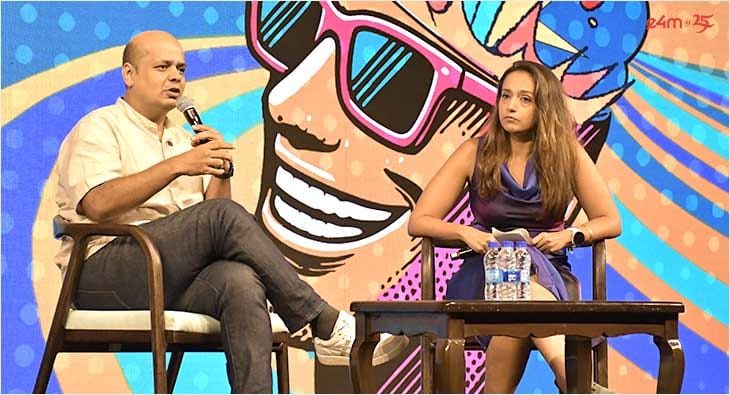

At Goafest 2025, Tejas Apte, Head of Media and Digital Marketing at Hindustan Unilever Limited (HUL), called attention to the growing risks and inefficiencies in the digital advertising ecosystem. In a session moderated by CNBC-TV18’s Shibani Gharat, Apte said that despite the scale and reach of digital, it remains plagued by ad fraud, non-human traffic, and data misuse—factors that significantly undermine business effectiveness.
Apte pointed to industry estimates that suggest up to 30% of digital ad impressions may be fake or bot-driven. He argued that this isn’t just a technical glitch—it’s a fundamental business issue. As marketers continue to shift budgets to digital, the absence of robust safeguards is leading to wasted spending and a loss of trust. He drew a contrast with legacy media models, which relied on both subscription and advertising revenue, creating a natural system of checks. Digital media, he noted, is almost entirely ad-funded, which raises the stakes for ensuring brand safety and viewability.
In response to these challenges, Apte outlined the Indian Society of Advertisers’ (ISA) recent efforts to define clearer standards for the industry. He discussed the ISA’s media charter, a set of guiding principles co-created with major platforms like Google and Meta, and agencies including GroupM, Dentsu, IPG, and Madison. Rather than issuing top-down mandates, the charter was built through collaboration to ensure alignment across publishers, advertisers, and agencies. Apte emphasized that the charter is designed to move the industry beyond vanity metrics and toward outcomes that actually impact businesses.
One of the central themes of the session was the distinction between input metrics—such as click-through rates—and outcome metrics tied to actual sales or brand impact. Apte stressed that while platforms are often incentivized to share metrics that show high engagement, marketers must push for insights that reveal whether advertising is truly working. He believes that a shared understanding of what constitutes meaningful performance is critical to improving accountability and media quality.
The discussion also addressed the increasing trend of in-housing, with some large advertisers bringing parts of their media or creative functions internally. Apte acknowledged the benefits of better data access and faster decision-making but said that, in practice, most in-housing is partial. Creative strategy and media planning, he said, continue to sit with agencies. He maintained that while automation and AI are transforming the execution layer, the core strategic value of agencies remains intact—for now. The challenge for agencies, according to Apte, is to shift from being service providers to business partners capable of delivering measurable outcomes.
Internally, HUL has started to apply the charter’s principles across its media practices. Apte noted improvements in first-party data handling and increased brand safety, as well as the discovery of new media partners through the charter development process. The effectiveness of the charter, he said, will ultimately be measured not by adoption among large advertisers alone, but by uptake across the broader market and a visible reduction in fraudulent or unsafe media placements.
Apte’s closing message was unambiguous: the industry needs to stop chasing superficial metrics and focus on results that matter. For digital media to remain credible and effective, all players—marketers, agencies, and platforms—must share responsibility for cleaning it up.
Read more news about Marketing News, Advertising News, PR and Corporate Communication News, Digital News, People Movement News
For more updates, be socially connected with us onInstagram, LinkedIn, Twitter, Facebook, YouTube & Google News