Global ad spends reached $1 trillion with 70% going to digital platforms: Martin Sorrell
Sorrell discusses global economy, S4 Capital's world views, the ongoing digital transformation, the role of AI in the ad industry, and shares strategic advice for marketers in India and beyond
 by
by
Published: Jan 31, 2025 3:18 PM | 6 min read
 Follow Us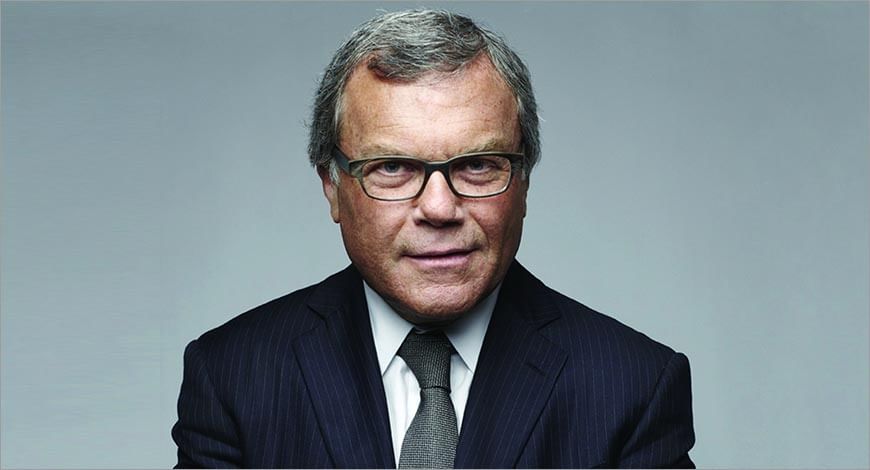

At the Amazon MX Player Streamnext 2025, Martin Sorrell, founder of WPP and Chairman of the board of directors of S4 Capital argued that rather than becoming more complicated, the digital landscape has become simpler.
He highlighted three major geopolitical disruptions shaping the global economy. Sorrell predicted that the U.S.-China relations will continue to fragment, with China increasingly aligning with BRICS nations and the Global South. Second, he expressed scepticism that a settlement in the Russia-Ukraine conflict would alter Putin’s broader motivations, suggesting that Eastern Europe will remain under pressure. Third, he expressed cautious optimism about the Middle East, citing the potential for improved relations between Israel and Saudi Arabia, provided there is a resolution to governance issues in Gaza and the West Bank.
Despite these challenges, Sorrell pointed out that global economic growth remains strong, albeit at a slower pace. India, in particular, stands out with projected growth rates of 6-8%, while worldwide growth hovers around 3%. He warned that inflation is proving to be more stubborn than expected, keeping interest rates higher than anticipated.
For businesses, Sorrell emphasised the importance of selecting growth markets wisely. He pointed to North America, South America, the Middle East, and Asia as key regions for expansion. "America is on steroids right now," he said, referencing the economic boom reminiscent of the Reagan era.
He also noted that by 2050, three of the world's five largest economies- China, India, and Indonesia, will be in Asia. However, he cautioned against overreliance on China due to geopolitical risks, suggesting that India presents a viable alternative. While Africa offers opportunities, he described it as "too volatile" for large-scale investment.
Beyond geographic considerations, Sorrell stressed the need for companies to embrace emerging technologies like AI, quantum computing, and the metaverse. While the metaverse has been subject to skepticism, he argued that its potential is underestimated, particularly in fields like healthcare. "The metaverse was overhyped before, but it’s probably underhyped now," he remarked, citing its ability to transform industries. He urged companies to leverage technology to drive efficiency, particularly in slower-growing economies like Europe.
Sorrell provided a deep dive into the advertising industry, revealing that global ad spends has reached $1 trillion, with 70% allocated to digital platforms. Traditional media, such as TV and print, continues to shrink, particularly for networks lacking live sports content. "If you don’t have live sports, your ad revenues are going down by about 10-15% a year," he explained.
Furthermore, explaining the growing dominance of major digital platforms in the advertising space, Sorrel stated Alphabet (Google) with $ 250 billion in ad revenue (25% market share), Meta (Facebook, Instagram, WhatsApp) with $ 150 billion (15% market share), Amazon, which is expected to reach $100 billion within a few years (currently $61 billion) and TikTok at $40 billion which holds 4% market share.
These four platforms alone account for 50% of global ad spend and 70% of digital advertising, with Chinese giants like Alibaba, Tencent, and ByteDance further shaping the market. "With AI, these platforms will only gain in importance and significance," he predicted.
He also mentioned how AI is reshaping the advertising industry. Majorly, AI has drastically reduced production timelines. "Time to market has shrunk from a week or a month to literally hours," he noted, challenging traditional agency billing models.
Further, AI allows brands to create millions of customised ad variations tailored to individual users. "We used to produce around 1.5 million content permutations for a campaign—now, with AI, we can do multiples of that," he said.
Moreover, the industry is moving away from manual media planning toward algorithmic models. "It’s ludicrous that 250,000 people are working in media planning when the work should be done algorithmically," he said.
Platforms like Meta’s Advantage+ are automating ad placement and content creation, already reaching a $20 billion annual run rate. "This is happening in real time—Meta’s Advantage+ has doubled in revenue in the past year," Sorrell stated.
He cited a joint venture between AWS, Adobe, and NVIDIA in outside broadcasting, which has drastically reduced production costs. "Historically, you would buy a truck to do an outside broadcast for $10 million," he explained. "Using AI and cloud computing, we can now produce that same program for about $100,000 or $200,000." This staggering 80-90% cost reduction exemplifies AI’s role in reshaping media production, making high-quality content more accessible and cost-effective.
However, he criticised agencies and clients for their reluctance to share data, arguing that AI is set to challenge this outdated approach. "The biggest problem I see with clients and agencies is their unwillingness to share information," he stated. "Political activity and behaviour are conditioned by the control of information, but with AI, that control will be democratised." He emphasised that this shift would have profound implications across industries, fundamentally altering how businesses are structured and managed.
While Sorrell remains optimistic about AI’s potential, he acknowledged its disruptive impact on employment. He referenced economist John Maynard Keynes, who predicted in the 1930s that automation would eventually lead to more leisure time. "I think AI will end up doing the same," Sorrell remarked. He noted that while AI will replace mundane tasks, it will also create new opportunities for innovation. Nonetheless, traditional roles in industries resistant to technological change are at risk of diminishing.
He emphasised three key strategies for marketers and agencies to stay competitive in the evolving landscape. First, he highlighted the importance of agility, stressing that in today’s fast-paced world, companies must not only claim agility but implement it to adapt to rapidly changing market conditions.
He also urged businesses to "take back control" from outsourcing, advocating for more internalisation of functions, particularly content and ideation, citing General Motors’ restructuring as an example.
Finally, Sorrell stressed the critical need for businesses to control their first-party data, as reliance on third-party data becomes increasingly impractical due to privacy changes by companies like Google and Apple. He underscored the necessity of integrating customer data with platform signals, such as Amazon's, to ensure effective and privacy-compliant marketing strategies.
Wrapping up his speech, Sorrell reiterated that businesses must navigate an increasingly complex world by leveraging technology, selecting the right markets, and prioritizing efficiency. "AI is driving significant changes, and clients must react with agility," he said. "Taking back control and leveraging data will be the real fuel of the future."
He mentioned that digital advertising will continue to be dominated by a handful of key platforms, with companies like NVIDIA, Microsoft, Apple, Salesforce, Oracle, and Adobe becoming even more influential. As AI reshapes industries, companies that proactively adapt to these changes will thrive, while those that resist will struggle to remain relevant.
Read more news about Marketing News, Advertising News, PR and Corporate Communication News, Digital News, People Movement News
For more updates, be socially connected with us onInstagram, LinkedIn, Twitter, Facebook, YouTube & Google News