From Stadiums to Streams: The expanding playbook of sports marketing
Guest Column: Uday Mohan, COO, Havas Media & Havas Play, on how esports are reshaping audience engagement and redefining sport itself
 by
by
Published: Aug 7, 2025 9:15 AM | 4 min read
 Follow Us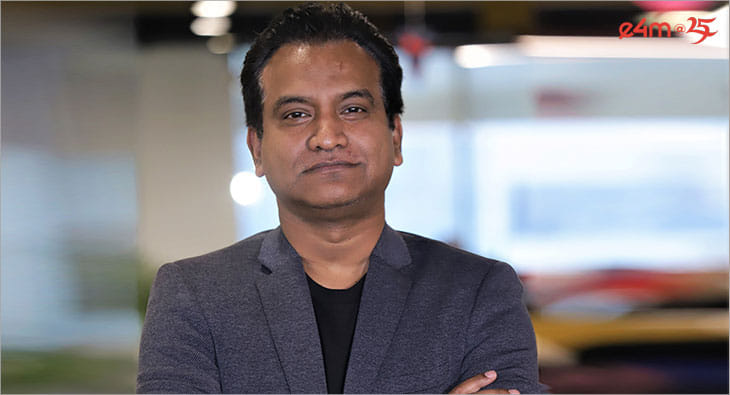

Is sport today limited to what takes place on the field, or is it also what unfolds on screens, streams, and servers around the world? For decades, sports marketing has played a pivotal role in shaping brand visibility, building emotional connections, and cultivating consumer loyalty. From perimeter advertising in stadiums to television sponsorships and athlete endorsements, the traditional sports ecosystem has offered brands a trusted avenue to reach millions. But as consumer behaviour evolves and media landscapes shift, so too must the playbook.
Esports have now emerged as a space that is not only rewriting the rules of audience engagement but also redefining what it means to participate in sport. What was once a niche interest has grown into a globally recognised industry, complete with professional teams, structured tournaments, and high-value sponsorships. More significantly, it captures the attention of a passionate, digitally native community that is youthful, influential, and fast growing.
India’s gaming audience has crossed 500 million, a rapidly expanding universe within which esports is fast becoming the cultural nucleus. The online gaming market was valued at INR 33,000 crore in 2023 and is projected to reach INR 66,000 crore by 2028, growing at a CAGR of 14.5%. This indicates not only a scale but a significant cultural shift where gaming transcends being a mere pastime and becomes a lifestyle. For younger cohorts like Gen Z and Gen Alpha, esports is not merely entertainment, it is identity. This generational shift opens a new frontier for marketers, one where engagement is driven not by visibility alone, but by relevance, authenticity, and participation.
The Engagement Quotient: From Passive Watching to Active Involvement
Traditional sports audiences, while loyal, tend to consume content passively. Esports fans, in contrast, are highly involved. They stream live matches, participate in chat forums, follow their favourite players across platforms, and even co-create content. They are not just watching the game; they are shaping it. This creates a vastly different media environment, one that is interactive, community-driven, and constantly evolving.
Brands that enter this space must think beyond sponsorships and logo placements. In esports, the most successful partnerships are those that enhance the experience rather than disrupt it. Whether it is an in-game integration, a digital collectible, a co-branded livestream, or influencer-led content, the focus must be on adding value to the fan journey.
Moreover, these campaigns are not only immersive, but they are also measurable. Every interaction, from in-game actions to conversions, is traceable. This provides marketers with real-time data and actionable insights, offering a level of precision and accountability that is often elusive in traditional media.
India’s Esports Inflection Point
Globally, esports have already established itself as a mainstream media channel. In India, the momentum is catching up fast. Traditional sports leagues are exploring digital extensions. OTT platforms are investing in gaming content. Influencers are turning into gaming celebrities with millions of followers. As the infrastructure matures and 5G adoption accelerates, esports will only become more integrated into the broader entertainment ecosystem.
For brands, this represents a unique opportunity to build long-term relevance with younger audiences who are increasingly tuning out of conventional media formats. The challenge lies in approaching the space with a mindset that respects the community, understands its language, and contributes meaningfully to its culture.
Phygital Play: The New Arena
Importantly, embracing esports does not mean abandoning traditional sports marketing. Instead, the future lies in blending the two to create hybrid experiences. Imagine a cricket match that features a parallel esports activation, or a physical product launch that is mirrored by a virtual drop inside a popular game. These are not hypothetical scenarios. They are already taking shape in global markets and will soon become common practice in India as well.
This convergence of sport, gaming, and technology opens up a new spectrum of touchpoints that are continuous, creative, and contextually rich. It enables brands to stay relevant in various moments of a consumer’s life, fostering not just visibility, but also resonance.
The Way Forward: Culture-First Marketing
The real promise of esports lies in its ability to merge storytelling, community, and performance into one integrated platform. In turning audiences into collaborators and brands into storytellers. To win here, marketers must stop broadcasting and start playing. It allows brands to become co-players rather than external advertisers. But this also means the bar is higher. Audiences are quick to call out inauthenticity and even quicker to embrace brands that truly get the culture.
As media becomes more fragmented and consumer attention becomes harder to earn, the most successful marketers will be those who can anticipate where culture is headed and embed themselves early. Esports is not the next big thing. It is already here. The question is whether brands are ready to show up, not as spectators, but as players in the game.
Read more news about Marketing News, Advertising News, PR and Corporate Communication News, Digital News, People Movement News
For more updates, be socially connected with us onInstagram, LinkedIn, Twitter, Facebook, YouTube & Google News