FMCG teaches you a lot more than just marketing and sales: Sunil Kataria
At e4m's Pitch Brand Talk 2024 summit, Kataria explained why FMCG has become the legacy brand sector
 by
by
Published: Oct 18, 2024 9:32 AM | 3 min read
 Follow Us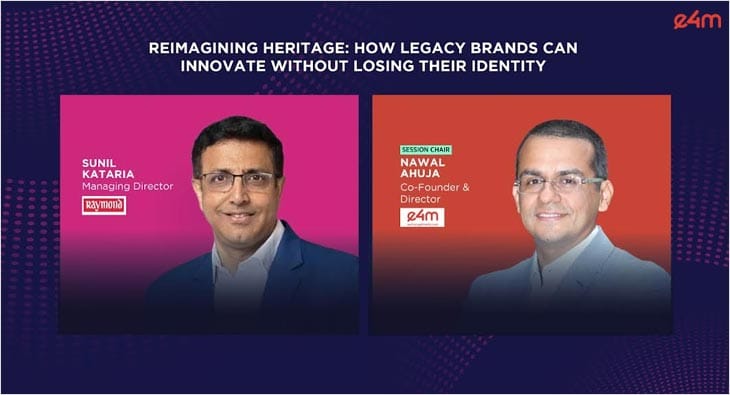

The Fast Moving Consumer Goods (FMCG) sector is often regarded as the legacy brand sector’ and many of the country’s most influential CEOs trace their roots back to FMCG companies—a trend that’s far from accidental. Managing Director, Raymond Lifestyle Limited, Sunil Kataria says, “FMCG teaches you a lot more than just marketing and sales – it gives you a holistic, 360-degree understanding of business, which is why so many CEOs come from this sector.”
Speaking at e4m's Pitch Brand Talk 2024 summit, Kataria explained the phenomena of how Tata, Hindustan Unilever, Nestlé, Britannia, Dabur, Colgate and Godrej emerged as legacy brands over the years. “People think product is the heart of FMCG, but after decades in this industry, I can tell you it’s much more about brand engagement.”
The challenge in FMCG is that most products, especially in categories like soaps or deodorants, have minimal differentiation. “If you ask me, there hasn’t been a massive product innovation in soaps for decades,” said Kataria. “The last big change might have been something like the introduction of ‘deodorant sticks.”
Instead, FMCG companies rely on strong brand identities and extensive distribution networks. “You learn how to create brand loyalty in categories where the product experience doesn’t vary much from competitor to competitor,” Kataria notes. “At the end of the day, the real differentiation happens in the consumer’s mind.”
Another crucial element FMCG instills is the importance of distribution. “FMCG is all about reaching millions of consumers, so once you’ve built a brand, the next challenge is ensuring availability,” Kataria explains. “These two pillars – brand engagement and distribution – form the foundation for a successful career in general management.”
This extensive exposure across multiple functions is why so many FMCG professionals rise to leadership positions. “You’re responsible for not just marketing, but also supply chain, cost, and P&L management. It’s a comprehensive training ground,” says Kataria.
Transitioning from FMCG to the fashion industry has been a unique learning curve for Kataria. In FMCG, the product tends to remain static for long periods, with minimal innovation, but in fashion, it’s a whole different story. “In fashion, the product is the most important piece,” Kataria observes. “Products change every 4 to 6 months, and each season brings new challenges. You can be a winner one season and miss the mark the next.”
Kataria highlights the complexity of marketing in fashion compared to FMCG. “When you’re in fashion, you’re defining the consumer’s personality,” he says. “The jacket I’m wearing today says a lot about me, whereas the soap I use doesn’t define who I am. That’s the fundamental difference.”
In the first quarter of 2024, India's FMCG industry recorded a 6.5% rise, compared to the same period in 2023. Currently, It Is projected to grow at a compound annual growth rate (CAGR) of 14.9%, potentially reaching around Rs 18.27 trillion by 2025 due to increase in rural consumption power.
Read more news about Marketing News, Advertising News, PR and Corporate Communication News, Digital News, People Movement News
For more updates, be socially connected with us onInstagram, LinkedIn, Twitter, Facebook, YouTube & Google News