Data-Driven Marketplace Strategies: Industry leaders chart a course for 2025 success
The first panel discussion at e4m D2C Summit 2025 reveals how brands across categories are leveraging algorithms, real-time insights, and omnichannel approaches to dominate digital shelves
 by
by
Published: Sep 3, 2025 3:20 PM | 4 min read
 Follow Us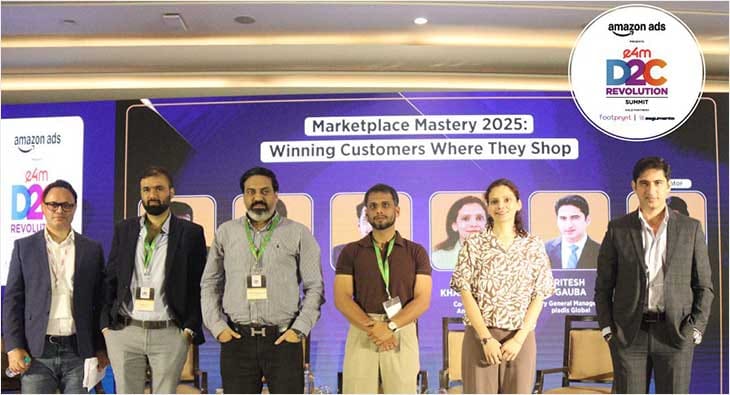

The marketplace landscape in 2025 demands more than transactional thinking; it requires algorithmic mastery, data precision, and strategic channel orchestration. At the e4m D2C Summit's panel discussion on ‘Marketplace Mastery 2025: Winning Customers Where They Shop,’ industry leaders from diverse categories shared their approaches to navigating the increasingly complex digital commerce ecosystem.
The Data Imperative: From Garbage to Gold
Ritesh Gauba, Country General Manager at Pladis Global, makers of McVitie's biscuits and Godiva Chocolates, opened with a fundamental truth about modern commerce, saying, “Just data is garbage, organized data is what really drives insights.” His approach centers on leveraging real-time marketplace data to revolutionize both front-end targeting and back-end operations. Within eight weeks, Pladis can identify trending variants and geographic preferences, enabling rapid supply chain adjustments and promotional pivots.
This data-driven agility represents a seismic shift from traditional FMCG operations that previously required months or years to understand market trends. Gauba emphasized how e-commerce platforms now provide unprecedented visibility into consumer behaviour patterns, allowing brands to optimize their entire value chain based on actual purchase data rather than forecasted demand.
Category-Specific Challenges: Fresh Food's Marketplace Dilemma
Deepanshu Manchanda, Founder and CEO of ZappFresh, presented a contrasting perspective from the fresh meat category. Despite being born from BlinkIt founder Albinder Dhindsa's vision, ZappFresh has identified inherent marketplace limitations for perishable products. “Quick commerce platforms view fresh as a filler category, contributing barely 2-3% of revenues,” Manchanda explained, highlighting why platforms hesitate to invest heavily in temperature-controlled supply chains.
His analysis reveals a fundamental mismatch between quick commerce models and fresh food consumer behaviour. Customers typically plan meat purchases for specific meals, preferring morning or evening orders rather than impulse 10–15-minute deliveries. This behavioural insight has led ZappFresh to focus on controlled environments and direct-to-consumer channels where product quality and brand integrity can be maintained.
Building Brand Identity in Marketplace Environments
Aayushi Khandelwal, Co-Founder of Anveshan, which specializes in A2 ghee and cold-pressed oils, demonstrated how emerging brands can leverage marketplaces as democratic launching platforms. Starting with Amazon in 2018, Anveshan has expanded across multiple channels while maintaining its authenticity narrative around farmer-led produce.
Khandelwal's strategy involves using exclusive products and pack sizes to drive D2C growth: offering 5 and 15-liter oil variants that quick commerce platforms won't stock, and creating seasonal product bundles that serve as testing grounds for new category expansions. This approach treats D2C channels as brand laboratories where loyal customers provide feedback before broader marketplace rollouts.
The Conscious Channel Choice: Furniture's Different Path
Raghunandan Sarraf, Founder of India's first D2C solid wood furniture brand Saraf Furniture, made perhaps the most contrarian move by deliberately avoiding marketplaces since 2014. His rationale centers on brand ownership and customer perception, saying that “We decided to make customers say they bought from Saraf Furniture, not from Amazon.”
Despite this marketplace absence, Saraf acknowledges their indirect contribution in normalizing online purchasing behaviour, particularly for high-value items. His data focus targets two critical points: purchase triggers (primarily price and peer reviews) and post-purchase retention strategies. The furniture category's unique three-week consideration cycle requires sustained visibility throughout the customer's decision-making journey.
Algorithm Navigation and Profitability Focus
Pratik Gour, Co-Founder of Footprynt, brought an agency perspective to algorithm management, emphasizing profitability as the primary metric for channel decisions. His examples of regional brand success – like Emami's Bengali-language content strategy for their Shorshe Posto fish masala – demonstrate how data analysis can drive hyper-localized approaches.
Gour's insights into ITC's East India-only milk distribution and regional brand strategies like Libas and Mulmul illustrate how even large corporations are embracing localized marketplace approaches based on data-driven consumer insights.
The Omnichannel Reality: Coexistence Over Competition
The panel consensus emerged around an omnichannel strategy rather than platform exclusivity. Gauba articulated this best by saying, “For me, it's about looking at all the channels today. They're all going to coexist. Of course, the contributions will change.” His framework treats different channels as serving distinct consumer needs: modern trade for new product launches, traditional trade for pantry fills, and quick commerce for convenience-driven purchases.
This nuanced approach requires sophisticated price-pack architecture strategies and channel-specific consumer understanding. The key lies in recognizing that while consumers may use multiple channels, their behaviour and expectations vary significantly across platforms.
Future-Proofing Marketplace Strategies
Looking ahead, the panellists identified several trends shaping marketplace mastery: increasing focus on profitability over volume growth, algorithm optimization for margin-rich categories, and the rise of social commerce integration. Live shopping, influencer-led commerce, and regional content strategies are emerging as critical differentiators.
The overarching message from this diverse panel was clear: marketplace success in 2025 requires data literacy, category-specific strategies, and the courage to make conscious channel choices aligned with brand objectives rather than following industry conventions. Whether embracing marketplace dominance or building independent channels, the winners will be those who truly understand their customers and organize their data accordingly.
Read more news about Marketing News, Advertising News, PR and Corporate Communication News, Digital News, People Movement News
For more updates, be socially connected with us onInstagram, LinkedIn, Twitter, Facebook, YouTube & Google News