‘Customer journeys are not linear anymore’
Industry experts at the e4m India Brand Conclave 2025 came together to discuss the various aspects of customer journeys and how brands must innovate to stay ahead of the curve.
 by
by
Published: Jan 30, 2025 9:18 AM | 4 min read
 Follow Us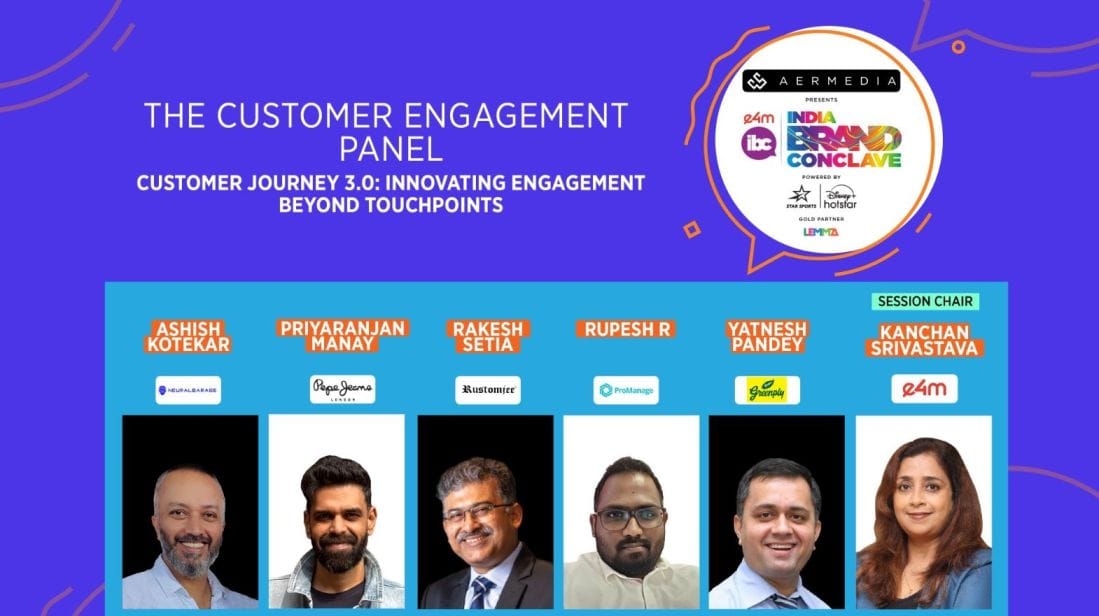

The way brands engage with customers is transforming at an unprecedented pace. Consumers today expect seamless, personalised, and immersive experiences that go beyond transactions. Customer Journey 3.0 represents this shift, where engagement is continuous, data-driven, and deeply integrated into everyday interactions.
The Customer Journey 3.0: Innovating Engagement Beyond Touchpoints panel at the e4m India Brand Conclave 2025 featured insights from Ashish Kotekar, Head Sales & Partnerships, NeuralGarage, Priyaranjan Manay, Head of Marketing, Pepe Jeans London; Dr Rakesh Setia, President - Sales, Marketing, CRM & Business Strategy Rustomjee Group; Rupesh R, Director - Sales & Marketing, ProManage and Yatnesh Pandey, Vice President - Marketing, Greenply. The panel was moderated by Kanchan Srivastava, Senior Editor & Group Editorial Evangelist at exchange4media.
From AI-powered personalisation to omnichannel strategies, the panel unpacked valuable insights on how brands can redefine customer engagement by leveraging technology, insights, and innovation to build lasting relationships.
Kickstarting the conversation, Ashish Kotekar, Head Sales & Partnerships, NeuralGarage shared: “Connecting data technology and human interaction seamlessly is where the brand journey is headed.”
He further explained, “Brands need to define it to ensure that the connection that people have with the brand in the digital space translates seamlessly into in-person interactions at the point of purchase. The same journey has to continue and that’s essentially what would create a frictionless omnichannel experience for the customers.”
Priyaranjan Manay, Head of Marketing, Pepe Jeans London added to the conversion with a perspective from a brand for whom retail experiences are key: “We are building our models to understand what our consumers are looking for and what kind of tick boxes are they checking before making a purchase decision.”
He added, “We are also closely looking at what else they are doing in their lives. Partners like Zomato are very big with us. As a fashion brand, we have also found a niche in people who love to enjoy experiences. We are seeing that after the pandemic, people are more interested in spending money on experiences than products.” The denim brand is also trying to give consumers additional reasons to buy their products apart from price, brand heritage and product quality, he shared.
Taking the conversation forward, Dr Rakesh Setia, President - Sales, Marketing, CRM & Business Strategy Rustomjee Group spoke about how technology is helping them elevate the consumer experience across the funnel. “The technology is helping us reach our target audience, make them interested in our projects, facilitate their site visits, showcase the project to them in a way that will appeal to them, enhance their purchase experience, share updates with them and handover the house to them,” he explained.
The internal information silos also need to be broken to ensure consistent information is provided to external customers. Capturing feedback from customers in real-time is another key area brands must focus on, added Rupesh R, Director - Sales & Marketing, ProManage.
He explained, “When brands look at empowering customer journeys, the focus has to be on long-term relationships and delivering value. Customer journeys are not linear anymore. They are dynamic. Brands need to move towards a holistic approach to how they want to activate and engage customers as part of their customer journey.”
Further, Yatnesh Pandey, Vice President - Marketing, Greenply spoke about the difference between B2C and B2B customer journeys: “In B2B, you have to create content material for the conversion of your sales pitch. It’s not the same as B2C where customers can take immediate decisions. B2B customers go deeper into product specifications, uses and services.”
The panel then spoke about the challenges brands are facing when it comes to customer engagement - disjoined customer journeys being the biggest one, followed by an internal exchange of information between various teams involved in large-scale projects and the need for innovation across touchpoints. Technology is helping brands bridge gaps but there is still room for improvements along the way.
Read more news about Marketing News, Advertising News, PR and Corporate Communication News, Digital News, People Movement News
For more updates, be socially connected with us onInstagram, LinkedIn, Twitter, Facebook, YouTube & Google News