Comm platforms perfect for not only sales avenues but also brand activations: Nitin Saini
At e4m India Brand Conclave 2025, Nitin Saini, VP of Marketing at Mondelez India, offered insights into how the company blended traditional and digital platforms through personalised campaigns
 by
by
Published: Jan 29, 2025 4:46 PM | 6 min read
 Follow Us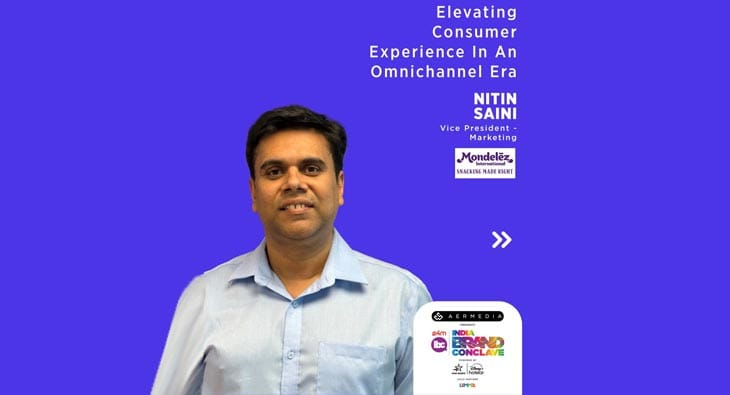

In an increasingly complex digital world, consumer behaviour is evolving rapidly. Marketers today face the challenge of adapting their strategies to meet consumers across a variety of platforms, from traditional media to emerging commerce channels.
For Nitin Saini, Vice President of Marketing at Mondelez India, the key to staying relevant is the seamless integration of brand activations across omnichannel platforms. Saini recently at e4m India Brand Conclave 2025 shared how Mondelez has harnessed the power of digital tools, personalised experiences, and real-time data insights to revolutionise consumer engagement.
"Consumer and shopper journeys have drastically shifted from what they were a decade ago," Saini remarked. "In the past, a consumer would watch an advertisement on TV and then head to a traditional kirana store to make their purchase. Today, those paths are far more intricate and webbed, involving e-commerce, in-store experiences, and even OTT platforms. So, it is imperative for us to adapt our brand activations in alignment with these new realities."
Saini emphasised that this shift in consumer behaviour underscores the importance of omnichannel strategies. "If you can manage to crack omnichannel in a meaningful way, your brand will not only benefit from consistency and ubiquity but will also gain valuable insights into consumer preferences," he explained. "It’s no longer enough to just show up on TV or in outdoor spaces. The brand needs to be present everywhere, from quick commerce platforms to in-store activations, to establish a more iconic presence."
Saini gave a closer look at how Mondelez has successfully blended traditional and digital platforms through personalised campaigns. One standout example was the brand's Valentine’s Day Campaign in 2024, where Mondelez took its chocolate brand positioning beyond just "romance" and into the realm of technology-driven personalisation.
"We wanted to create a campaign where consumers could feel emotionally connected to our brand, not just through buying a product but by having a personalised experience," Saini explained. "Our Valentine’s Day campaign, which encouraged people to create personalised love stories powered by AI, was a perfect example of this. Consumers could visit our website, answer a few questions, and receive a video of their unique love story—made even more special by the integration with our products."
What made the campaign truly stand out was its omnichannel execution. "We launched the campaign across traditional platforms like TV and digital, but then we took it further to commerce platforms. The real innovation came from our direct-to-commerce platform, Cadbury Joy Deliveries," he shared. "Consumers could not only create their personalised videos but also order a Valentine's Day silk pack featuring their personalised message—making the experience both emotional and tangible."
The results were impressive. "When we looked at the ROI from different channels, this particular activation gave us the highest return on investment," Saini said. "By combining personalised engagement with a seamless journey from content creation to purchase, we were able to deliver a truly memorable experience that resonated deeply with our customers."
Saini highlighted that Mondelez's success in the omnichannel space wasn't just about broadening touchpoints, but also about leveraging data. “One of the key advantages of omnichannel marketing is the real-time data insights it provides,” Saini noted. "By tapping into commerce platforms, we can immediately gauge what consumers are engaging with, what flavours they like, and which campaigns resonate the most."
He went on to explain how Mondelez integrates this real-time data into its product development cycle. "For example, with our Dairy Milk range, we regularly launch new flavour extensions. Thanks to the insights we receive from both in-store and e-commerce platforms, we can understand consumer preferences right away and incorporate that feedback into our flavour innovations," he said. "Real-time data gives us a competitive edge and enables us to fine-tune our product offerings based on actual consumer behaviour, rather than relying on guesswork or long-cycle surveys."
A key insight Saini shared was the need to rethink how brands engage with consumers at the point of purchase. "When it comes to commerce platforms, whether it’s e-commerce or quick commerce, many brands still view these channels as only sales avenues," he said. "But we’ve realised that commerce platforms offer much more—they are also channels to build brand awareness, engagement, and even create personalised experiences."
A great example of this is Mondelez's Rakhi campaign in 2024. "The insight behind this campaign was that people want to share personal memories on Rakhi, but many of those moments are not captured," Saini explained. "We allowed consumers to create visual memories and share them with their loved ones. They could even print their personaliaed images onto a sleeve and give them as gifts, making the experience even more personal and meaningful."
Mondelez took this concept to both modern trade stores and its e-commerce platform. "In-store kiosks allowed consumers to input their responses and immediately receive a personalised Rakhi sleeve with their Celebrations pack," Saini shared. "On our DTC platform, we provided a similar experience where people could create personalised gifts and have them shipped directly to their loved ones."
The campaign resulted in over 500,000 personalised memories being created, with an equally impressive number of personalised sleeves printed and shared. "We've seen extraordinary results with this approach," Saini said. "Engagement was through the roof, and we experienced some of our highest ROI in recent years."
Saini concluded by encouraging marketers to think beyond traditional sales and advertising strategies. "It’s time for us to reimagine how we approach brand activations. Omnichannel platforms are no longer just sales avenues—they should be key touchpoints for engaging and connecting with consumers," he said. "As marketers, we need to seize the opportunity to create meaningful, personalised experiences that resonate at every stage of the consumer journey, whether that’s in-store, on e-commerce platforms, or even on our own direct-to-consumer channels."
The key takeaway from Saini’s insights is clear: By embracing omnichannel strategies and prioritising personalised engagement, brands can not only enhance consumer experience but also drive measurable business outcomes. "The future of marketing is about creating seamless, personalised experiences that span multiple touchpoints and truly connect with the consumer on a deeper level," he concluded.
Read more news about Marketing News, Advertising News, PR and Corporate Communication News, Digital News, People Movement News
For more updates, be socially connected with us onInstagram, LinkedIn, Twitter, Facebook, YouTube & Google News