Financial Times’ Energy Transition Summit: Industry heads discuss India’s net zero target
The summit saw over 250 participants, representing more than 150 companies from 15 countries
 by
by
Published: Sep 19, 2025 2:16 PM | 3 min read
 Follow Us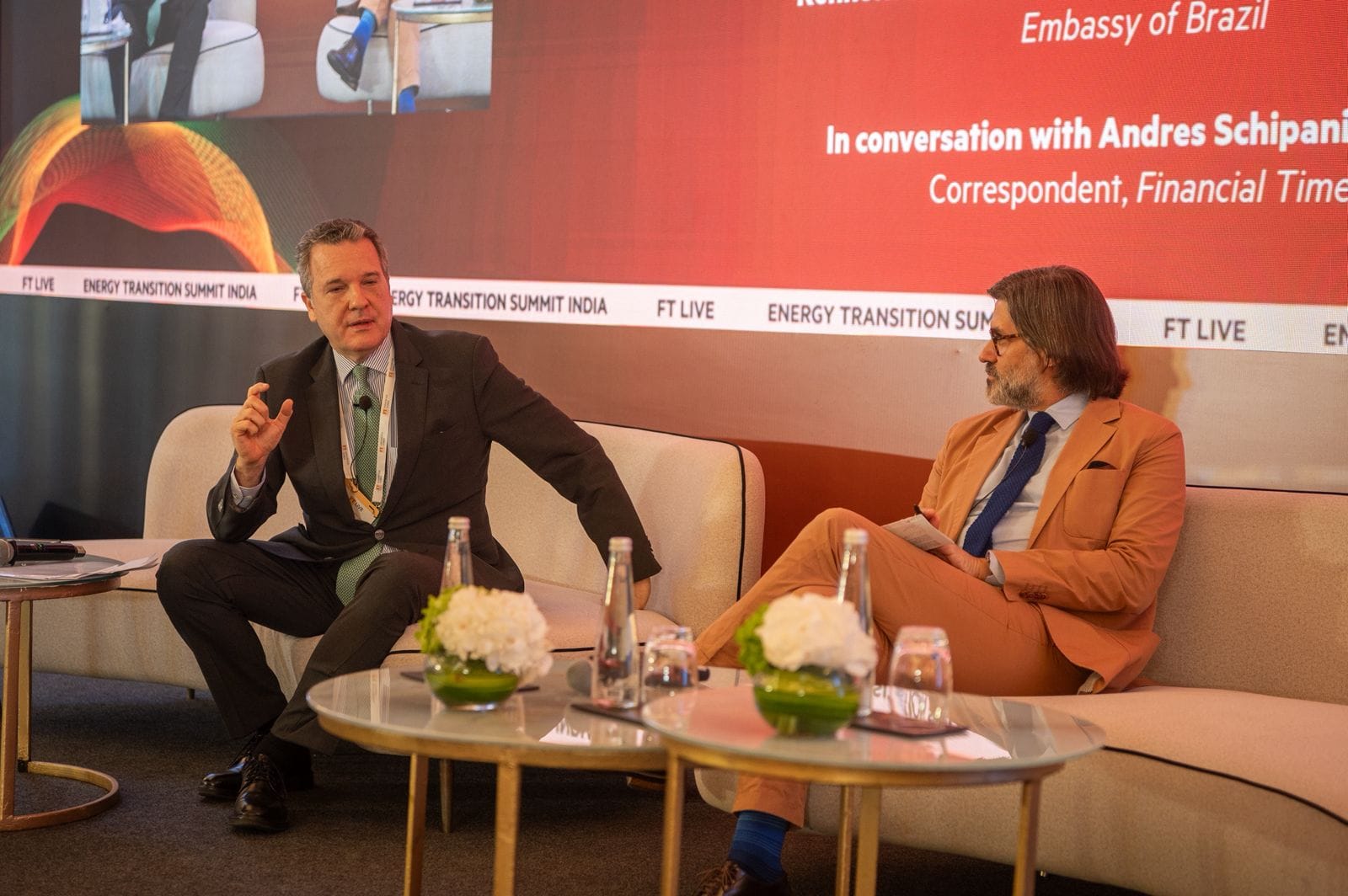

New Delhi witnessed an important moment in its climate and energy calendar with the conclusion of the Financial Times’ Energy Transition Summit India 2025, held on September 16–17 at the Taj Mahal Hotel.
Over 250 participants, representing more than 150 companies from 15 countries, gathered under one roof to deliberate India’s ambitious journey toward achieving net zero by 2070. The summit, which combined high-level keynotes, engaging panels and networking sessions, brought together senior policymakers, business leaders, investors, and experts from energy, metals, transport and manufacturing.
The opening day set the tone with an address from Pralhad Joshi, Minister of New & Renewable Energy, who reaffirmed India’s commitment to balancing growth and sustainability while ensuring energy remains affordable for its citizens.
Suman Bery, Vice Chairman of NITI Aayog, followed with an urgent call for aligning India’s industrial strategy with global capital flows, stressing that overseas investment and risk-mitigation mechanisms would be as critical as technology itself in enabling the transition.
Industry leaders brought perspectives from the corporate frontlines. Praveer Sinha, CEO & Managing Director of Tata Power, and Ashish Khanna, CEO of Adani Green Energy, spoke about the challenges of scaling renewable capacity at the speed required, while Deshnee Naidoo, CEO of Vedanta Resources, underlined the need for cleaner metals production and carbon-capture solutions in hard-to-abate sectors. The financial dimension was explored by Johannes Zutt of the World Bank, who highlighted the bottlenecks in climate financing, and Mansi Madan Tripathy of Shell, who focused on supply chain resilience and innovation.
What emerged from the two days was a picture both of immense opportunity and of daunting challenges. There was consensus that India’s aspirations to lead in green hydrogen will only materialize if technology costs decline rapidly and policy frameworks provide clarity. Speakers also stressed the urgency of building a robust domestic battery ecosystem to support the country’s electrification drive, and of securing clean-energy supply chains in an increasingly turbulent geopolitical environment.
Equally prominent was the emphasis on equity. Sunita Narain of the Centre for Science and Environment and Arunabha Ghosh of CEEW reminded the gathering that a just transition must remain at the heart of the energy shift, ensuring that communities and states dependent on coal are not left behind. Their interventions echoed a broader theme: that the credibility of India’s net-zero journey will rest on how it manages decarbonisation in heavy industries like steel and cement while keeping households and small businesses shielded from price shocks.
Behind the scenes, collaboration was the defining spirit. Panels revealed how government, private industry and international investors will need to move in lockstep, with clear timelines for hydrogen deployment, carbon-capture initiatives and renewable grid integration. At the same time, speakers admitted that overcoming generational perceptions, unlocking overseas capital and ensuring consistent policy regimes remain formidable tasks.
The Summit concluded on a note of cautious optimism. While no binding commitments were announced, the discussions laid out a clear strategic direction: India must streamline regulatory approvals, deepen public-private partnerships, encourage innovation in clean technologies and ensure its transition narrative is as much about social equity as it is about megawatts and gigatons. As one speaker observed, India’s pledge to reach net zero by 2070 is no longer just aspirational—the next decade will decide whether it can be transformed into reality.
Read more news about Industry Briefing, Internet Advertising, Marketing, PR & Corporate Communication, Television Media
For more updates, be socially connected with us onInstagram, LinkedIn, Twitter, Facebook YouTube & Google News