Amitabh Agnihotri: The glory of Hindi journalism can never fade
Reflecting on the evolution of Indian journalism, Agnihotri highlighted the distinct role Hindi media has played in representing grassroots issues and connecting with the common people
 by
by
Published: May 30, 2025 2:09 PM | 3 min read
 Follow Us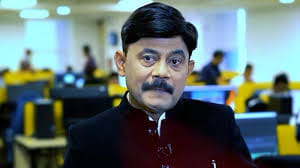

On May 30, 1826, Pandit Yugal Kishore Shukla published the first Hindi newspaper under the name Udant Martand. Now, just a year away from completing 200 years, Hindi journalism has grown stronger and more impactful with time, says veteran journalist Amitabh Agnihotri.
Reflecting on the evolution of Indian journalism, Agnihotri highlighted the distinct role Hindi media has played in representing grassroots issues and connecting with the common people. “Whether it's raising public concerns or echoing the sentiments of the masses, Hindi journalism has reached every household and spoken up for people’s rights more effectively than English journalism,” he said. “I don’t wish to compare or undermine any language, but this is my perspective, Hindi is the language of the common people and their concerns.”
Agnihotri also cited Mahatma Gandhi as the greatest editor of his era, emphasizing that Gandhi chose Hindi to publish his newspaper because he understood the soul of India resides in this language. He recalled a story where, on the eve of India’s independence, a BBC reporter asked Gandhi to deliver a message to the world. Gandhi responded, “Gandhi does not know English. The message will be in Hindi,” reaffirming his belief in Hindi as the language of India’s soul.
Speaking about the reach and influence of Hindi journalism, Agnihotri said it has held governments and the judiciary accountable, acting as a moral check essential to democracy. He quoted noted journalist Pritish Nandy, who once said that even the most powerful personalities, during interviews, would naturally switch to Hindi when speaking from the heart, demonstrating the emotional and expressive strength of the language.
“Hindi journalism has taken the discourse beyond the elite and brought stories from villages and farmlands to the forefront. It has become a source of hope for justice among common citizens,” he stated. “That is the biggest success of this medium. Journalism that truly reflects the mind and spirit of the people of India is, without doubt, Hindi journalism.”
He also emphasized the political significance of Hindi, pointing out that while governance and bureaucracy may function in English, no politician seeks votes in English. “In my 36 years of experience, I’ve never seen any leader ask for votes in English. During elections, nearly 70% of the landmass of India hears campaign appeals in Hindi.”
Recalling an incident with senior BJP leader L.K. Advani, Agnihotri said, “At a public rally, Advani was speaking in Hindi, and a translator would then deliver it in the regional language. Later, I told him that the very language he cherishes on stage is sidelined once in power. He paused, reflected, and admitted I was right.”
Agnihotri concluded with a powerful message: “The machinery of this country—government, administration, and judiciary—may run in English, but the poor villager fighting a legal battle doesn’t even understand what the lawyer says. This is a serious concern. Hindi journalism can never lose its relevance, because this country runs on votes, and votes are sought in Hindi.”
Read more news about Industry Briefing, Internet Advertising, Marketing, PR & Corporate Communication, Television Media
For more updates, be socially connected with us onInstagram, LinkedIn, Twitter, Facebook YouTube & Google News