India bags 17 shortlists at Cannes Lions so far: Here are 5 with a real shot at metal
While Ogilvy Mumbai leads the agency table with four shortlists, VML India follows with three
 by
by
Published: Jun 22, 2026 8:57 AM | 10 min read
 Follow Us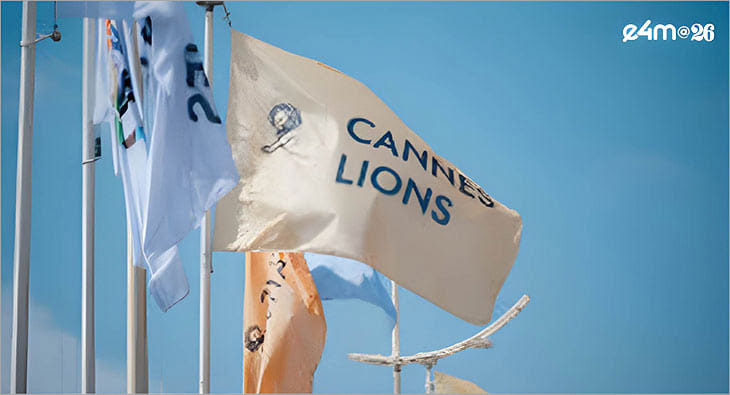

- The 73rd Cannes Lions International Festival of Creativity has commenced, with India securing 17 entries across nine categories, a significant decrease from last year's 32 Lions from a broader shortlist of 982 entries.
- Notably, India's shortlisted entries this year focus on purpose-led and culturally rooted campaigns, with no representation in categories like Digital Craft, Social & Creator, or Entertainment, despite industry discussions emphasizing these areas.
- Key campaigns to watch include Ogilvy Mumbai's "Renu vs The City" and "Box To Beds," VML India's "The Kolhapuri Kalapuri," and McCann India's "Project Golden Minute," all of which showcase strong cultural insights and cross-category traction.
- The overall trend indicates a shift in Indian advertising towards traditional craft and storytelling rather than newer digital trends, raising questions about the industry's creative direction as the festival progresses.
The Croisette is doing what the Croisette does best today. Suits are getting linen-creased in the French heat, lanyards are multiplying by the hour, and somewhere between the Palais and a rosé-fuelled beach activation, the global ad industry has once again convinced itself that this week will decide who is actually good at this job. The 73rd Cannes Lions International Festival of Creativity kicks off today, and as always, the festival opens not with a bang but with a scoreboard. Shortlists have been trickling in since June 20, and by the eve of the opening ceremony, India’s tally stood at a tidy 17 entries across nine categories. The real fireworks, though, start now. Shortlists in Health & Wellness, Pharma, Audio & Radio, Creative Brand, Print & Publishing and the Lions Health and UN Grand Prix for Good were among the first announced, with the rest to follow through the week.
Seventeen is a number that needs context to mean anything, and the context is not flattering. India had secured 32 Lions last year, a healthy showing built on a much wider shortlist base of 982 entries. This year’s pre-festival count is visibly thinner, and the categories where India has traditionally excelled (Outdoor and PR among them) have returned a blank so far. Outdoor drew zero Indian shortlists despite the category fielding 135 finalists globally, and PR, Digital Craft, Entertainment, Industry Craft and Social & Creator have all gone the same way. For an industry that loves a comparison, the maths is uncomfortable. Fewer shortlists almost always means fewer Lions, and the agencies that built their reputations on Cannes weight will be watching the next four days a little more nervously than usual.
What makes this year’s list genuinely interesting, though, is not the count. It is the shape of it. Look at where India’s 17 shortlists actually sit, and a pattern jumps out immediately. Despite two years of every conference panel insisting that AI, creator economy and immersive digital experience are the future of Indian creativity, not one of those buzzwords shows up in the shortlist. There is no Indian entry in Digital Craft. None in Social & Creator. None in Entertainment, Gaming, or Music. Instead, the work that has survived the first cut is overwhelmingly purpose-led, culturally rooted and craft-heavy. Health & Wellness alone accounts for four shortlists, the single strongest category for India this year. Add Pharma, Creative Brand and the non-profit thread running through Film Craft, and a clear story emerges: India’s Cannes case this year is being built on storytelling about real bodies, real diseases and real cultural artefacts, not on technology spectacle.
Read: Cannes Lions 2026: India secures 9 spots across 12 categories in third set of shortlists
Cannes Lions 2026: India scores 8 shortlists across 7 categories
Cannes Lions 2026: India misses out on first wave of shortlists
Ogilvy Mumbai leads the agency table with four shortlists, spread cleverly across Health & Wellness, Film Craft and Media, which already tells you something about how the network has structured its entries this year. VML India follows with three, split between Print & Publishing, Direct and Design, giving it the most category-diverse showing of any single agency. Leo India, McCann India, Humour Me, TBWA\Lintas, 82.5 Communications, Mindshare India, Talented and 22Feet Tribal Worldwide round out the list with one shortlist apiece. It is a wide spread rather than a concentrated one, which is its own kind of signal. Nobody has run away with the count the way agencies sometimes do in a strong Indian year. Instead, what India has is a set of individually strong bets rather than a dominant portfolio.
A shortlist, of course, only confirms that a piece of work survived the first filter. It says nothing about whether the jury will go on to award it Bronze, Silver, Gold, or nothing at all. But shortlists are not random either. Multiple shortlists for the same campaign across different tracks, strength in categories where India has historically performed, and work that carries an unmistakable cultural insight tend to be the early tells of where the metal will land. Run that filter across the 17, and five campaigns stand out as the ones actually worth watching this week.
The campaigns carrying India’s metal hopes
“Renu vs The City,” Ogilvy Mumbai’s campaign for St Jude India ChildCare Centres, a non-profit organisation that runs free accommodation and support services for families of children undergoing cancer treatment, is the only Indian entry this year shortlisted in two separate Lions tracks: Health & Wellness and Film Craft, where it picked up a nod specifically for Casting. That double listing matters more than it might seem on paper. A campaign that survives scrutiny from two entirely different jury rooms (one examining brand-led education and awareness, the other dissecting craft choices down to the casting brief) is being read as strong in both idea and the execution. Cannes juries have leaned hard into rewarding non-profit and social-impact work over the past few cycles, provided it does not feel stage-managed, and a story about childcare support for families battling paediatric cancer sits squarely in that emotional register without tipping into the manufactured sentimentality juries have grown wary of.
VML India’s “The Kolhapuri Kalapuri,” made for Kalapuri, an artisan footwear brand built around the traditional Kolhapuri chappal, picked up shortlists in both Print & Publishing, under Publications for Good, and Direct, under Cultural Engagement, making it the second campaign on this list with cross-category traction. The work leans into a craft form with deep regional roots and a recent moment of global fashion controversy behind it, and translates that into a campaign that reads as distinctly local while speaking a language international juries understand. Direct juries in particular have been shifting their reward criteria away from pure activation mechanics toward genuine cultural participation, and this is exactly the kind of “local insight, global resonance” work that tends to benefit from that shift.
“The Art of Survival,” built for the luxury Indian whisky brand Godawan by 22Feet Tribal Worldwide in collaboration with London-based design studio Butterfly Cannon, picked up a shortlist in Packaging Design, arguably one of the hardest categories in the entire festival to break into, given the sheer global volume and polish of entries. Premium Indian brands have historically struggled to get noticed in design-led categories at Cannes, which makes this shortlist worth more attention than the bare entry count suggests. The campaign already has international validation behind it, too, having picked up an ADC Silver Cube, two Bronze Cubes and two Merits at the Art Directors Club’s 105th Annual Awards just last month, a strong indicator that the craft is already resonating with juries outside India before Cannes has even weighed in.
“Box To Beds,” Ogilvy Mumbai’s campaign for Amazon, shortlisted in Media Lions under Social Behaviour, has the advantage of scale and a category that historically rewards demonstrable real-world impact over creative flourish alone. Social Behaviour as a track tends to reward work that can show its sustainability and utility credentials clearly, and a campaign that repurposes Amazon’s packaging infrastructure for tangible social good fits that brief precisely. Media juries have increasingly favoured effectiveness data over pure creative spectacle in recent years, and a brand with Amazon’s reach behind the case study only strengthens the numbers a jury will eventually see.
Rounding out the five is McCann India’s “Project Golden Minute” for Johnson’s Baby, shortlisted in Health & Wellness under Brand-led Education & Awareness. Health & Wellness has consistently been one of India’s strongest international categories, and educational healthcare interventions backed by measurable outcomes tend to travel well with juries who see hundreds of awareness campaigns and respond best to the ones that can prove behaviour actually changed. McCann’s own Cannes track record in purpose-driven work gives this entry an added layer of credibility heading into judging.
The chasers and the wild cards
Behind the top five sits a second tier of campaigns with genuine, if slightly longer, odds. Ogilvy Mumbai’s “Ek Tara Project” for Titan Eye+, also shortlisted in Health & Wellness, taps into the same healthcare-accessibility territory that has worked for Indian entries before, and Ogilvy’s experience packaging purpose-led narratives for international juries gives it a real shot, even if it lacks the cross-category validation of the top five. Mindshare India’s “Vim Ka Mahakadhai Record,” shortlisted in Media Lions under Single-Market Campaign, depends heavily on the scale of real-world participation the case study can demonstrate, since Media juries have increasingly rewarded earned attention and effectiveness over raw creative concept. VML Gurgaon’s “The Slooowest Vending Machine In The World” for KitKat, shortlisted in Design under Brand Environment & Experience Design, is built on an instantly legible idea that plays directly into KitKat’s decades-old “have a break” platform, the kind of simple behavioural insight that design juries have rewarded before when a brand truth is embodied this literally in an experience.
Then there are the three genuine dark horses. Coca-Cola’s “Jeere Mein Heera,” created by Talented and ZigZag Films and shortlisted in Film Craft for Use of Licensed or Adapted Music, could convert unexpectedly if the craft execution lands, since music-driven Film Craft entries are notoriously unpredictable in how juries respond to them. Leo India’s “The Unofficial Official Sound of F1” for Sting, shortlisted in Audio & Radio under Challenger Brand, sits in a category that has historically produced volatile results, where challenger-brand stories sometimes punch well above their shortlist position. And Humour Me’s “Sawaal Uthao” for Tata 1mg, shortlisted in Pharma under Disease Awareness & Understanding, is up against a jury that has become noticeably tougher to crack in recent years, though genuine behaviour-change work in the disease-awareness space has continued to find metal even as the category bar has risen.
Why the shape of this list matters more than the size
Step back from the campaign-by-campaign picture, and the larger story for Indian advertising this year is really about where the industry’s creative energy is currently concentrated. The conference circuit talks endlessly about AI-generated content, creator-led storytelling and immersive digital experience, and yet none of that conversation is visible in the categories where India is actually landing shortlists. What is visible instead is purpose, packaging, print and performance craft. That is either a sign that Indian agencies are simply better at these traditional disciplines than at the newer ones, or a sign that this year’s entry strategy leaned conservative, betting on craft and cause over experimentation. Either reading is worth a longer conversation once the final metal count is available.
The shortlist gets you into the room. What happens over the next four days decides who walks out with something to show for it.
Read more news about Cannes Lions Festival, Advertising, Marketing, Digital Media, PR & Corporate Communication News
For more updates, be socially connected with us onInstagram, LinkedIn, Twitter, Facebook YouTube , WhatsApp & Google News