Chasing Lions on the Riviera
With India chasing global creative glory, creativity, culture, craft and impact take centre stage at Cannes Lions 2026. Here are India's Cannes contenders this year
 by
by
Published: Jun 17, 2026 9:05 AM | 22 min read
 Follow Us

- As Cannes Lions 2026 begins, India showcases its growing confidence and presence in the global creative industry, with notable agencies like Ogilvy, Dentsu, and Leo India contributing to its success, including 32 Lions won in 2025.
- The festival emphasizes the intersection of creativity, technology, and cultural relevance, introducing new categories such as the Creative Brand Lion and expanding recognition for AI-driven creativity.
- Prominent speakers, including Oprah Winfrey and industry leaders from major brands, will participate, while the festival aims to highlight the importance of originality and effective execution in creative work.
- Indian jury members express a strong belief in the country's cultural advantage, emphasizing the need for authenticity and relevance in ideas, while also acknowledging areas for improvement in entry presentation and category selection.
This story first appeared on impactonnet.com.
As Cannes Lions 2026 gets underway, India finds itself entering the festival with growing confidence. Over the past few years, Indian agencies have steadily expanded their presence on the global creative stage, with networks such as Ogilvy, Leo, Dentsu and FCB (now part of McCann Worldgroup) delivering some of the country’s most celebrated Cannes wins, including Grand Prix and Gold Lion victories across categories. That momentum culminated in a strong showing at Cannes Lions 2025, where India brought home 32 Lions—including one Grand Prix, nine Gold, nine Silver and 13 Bronze Lions.
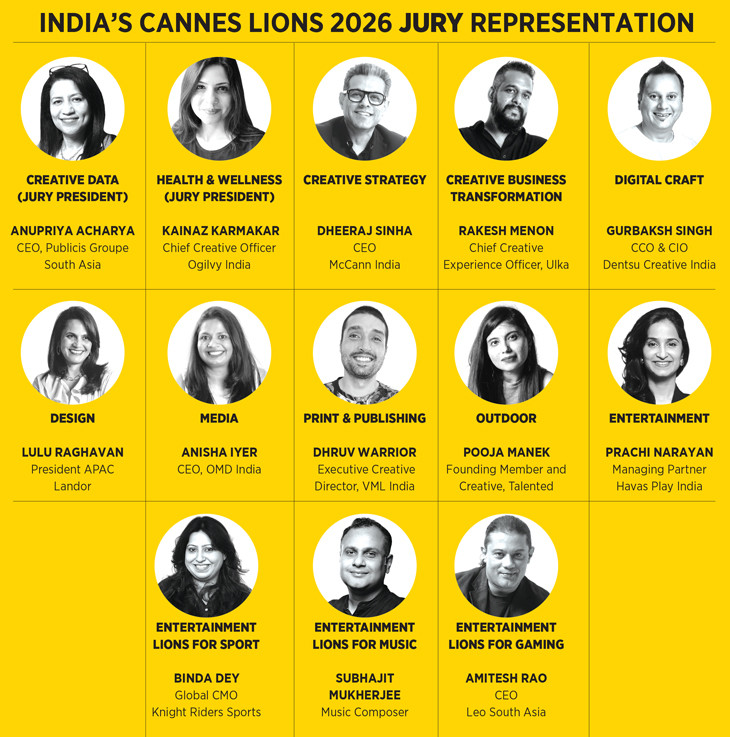
This year, alongside entries from agencies including Dentsu Creative, VML India, Leo India, Havas Creative India, Enormous, tgthr, Tribes and 22feet, India will also be represented in jury rooms across Creative Strategy, Creative Data, Media, Outdoor, Gaming, Creative Business Transformation, Digital Craft, Print & Publishing, Design, Sports, Music and Health & Wellness.
The 2026 edition marks the 73rd year of Cannes Lions and arrives at a time when the festival itself is evolving. This year’s programme places a strong emphasis on creativity’s relationship with technology, business impact and culture, with six content streams spanning Innovation Unwrapped, Creative Impact, Talent & Culture and a new Cannes Lions Deconstructed series that promises behind-the-scenes access to jury deliberations and winning work. The speaker line-up includes global names such as Oprah Winfrey, who will receive the Cannes LionHeart Award, alongside leaders including Marc Pritchard, Chief Brand Officer, Procter & Gamble, Demis Hassabis of Google Deep Mind, Stella McCartney and executives from Patagonia, Meta, Mastercard and Sephora.
The festival will also honour Susan Credle, former Chair and Global Chief Creative Officer of FCB, with the prestigious Lion of St Mark award—Cannes Lions’ highest lifetime achievement recognition. Credle’s connection with India runs particularly deep through FCB, one of the networks that has consistently delivered major wins for the country over the past decade.
But Cannes has always been about more than the number of entries or metals won. Every year, it offers a snapshot of where the industry is headed and what standards creative work is being measured against. The festival’s own evolution reflects those shifts. For 2026, Cannes Lions has introduced the Creative Brand Lion, recognising organisations that embed creativity into the fabric of their business rather than a single campaign. It has also expanded recognition for AI-led craft, retail media and data-driven creativity, underscoring the growing importance of technology, innovation and effectiveness in modern marketing.
The conversations with India’s jury members and speakers this year suggest that while categories continue to evolve, the expectations from winning work remain remarkably consistent.
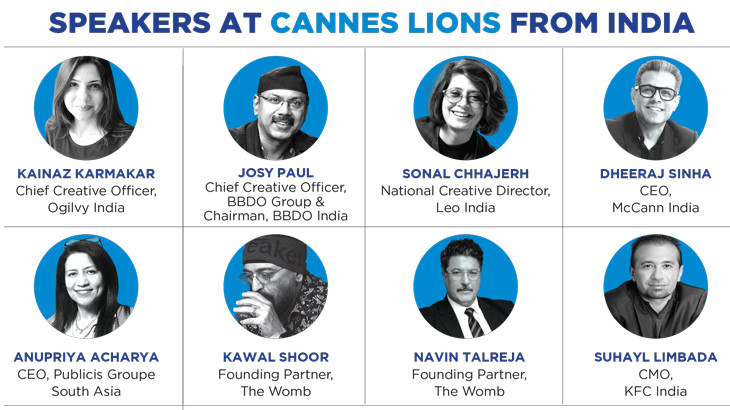
For Dheeraj Sinha, CEO, McCann India, Jury Member of Creative Strategy Lions, and a Cannes Lions Speaker this year, the strongest entries will be those that successfully combine creativity with effectiveness. “The ideas that shine are those that are spectacularly creative and needle-moving for the brand. I am looking for what I call twin-peak ideas—work that hits peak creativity and peak impact at the same time.”
That expectation extends across categories. Whether in media, gaming, or health and wellness, there is a growing consensus that ideas must demonstrate not only originality but also tangible outcomes.
Anisha Iyer, CEO of OMD India and Jury Member of the Media Lions Category, believes the role of media itself is being judged differently. “Great execution in media is where media is at the centre, and media just doesn’t act as a distribution channel of a powerful creative idea.”
Similarly, Amitesh Rao, CEO, South Asia, Leo and the Jury Member of Entertainment Lions for Gaming, points to a shift in how brands engage with gaming communities. “Some brands are recognising this shift and going deep into the gaming ecosystem. They’re working closely with gaming communities, integrating into games in meaningful ways, and using gaming platforms to drive not just commercial success, but also social change.”
Alongside effectiveness, craft emerges as another recurring theme.
Gurbaksh Singh, Chief Creative Officer and Chief Innovation Officer, Dentsu Creative and Jury Member of Digital Craft Lions Category, believes the best work often hides the complexity behind it. “Exceptional digital craft is when technology becomes invisible, and emotion becomes unforgettable.”
In Outdoor, Pooja Manek, Founding Member and Creative, Talented and Jury Member of Outdoor Lions, has spent weeks reviewing entries from around the world. Her takeaway is that the strongest work succeeds because of its simplicity as much as its execution. “For me, any standout piece of outdoor really has two parts to it. One is clarity of thought. Another is a radically well-done execution. It’s not either-or, it has to be both.”
If there is one area where Indian jurors believe the country has a natural advantage, it is culture. As brands around the world search for authentic stories and fresh perspectives, India’s diversity continues to offer fertile ground for ideas that can travel beyond the market in which they were created.
“If you look at the last decade, work coming out of India has genuinely shone on the global stage. Today, people are actively looking for authenticity and interesting insights, and they are finding it in cultures like ours,” says Sinha. Kainaz Karmakar, Chief Creative Officer, Ogilvy India, who serves as Jury President of the Health & Wellness Lions Category and is also a Cannes Lions Speaker this year, believes jurors must make an effort to understand the realities from which ideas emerge.“We need to definitely be in touch with cultures of various places. We need to check the relevance of the problem connected to that place and take the trouble to read the form and go deep and do research and figure out how relevant that problem is to those people.”
The observation is particularly relevant for markets like India, where many of the strongest ideas emerge from local realities that may not be immediately familiar to jurors from other parts of the world. Yet several jury members also believe India has room to improve. Better category selection, stronger entry packaging and a willingness to put in more work are all areas that come up repeatedly in conversation. “Unless you put it out there, you’ll never get feedback. And some brave hearts do. More often than not, the ones who do end up winning,” says Iyer.
Dhruv Warrior, Executive Creative Director, VML India and Jury Member, Print & Publishing Lions, believes that success at Cannes depends not just on the quality of the work, but also on how effectively it is presented to juries. “The thing of winning and leaving points at Cannes doesn’t begin and end at just that piece of work. The same thing applies to the way you craft the entry.”
The conversation around artificial intelligence is, unsurprisingly, impossible to avoid this year. But rather than focusing on the technology itself, many of India’s representatives are paying closer attention to what distinguishes one idea from another in an environment where tools are becoming increasingly accessible.
Josy Paul, Chief Creative Officer, BBDO Group & Chairman, BBDO India, who is also a Cannes Lions Speaker this year, shares, “Algorithms optimise for what has already worked; creativity imagines what has never existed—or reveals what was always there but remained unseen.”
It is this distinction between replication and revelation that is increasingly defining how creative courage is understood in the AI era.
After reviewing several entries, Manek believes the strongest work often carries what she calls ‘proof of human’ which has the evidence of taste, judgment and originality.
The same sentiment is reflected in the views of Kawal Shoor, Founding Partner, The Womb and Cannes Lions Speaker. He mentions, “AI, tech and new commerce are equalisers. They’re false waves that large agencies are trying to surf. They rise and fall equally for all. It is now up to the free-willed, the independents, to do what may seem counter-intuitive but will save what may in fact be the only things our industry has: insight, idea, and the power they have to make people feel.”
Shoor’s comments touch on a question that is likely to feature prominently across Cannes this year. As technology becomes more accessible and creative tools become increasingly democratised, the focus is shifting from the tools themselves to how they are used. Across conversations with India’s jurors and speakers, the emphasis repeatedly returns to ideas, cultural relevance, craft and impact. The platforms may evolve, and the technologies may change, but the expectation of original thinking remains constant.
The campaigns featured on the following pages offer a glimpse into how agencies across India are responding to that challenge. From Dentsu Creative, VML India, Leo India, Havas Creative India, Enormous, tgthr, Tribes and 22feet, the entries span categories and disciplines, reflecting both the breadth of Indian creativity and the industry’s ambition to compete on a global stage. Whether they ultimately convert into Lions will be decided in jury rooms over the coming weeks, but together they provide a snapshot of the ideas India is taking to Cannes in 2026.
CANNES CONTENDERS 2026
The stage is set once again as India’s creative forces gear up for the Cannes Lions International Festival of Creativity 2026. The work heading to Cannes this year signals a growing appetite for ideas that are culturally attuned, strategically sharp and designed to leave a lasting impression. Across categories, brands are moving beyond conventional communication to engage with people in more relevant and meaningful ways. As the industry gathers on the global stage, these campaigns reflect the breadth of creative thinking emerging from India and the ambitions driving it forward.
dentsu
D.A.V. Public School: Bullying Decoder
To tackle the largely invisible issue of verbal bullying, D.A.V. Public School, in partnership with Classteacher Learning Systems and Dentsu Lab, introduced Bullying Decoder—an AI-powered solution that listens to classroom conversations through the audio layer of existing CCTV systems. The tool analyses tone, emotional intensity, and repeated language patterns to identify instances of verbal bullying in real time. These findings are anonymised and shared with school authorities via a secure dashboard, enabling timely, empathy-led counselling interventions. By converting everyday school surveillance into a system that actively detects and decodes harmful speech, the campaign brings measurable attention to a problem often dismissed as ‘just words.’
“ Verbal bullying often slips through the cracks because it leaves no visible scars. With Bullying Decoder, we set out to name and give form to what’s dismissed as ‘just words’, so educators can recognise it and respond with care. Taking this to Cannes is about scale, bringing an overlooked issue to the forefront and making it harder to ignore and impossible to excuse.”
Amit Wadhwa, CEO, Dentsu Creative & Media Brands, South Asia, dentsu
Havas Creative India
Pepsi: Any Time Is Pepsi Time
When Coca-Cola, the official ICC Champions Trophy sponsor, launched its ‘Half Time’ campaign asking fans to wait till halftime to enjoy a Coke, Pepsi saw an opportunity. The insight was simple: cricket fans don’t wait, and culture today unfolds in real time. Pepsi flipped Coke’s idea from ‘Half Time’ to ‘Any Time,’ turning its rival’s communication into the campaign brief itself. Every moment—first time, thirst time, daytime, we time, me time—became a Pepsi moment. Despite having no sponsorship rights, a smaller budget, and only four days to react, Pepsi used print, digital, OOH, collaborations and memes to dominate the cultural conversation, driving 9x sales and significantly outpacing Coke on growth.
“ With the Pepsi challenger mindset at the core, we decided to seize the day for the campaign. Back in the 1950s, Pepsi had said, ‘Any weather is Pepsi weather.’ Carrying that spirit forward, we conceptualised ‘Any time is Pepsi time.’ Because Pepsi is for every moment that matters.”
Anupama Ramaswamy, Managing Director & Chief Creative Officer, Havas Creative India
HAVAS CREATIVE INDIA
The Times of India: Ink of Democracy
In the previous Indian General Elections, around 33% of eligible voters did not turn up due to laziness, lack of awareness, and political alienation. This led to 7,500 litres of unused electoral ink—a purple-coloured ink normally used to mark fingers after voting to prevent duplicate votes.
Just before the 2024 elections, for the first time in history, pages of The Times of India and The Economic Times were printed in purple ink instead of the traditional black. For every 132 absent voters, one page was printed, totalling 2.28 million prints and carrying one appeal: “Don’t waste a drop of electoral ink. Don’t waste the power of democracy.”
The ink, once used as a mark of democracy, became a reminder to defend it. In response to the campaign, India broke free from political apathy, and despite an intense heatwave, the country witnessed a world record 642 million voters turn up to cast their vote.
“ The magic of the ‘Ink for Democracy’ campaign lies in its simplicity. It didn’t rely on grand visuals or complicated storytelling—just a powerful medium used in an unexpected way, sparking a meaningful change. In this case, we made India’s most read English daily remind the citizens about their duty and help shape the future of India, the world’s largest democracy.”
Anupama Ramaswamy, Managing Director & Chief Creative Officer, Havas Creative India
tgthr
Nilkamal Homes: Safe Space Studios
India has millions of creators producing content every day, but not all have access to safe, well-designed spaces to shoot. Many emerging creators end up filming in whatever locations are available to them, which are often unsafe or not aesthetically suitable. Recognising this gap, Nilkamal Homes identified an opportunity to support creators by leveraging its existing retail infrastructure—the beautiful, well-designed room setups in its stores—thereby enabling creators with access to safe and visually appealing environments for content creation.
“ We’re proud to have brought to life an idea that has been incubating for many years. Creators today do so much for brands and culture, yet access to the right environment to create is still limited for many of them. Safe Space Studios by Nilkamal Homes started with a simple thought: what if a brand could give something meaningful back? By collaborating with Nilkamal Homes, we’ve turned a retail space into a creative enabler where creators can focus purely on bringing their ideas to life. For a community like creators, who work with agencies and brands, it’s an idea that’s close to our hearts.”
Aalap Desai, CCO and Co-Founder, tgthr
Enormous Britannia: The Pride Pact
In India’s highly commoditised biscuit market, Britannia Good Day sought to redefine its promise of ‘happiness’ in a more meaningful way as Pride visibility grew post Section 377. Instead of creating another rainbow-themed campaign, the brand launched The Pride Pact, inviting rival Parle Monaco to appear on its own wrapper and breaking a long-standing category norm. By turning its pack into a symbol of coexistence and allyship, Britannia moved beyond performative support and made inclusion part of everyday life. The campaign sparked widespread conversation while reinforcing the belief that happiness only exists when it is shared.
Battlegrounds Mobile India (BGMI) | Krafton Inc: Everyone Loves A Good Fight
Facing declining engagement, regulatory scrutiny, and growing stigma around violent gaming, Battlegrounds Mobile India sought to reconnect with India’s ‘Play Generation’. The campaign reframed BGMI’s core theme of conflict, shifting it from aggression to playful rivalry through a culturally familiar metaphor: the classroom chalk fight. The film turned everyday school banter into an exaggerated, cinematic battle filled with alliances, ambushes and chaos, evoking nostalgia rather than violence. Supported by in-game integrations, pop-up activations and influencer amplification, the campaign used humour and shared childhood memories to soften BGMI’s image and make gaming feel more socially acceptable.
Lahori Zeera: Har Koi Peera Lahori Zeera 2.0
In India’s ₹567 billion soft drinks market, global cola brands have long dominated refreshment culture, while traditional beverages like jeera soda were often seen as functional rather than fashionable. Lahori Zeera, despite strong regional loyalty, remained a niche favourite with limited national visibility. As younger consumers embraced local identity and authenticity, the brand launched its first ATL campaign, ‘Har Koi Peera, Lahori Zeera,’ built on the simple truth that everyone enjoys the drink. By celebrating cultural confidence instead of competing with cola giants on celebrity power, the campaign transformed Lahori Zeera from a niche regional beverage into a mainstream cultural favourite.
“ Each of these campaigns comes from a very different place, but they represent the kind of work we are most proud of at Enormous: work that has a clear job to do and still finds a way to be brave. With Lahori Zeera, the goal was to make a deeply desi drink feel mainstream and culturally magnetic. With Britannia Good Day, it was about turning allyship into action rather than symbolism. And with Everybody Loves a Good Fight, we used a nostalgic classroom chalk-fight to reframe perceptions of gaming as playful and socially relatable. I’m proud of these campaigns because they challenge the brand, the category and culture in their own ways.”
Ashish Khazanchi, Managing Partner & Chief Creative Officer, Enormous
VML India
Nestlé: The Slooowest Vending Machine in the World
In today’s hustle culture, young consumers are constantly juggling work, social lives and endless digital stimulation, leaving little room to truly switch off. KitKat saw an opportunity to reframe breaks as meaningful mental resets through the idea of microbreaks. Spotting the contradiction that vending machines are designed for speed while people increasingly need moments to slow down, the brand created ‘The Slooowest Vending Machine in the World.’ The dispenser took three minutes to deliver a KitKat, turning the wait into an entertaining visual journey of how India takes breaks and encouraging people to embrace the joy of slowing down.
The Coca-Cola Company: Coke Holi
Holi, one of India’s most iconic festivals, is celebrated through colours that symbolise joy, equality and togetherness. On a festival defined by colour, Coca-Cola removed its own, transforming its iconic red bottle into a white canvas for people to colour during Holi. As revellers played with coloured powders and water, their instinctive gestures naturally left unique imprints on the bottle, turning each one into a personal, one-of-a-kind creation. Distributed at large-scale Holi celebrations in Mumbai and through influencers, the campaign embedded itself within real festivities and relied entirely on natural human behaviour rather than instructions.
“ Everything today is about speed, about multitasking and checking things off a list. But what happened to taking a moment for yourself, to have a break? We created the KitkatVending Machine to allow people a guilt-free moment of wonder in a world that needs it more than ever.”
Bas Korsten, Global Chief Creative Officer, Innovation & EMEA CCO, VML
“ While the average vending machine pops out a snack in three seconds, ours takes a luxurious ride in no hurry at all. For the entire duration of the KitKat’s journey, people are invited to do what they hardly ever do anymore: have a break. To watch. To smile. To simply be.”
Kalpesh Patankar, Group Chief Creative Officer, VML India
“ Going beyond conventional festive advertising, Coke Holi created a culturally relevant experience people could participate in. In India, Holi represents the diversity of celebrations, local identity, and the shared traditions of joy, togetherness, renewal and revival. Coke Holi built on this idea by making Holi a kaleidoscope of cultural expressions. Each one, inimitable. Individualistic. Incomparable.”
Kalpesh Patankar, Group Chief Creative Officer, VML India
Leo India
Sting F1: The Unofficial Official Sound of F1
Leo India was tasked with launching Sting’s landmark partnership with Formula One, one of the biggest moves for PepsiCo’s fast-growing energy drink brand. Instead of relying on traditional sponsorship messaging, the campaign transformed Formula One’s iconic engine roar into a cultural talking point. Global DJ Armin van Buuren claimed he could hear the word “Stinggg” hidden within the sound of an F1 engine, sparking replays, remixes and debate across social media. The conversation grew with participation from Jenson Button, Kush Maini and fans at the Monaco Grand Prix, turning a sonic observation into a global cultural phenomenon and proving that a brand can be heard before it is seen.
Budweiser China: This Ronaldo is that Ronaldo
For Budweiser China, the challenge was to make football legend Ronaldo Nazário relevant again as ambassador for the FIFA Club World Cup 2025. While Ronaldo remains one of football’s greatest icons, much of China remembered him through his iconic 2002 World Cup haircut. Instead of fighting that perception, the campaign embraced it, launching a custom filter that let fans add the famous ‘R9’ look to their profile pictures. What began as playful nostalgia became a cultural phenomenon, with millions participating and the trend topping Weibo for a full day. The campaign drove major engagement, earned recognition at the Great China Effies, and helped secure a continued partnership through the 2026 FIFA World Cup.
Mountain Dew: Darescore
Despite being home to 8 of the world’s 14 highest peaks, Nepal’s mountain tourism remains heavily concentrated around Mount Everest, driven by the misconception that the tallest mountain is the toughest. As Nepal’s leading adventure drink, Mountain Dew set out to challenge this belief by creating the world’s first mountain grading system based on 50+ variables, including weather patterns, terrain complexity, climbing routes and Sherpa availability. The resulting ‘Fear Score’ revealed the true difficulty of lesser-known peaks, helping redistribute climber interest and support local economies. In partnership with the Nepal Tourism Board and Discovery Channel, Mountain Dew also turned its bottles into adventure guides, offering climbers an immersive planning experience via QR scan.
Tribes
Kansai Nerolac: The Coolest Seva
In a category dominated by large media spends and high-visibility advertising, Kansai Nerolac chose to create utility instead. Millions of devotees walking barefoot on pilgrimage routes endure scorching ground temperatures that can exceed 60°C during peak summer. Rather than advertise along these routes, the brand applied its heat-reflective Perma No Heat coating to temple pathways, reducing surface temperatures by up to 15°C. The result was an Outdoor campaign that people could physically experience. By turning product performance into public service, Nerolac became part of the pilgrimage journey itself, demonstrating how media can create value rather than simply occupy space.
HDFC Mutual Fund: Mutually Funded
Mutual funds are built on the promise of long-term growth, but regulations limit how directly brands can communicate future returns. HDFC Mutual Fund responded by making growth visible in an entirely different way. Through Mutually Funded, every SIP contributed towards restoring water-holding capacity in a dying lake, linking personal investment with environmental regeneration. Each contribution helped replenish 5,000 litres of water capacity, creating a real-world demonstration of compounding that communities could witness over time. Rather than simply talk about investing, the brand transformed the act itself into a force for collective impact, connecting wealth creation with ecological restoration through a single action.
NIVEA: Carbon Economy for Advertising
As brands deepen their sustainability commitments, advertising is still largely measured by cost and reach. NIVEA India aimed to change that with Carbon Economy for Advertising, powered by Ecometer, a platform built on over a billion data points. The system assigns campaigns carbon budgets alongside financial budgets, enabling planners to measure and optimise environmental impact before launch. The initiative reduced media-related emissions by 24.57%, saving 141.88 tCO₂e across OOH, DOOH, TV, print, digital and events. Channel-level reductions included DOOH (-65.22%), OOH (-44.29%), Print (-8.75%), Events (-6.65%), TV (-4.01%) and Digital (-1.18%). By making carbon a planning metric rather than a reporting metric, NIVEA sought to embed sustainability into media decision-making.
“ The most exciting thing about creativity today is that it is no longer confined to communication. The ideas that endure are the ones that solve a problem, change behaviour, or create value beyond the campaign itself. The work we are taking to Cannes this year reflects that belief. Whether it is cooling temple pathways for millions of devotees, bringing carbon accountability into media planning, or connecting financial participation with cultural moments and environmental action, each idea started with a real human challenge. As an industry, we need to move beyond visibility and focus on value creation. That is where the future of our business lies.”
Gour Gupta, Chairman, Tribes
22feet
Battlegrounds Mobile India (BGMI) | Krafton Inc: The Great In-Game Wedding
In India, gaming often faces social resistance from parents and authority figures who believe it delays adulthood and disconnects young people from society. Adulthood is closely associated with milestones such as career stability and marriage, while gaming is often seen as escapism or a distraction. BGMI identified that the strongest resistance came not from gamers, but from the non-gamer community around them. The breakthrough insight came from discovering gamers were building meaningful real-life relationships through the game, including a couple who met inside BGMI. The campaign used India’s cultural love for weddings to invite non-gamers into the world of BGMI.
“ The Great In-Game Wedding campaign, much like any Indian wedding, came with its own challenges. The first was finding the right couple and their families, and after speaking to several gamers, we found Jaspreet and Tanupreet. Conducting an in-game wedding also meant building an unmistakably Indian wedding venue within the game’s limitations and managing unexpected moments, like finding a horse for the groom’s baraat. Bringing together collaborators like Ritu Beri and Benny Dayal, while managing the overall execution, required a huge collaborative effort. The support from the gaming community made it all come together beautifully.”
Vishnu Srivatsav, Chief Creative Experience Officer, 22feet
Read more news about Cannes Lions Festival, Advertising, Marketing, Digital Media, PR & Corporate Communication News
For more updates, be socially connected with us onInstagram, LinkedIn, Twitter, Facebook YouTube , WhatsApp & Google News