Why Hephzibah Pathak is the right choice to lead WPP Creative India
Guest Column: Adman Prabhakar Mundkur writes how Hephzibah Pathak represents ‘something that cannot be manufactured through restructuring - cultural continuity’
 by
by
Published: Apr 21, 2026 8:25 AM | 3 min read
 Follow Us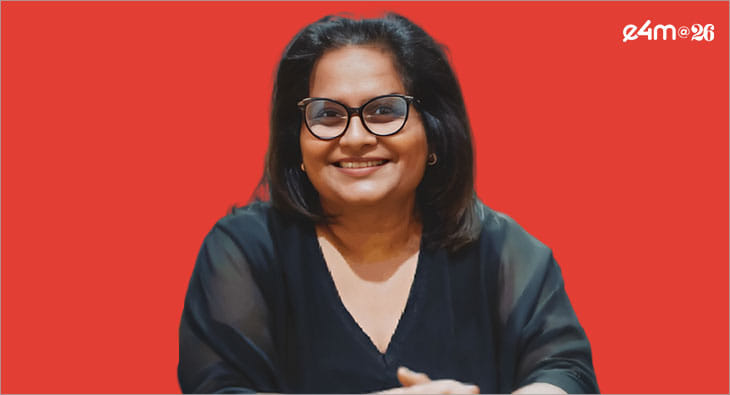

In an industry increasingly obsessed with transformation, integration, and the language of platforms, WPP’s apparent choice of Hephzibah Pathak to lead creative in India sends a powerful and necessary signal: creativity still sits at the heart of the business.
And that matters more than ever.
For the past few years, global networks, including WPP, have been evolving toward what is broadly termed “creative transformation”, a model that blends data, commerce, technology, and storytelling into one seamless offering. It’s a logical shift, driven by client demands and the complexity of modern marketing ecosystems.
Read more on Hephzibah Pathak's appointment.
But in the rush to integrate everything, there has also been a quiet risk: the dilution of creativity as a distinct, defining force.
Pathak’s elevation pushes back against that.
Having grown within Ogilvy, she represents something that cannot be manufactured through restructuring - cultural continuity. She understands not just how to create campaigns, but how to build brands over time. She brings with her a deep respect for craft, for ideas that endure, and for the kind of thinking that goes beyond momentary effectiveness.
In many ways, her appointment is not just about leadership it is about reaffirmation.
It tells clients that WPP is not abandoning the fundamentals that built its reputation. It tells talent that the organisation still values creativity as a discipline, not just as an output layered onto data systems. And perhaps most importantly, it tells the industry that even in a digital-first world, creativity is not subordinate to transformation it is its foundation.
Because the truth is, transformation without creativity is just optimisation.
India, more than many other markets, understands this. It remains deeply relationship-driven, where trust, consistency, and brand memory play a significant role in business outcomes. Pathak’s long-standing client relationships and her credibility within the system are not just soft advantages, they are strategic assets.
Technology, platforms, and AI can scale ideas but they cannot originate them with cultural nuance, emotional intelligence, or brand instinct.That still requires people who understand creativity at its core.
What Pathak represents is a belief that change must be anchored in something enduring. Under her leadership, WPP India has the opportunity to evolve its integrated offerings without losing the very thing that differentiates it.
And that balance is rare.
For an organisation that has built its legacy on creativity, this decision feels both strategic and symbolic. It is a reminder that while the tools of advertising may change, the essence of the business does not.
For the broader industry, this move will be closely watched. At a time when many networks are racing toward convergence models, WPP’s choice suggests that creative leadership is not being diluted it is being defended.
And perhaps redefined.
Because the future of advertising will not be won by those who simply integrate capabilities, but by those who ensure that creativity remains the force that connects them all.
If this is indeed the direction WPP is taking, it is a reassuring one.
Not just for the network, but for the industry at large.
Read more news about Internet Advertising India, Marketing News, PR and Corporate Communication News, Digital Media News, Television Media News
For more updates, be socially connected with us onInstagram, LinkedIn, Twitter, Facebook YouTube & Google News