Retelling of our Epics is the need of the hour
Guest Column: Chandana Agarwal, President, 82.5 Communications, writes how recent dowry deaths expose society’s complicity and calls for a renewed commitment to respecting women’s dignity
 by
by
Published: Sep 23, 2025 5:38 PM | 4 min read
 Follow Us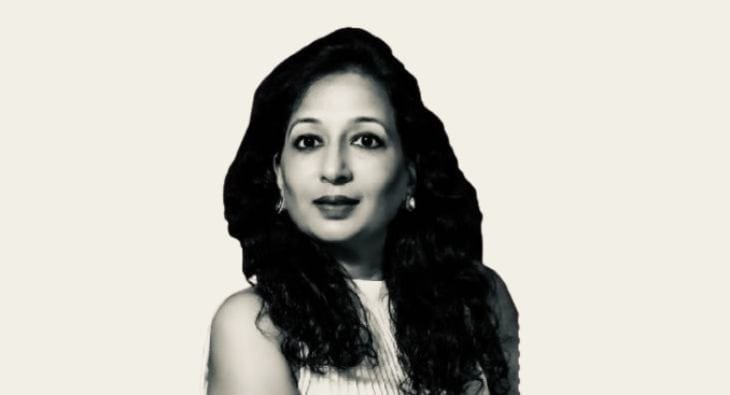

Myths help us interpret our present while anchoring it into the eternal. Myths are characterized by strong characters, that have a well-defined character arch, a storyline that tests the characters for their moral rectitude, bravery, valor to put it briefly for their Dharm and Karm. They serve as a guiding light subconsciously when we are faced with dilemma.
I am bringing this up because the spate of recent dowry deaths got me thinking about the beliefs that guide our actions and behaviors. The social conditioning that we take as an unwritten law. Most dowry deaths that happen are not sudden, there is a pattern, the girl is in an abusive marriage for a long and extended period. Often her suffering is not a secret. The maternal family of the girl, her friends, neighbors and siblings all are aware of her distress. The typical arch is that she tries hiding it, then she makes excuses, then she is ashamed, then she reaches out and asks for help. When she gets only platitudes she sends videos of her scars and the abuse. She expresses inability to deal with it anymore and then losing hope she either commits suicide or there is an accident and she loses her life in a painful way.
We are a society of mourners. We excel at it. When a daughter, silenced by abuse, finally leaves, we demand justice. We watch the news, hungry for retribution. But this collective grief is a lie. It is the final act of hypocrisy in a long, silent betrayal. We were complicit. And our complicity is rooted in a story we tell ourselves, a story we have deliberately misread.
We worship Lord Ram as Maryaada Purshottam, the paragon of virtue who placed his kingly duty above all else. We build temples to his name. But we have committed a great betrayal against the epic he belongs to. We have ignored its most courageous character: Swabhimaan Purshottam Sita.
When her dignity was questioned, Sita did not "adjust." She did not "compromise." She did not "die trying." She made a choice. She chose her self-respect. She walked away from a matrimonial home that no longer gave her due and found refuge with her foster parents (Rishi Valmiki) . And what did her community do? They didn't send her back with lectures on sacrifice. They took her in. They honoured her choice. Nobody said, once you have kids things will be better. She finally chooses to go back to her mother, Earth not as an escape but as an act of defiance. Why are we not taking inspiration from that? For a woman to go back to her Maternal home if she doesnt feel honoured or respected is well depicted in our Epics.
Why do we celebrate Ram's sacrifice but ignore Sita's strength? Why do we conveniently forget that the Ramayana offers a powerful precedent for a woman choosing her own dignity over an unjust life?
We call our daughters 'Paraya Dhan'—another's property. Then, in an act of supreme cognitive dissonance, we perform 'Kanya Daan,' giving her away as a charitable gift to secure our own salvation.
Let's be clear. This is a moral and logical absurdity. I ask today as Draupadi had asked thousands of years ago, can you give away anything that is not yours?
Is your daughter a human being with agency, or is she a commodity for you to transact for spiritual brownie points? You cannot have it both ways.
The epics need to be retold, they need to be re interpreted, we cannot be selective about the lessons we draw from it.
Our modern epics—our cinema—play out this very conflict. For every rare and courageous Queen or Laapata Ladies that dares to show a woman choosing herself, we are fed a hundred stories of complicity. Films like Dil Dhadakne Do masterfully show families actively pushing their daughters back into the fire of a toxic marriage for the sake of "honor" and business—a perfect, chilling reflection of our own societal sickness.
As communication creators it is our privilege to play a role in changing this narrative of what is ideal
So the next time we hear of a tragedy, we must ask ourselves the truly uncomfortable question: Are we building a society that encourages our daughters to be like Sita, or are we grooming them for the fire? When your own daughter is suffering, will you give her the lecture on sacrifice, or will you do as Sita's parents did and simply bring her home?
Read more news about Internet Advertising India, Marketing News, PR and Corporate Communication News, Digital Media News, Television Media News
For more updates, be socially connected with us onInstagram, LinkedIn, Twitter, Facebook YouTube & Google News