Muted overall growth & weak APAC biz behind Omnicom’s IPG acquisition?
Tough advertising market, massive tech disruptions, ongoing wars, coupled with declining profit margins may have driven IPG to seek merger option, say insiders
 by
by
Published: Dec 10, 2024 11:48 AM | 4 min read
 Follow Us

The decades-old rumour of American agency networks Omnicom Group and Interpublic Group (IPG) are destined to combine turned true on Monday, when the duo announced a merger in an all-stock deal valued at over $13 billion.
If successful, the merger would unite the world’s third and fourth-largest ad buyers, creating a consolidated force in the advertising landscape. The two companies will operate under the Omnicom name and have a combined 2023 revenue of $25.6 billion, much bigger than the currently topmost agency in the world WPP with revenue of $18 Billion.
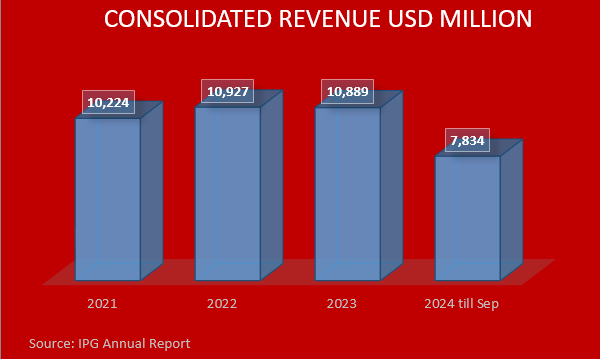
This development comes days ahead of the IPG’s fourth quarter (CY 2024) results and followed by a challenging September quarter and muted growth over the past three years. After reaching a peak of $10.9 billion in 2022, its consolidated total global revenue declined slightly to $10.89 billion in 2023, reveals its annual report.
In the September quarter of 2024, revenue stands at $2.6 billion, signalling potential year-end figures lower than previous years if the current trend persists.
The APAC region has been particularly bad, numbers say. The region, which includes India and Australia, reported a notable 7.4% decline in net revenue, though the global consolidated revenue rose by 1%.
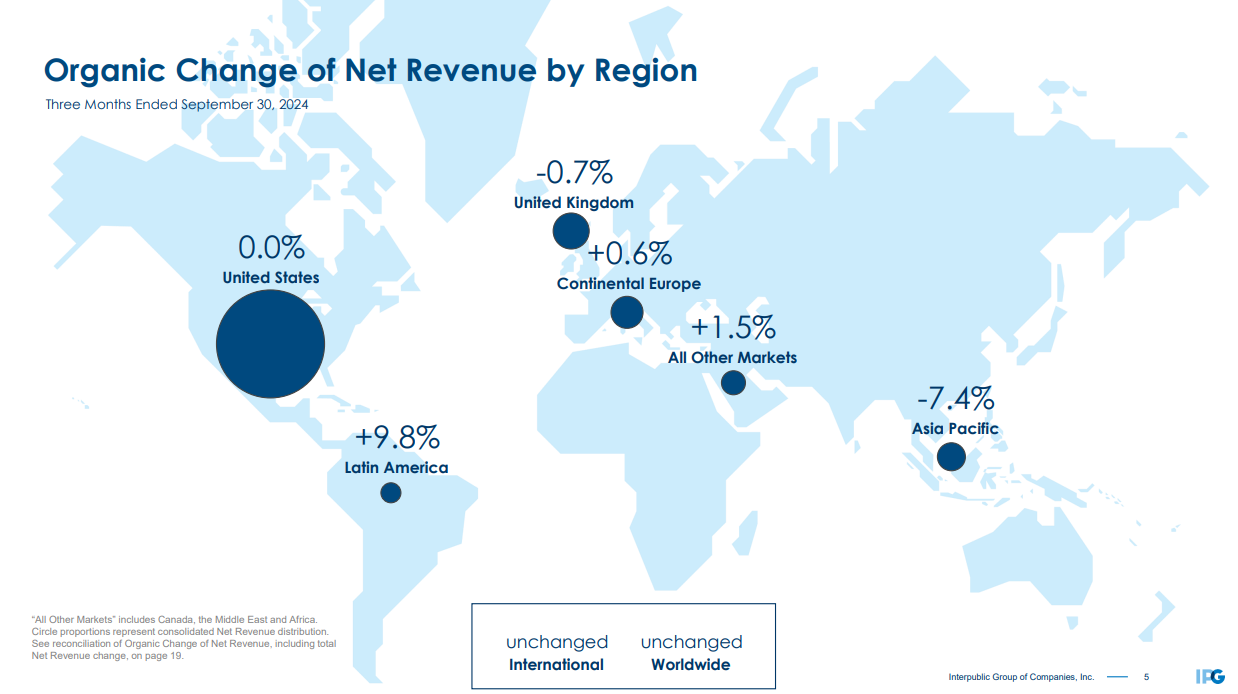
“IPG’s challenges in APAC are stark-single digit degrowth in India and double-digit degrowth in other markets. Its high time agencies de-couple India from the APAC, considering our market size and economic growth,” industry leaders say.
Omnicom’s books have been slightly better and bigger than the IPG. Compared to $14.29 Billion revenue in 2022, the agency reported $14.69 Billion of global revenue in 2023, an increase of 2.8 per cent.
Besides, Omnicom posted a revenue of $3.9 billion, with organic growth of 6.5% in the September quarter of this year. Its APAC business also grew by 10.9% in this quarter.
Strategic Rationale for a Merger
This trajectory highlights the challenges IPG faces in maintaining growth amid market pressures, automation, ongoing global wars in the Russia-Ukraine and Israel-Palestine region (now civil war in Syria) and inflation. To make matters worse, IPG has lost three of its biggest creative accounts in the last 18 months - General Motors, Amazon and Verizon.
“Almost all media and ad agencies are facing similar pressures due to the softening of demands which has prompted FMCG and Auto businesses to hold their marketing expenses,” industry leaders shared.
This was despite the fact that IPG streamlined its adtech capabilities by establishing KINESSO as a single, tech-driven performance unit. It also forged partnerships with AI research firms. “We launched Real ID in the Cloud and a unified retail media network solution, which ensures brands have a holistic view of their performance across retail platforms. In early 2024, we forged a first-to-market partnership with Adobe that combines their leading-edge generative AI tools and platform with our combined data assets to automate,” Chief Executive Officer, Philippe Krakowsky, writes in the annual report 2023.
For Omnicom, the merger presents an opportunity to diversify its portfolio and capitalize on IPG’s strengths in creative and media services. The all-stock nature of the deal could also mitigate financial risks for both parties, allowing them to navigate the current economic uncertainties without heavy cash outlays.
“The combined company will bring together the industry’s deepest bench of marketing talent, and the broadest and most innovative services and products, driven by the most advanced sales and marketing platform. Together, the companies will expand their capacity to create comprehensive full-funnel solutions that deliver better outcomes for the world’s most sophisticated clients,” both the companies said in a statement.
Road Ahead
Notably, IPG global brands include IPG Mediabrands, Acxiom, FCB, FutureBrand, Golin, Initiative, IPG Health, KINESSO, MAGNA, McCann, Mediahub, Momentum, MRM, MullenLowe, Octagon, UM and Weber Shandwick.
IPG Mediabrands India, 12 years old now, boasts of more than 5,000 employees across 14 companies in the country.
It is yet to be seen how the merger will take place accommodating each and every agency in both the holding networks.
While the merger holds promise, it is expected to attract close scrutiny from regulators, particularly in the U.S. and Europe. Antitrust authorities may raise concerns about reduced competition in the advertising industry, potentially leading to higher costs for clients. Both companies will need to present a compelling case for how the merger will benefit clients and foster innovation in the advertising ecosystem.
"The merger comes at a pivotal moment for the advertising industry, which is grappling with rapid technological advancements, shifting consumer behaviors, and economic headwinds. For IPG, the deal could provide a lifeline to navigate its current challenges and regain momentum. For Omnicom, it offers an opportunity to solidify its position as a global leader," industry experts say.
The IPG and Omnicom group's responses were awaited. The copy will be updated as and when they respond.
Read more news about Internet Advertising India, Marketing News, PR and Corporate Communication News, Digital Media News, Television Media News
For more updates, be socially connected with us onInstagram, LinkedIn, Twitter, Facebook YouTube & Google News