Hall of Ads: Happydent Palace - The ad that switched India on
From today, we start a new series - Hall of Ads - where we celebrate advertising gems that went on to become an unforgettable cultural moment, sometimes for brilliance, sometimes for blunders
 by
by
Published: Sep 5, 2025 12:33 PM | 4 min read
 Follow Us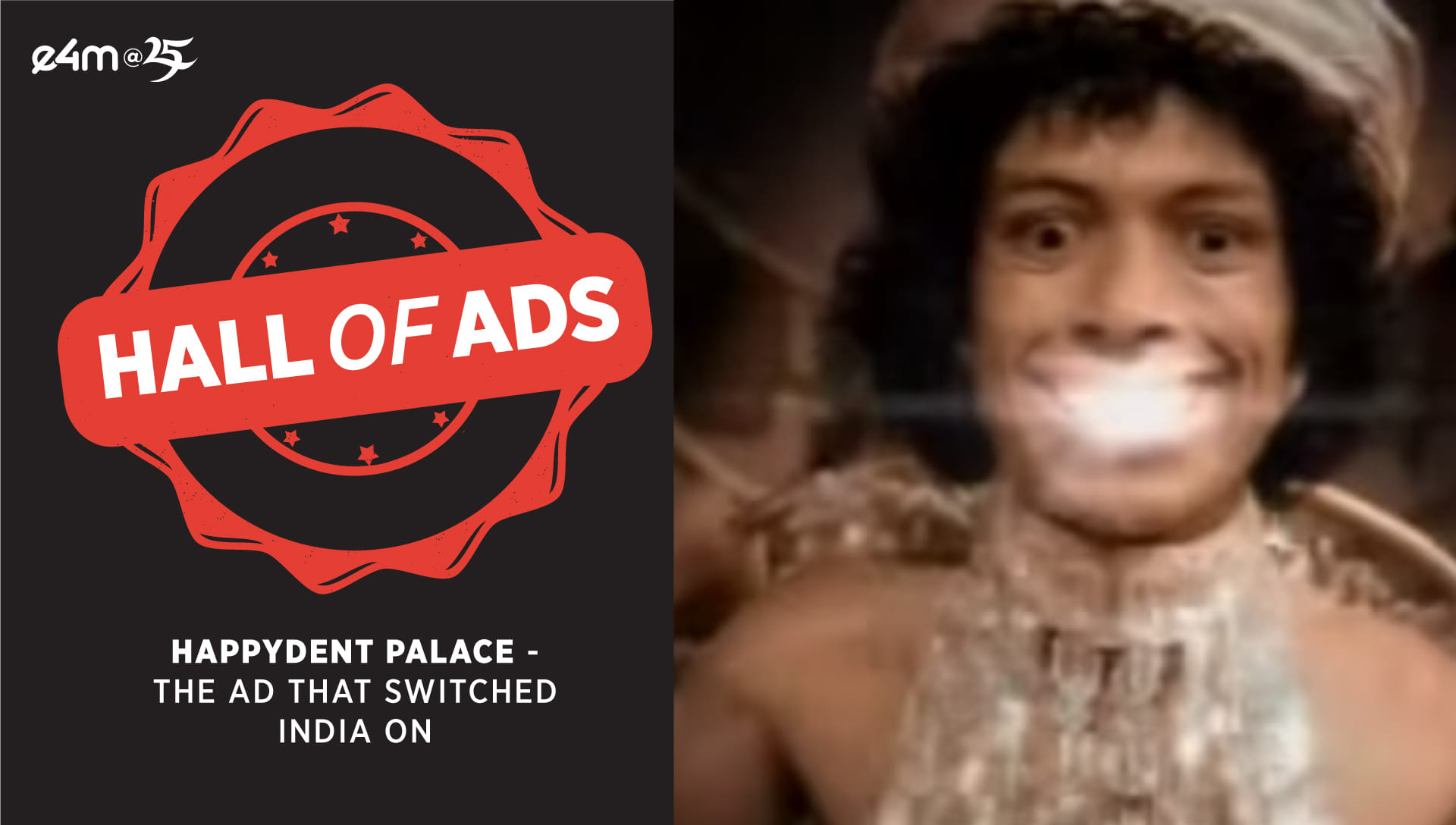

Advertising has given us lines we can’t forget, jingles that refuse to leave our heads, and visuals that become part of how we talk about life itself. Hall of Ads is where we celebrate those gems. Each week, we’ll pull out one ad that went beyond selling a product to become an unforgettable cultural moment, sometimes for brilliance, sometimes for blunders.
Think of it as a museum of India’s most iconic campaigns, only with a little less glass casing and a lot more fun. And to open our doors to this Hall, we begin with an ad that didn’t just shine on screen it lit up an entire kingdom and set a new benchmark for Indian creativity: Happydent 'Palace'.
Back in 2006, Perfetti Van Melle India and McCann Erickson (now McCann Worldgroup India) launched a Happydent commercial that didn’t just sell chewing gum, it staged a full-blown epic. Directed by Ram Madhvani of Equinox Films, the ad imagined a kingdom where glowing white teeth powered an entire palace. Chandeliers? Made of people grinning from the rafters. Streetlamps? Men hanging from poles, beaming away. The royal spotlight? A servant pedalling furiously so he could take his place as the final “bulb” at the king’s banquet.
It sounds mad on paper. On screen, it was majestic.
The genius of Happydent Palace was that it never winked at the audience. The idea may have been surreal, but the execution was cinematic, almost reverent. The palace felt lived-in, the choreography of human chandeliers felt organic, and the whole story unfolded like folklore.
Add to that the soaring soundtrack, composed by Shantanu Moitra, written by Prasoon Joshi, and sung with earthy gusto by Kailash Kher, and you had a film that wasn’t just an ad, it was a cultural performance. At nearly 90 seconds, it broke every rule of “short and snappy,” but every beat earned its place.
At the heart of it was a single sharp product truth: Happydent makes your teeth so bright, they can light up a room. Prasoon Joshi (then National Creative Director at McCann, now CEO & CCO, McCann Worldgroup India) stretched that truth until it became a metaphor for an entire kingdom. Madhvani’s direction grounded the fantasy, while Anil Mehta’s lens gave it a glow that felt real, not cartoonish.
The world noticed. Happydent Palace bagged two Film Lions (Silver and Bronze) at Cannes 2007, a rare feat for an Indian TVC at the time. Almost a decade later, it was voted into the Top 20 best ads of the century by Gunn Report, a testament to just how deeply it stuck.
Closer home, it became part of Indian pop culture shorthand. “That Happydent ad” still gets referenced whenever anyone talks about the peak of Indian creativity. It wasn’t just an award-winner; it was a memory-maker.
What made the ad remarkable?
It stretched the metaphor: Happydent didn’t stop at “your teeth shine like bulbs.” The creative team imagined what an entire world would look like if that were literally true. Chandeliers, streetlamps, spotlights, all built on one exaggerated product promise. That leap is why the film feels bigger than a gag; it’s storytelling at scale.
Backed the craft: A wild idea can collapse if it looks cheap or fake. Happydent Palace invested in real locations, intricate choreography, and pitch-perfect cinematography to sell its impossible world. By grounding fantasy in meticulous detail, the ad made viewers suspend disbelief, and ensured the joke became a jaw-dropping spectacle instead of slapstick.
Let it breathe: Most commercials in that era cut corners for time, but this one expanded to nearly 90 seconds. That decision gave every scene room to build and every payoff time to land. Instead of rushing, the narrative escalated beat by beat, proving long-form advertising works when it’s crafted with rhythm, tension, and delight.
Nearly twenty years later, Happydent Palace hasn’t dimmed. It still shows up on “greatest ads” lists, in classrooms, in pitches, and in conversations between creatives who wish they had made it. It proved that Indian advertising could be world-class, wildly imaginative, and deeply local all at once.
Read more news about Internet Advertising India, Marketing News, PR and Corporate Communication News, Digital Media News, Television Media News
For more updates, be socially connected with us onInstagram, LinkedIn, Twitter, Facebook YouTube & Google News
