Do regional ads deliver better returns than pan-India campaigns?
Regional creatives can bring 25–30% higher conversion rates across categories, cut through clutter, build trust and drive repeat purchases, share experts
 by
by
Published: Sep 23, 2025 9:36 AM | 6 min read
 Follow Us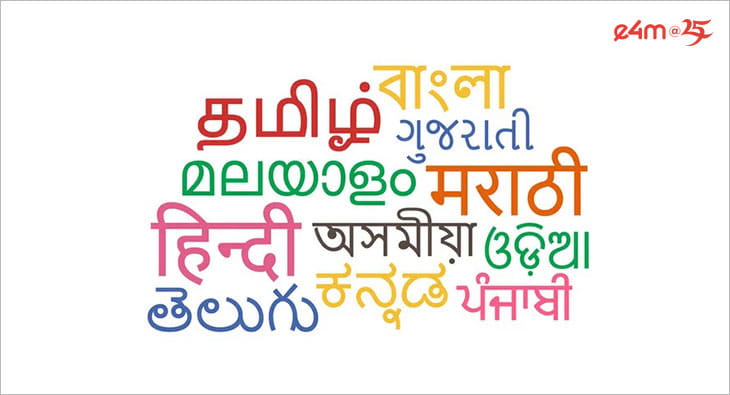

From Makar Sankranti to Holi, Onam, Diwali, and Christmas, brands leave no stone unturned in tapping into festive moments to woo consumers with creative campaigns and hyper-local storytelling. And with India’s digital and consumer markets maturing rapidly, localisation has become central to national brand strategies. One factor that makes linguistic diversity so critical in advertising is that India has over 600 dialects and 22 official languages.
Across sectors, brands are increasingly tailoring their messaging to regional audiences, leaning on vernacular languages and cultural cues to build trust and resonance. Many may point out that the growth of regional content is just a passing trend, but the fundamental shift lies in digital consumption. Today, over 57% of India’s internet users consume content in their native language, and more than 86% of Google searches happen in regional languages, according to reports.
Research also shows that nearly 70% of users prefer digital content in their local languages, with vernacular campaigns delivering 2X higher engagement rates compared to English- or Hindi-only communication. This has somewhat proven that campaigns rooted in cultural idioms, local festivals, and regional narratives deliver stronger recall, higher ROAs, and deeper consumer trust compared to one-size-fits-all pan-India messaging. Be it ITC’s Telugu-first Aashirvaad Masalas campaign or Tanishq’s festive ads in multiple South Indian languages, regional storytelling has clearly moved from a tactical add-on to a core growth lever for brands.
According to John Alukkas, Managing Director of Jos Alukkas, one of the leading South Indian jewellery retail chains, “We have always believed that speaking the local language is the strongest way to connect with our patrons. In Karnataka, and in every market we operate, our communication reflects the culture and sentiments of the community. This has resulted in deeper trust, lasting brand loyalty, and higher footfalls, as customers feel we are truly speaking their language. It affirms that playing the long game, by building local cultural nuance from day one, is a key growth driver.”
But do regional ads work better at the awareness stage or the conversion stage of the funnel? And how exactly are local language campaigns contributing to higher returns in key markets like Karnataka? Let’s dive in to find out.
Read e4m report on Regional Influencers driving purchases
Regional ads: Awareness or conversions?
The big question marketers often grapple with is whether regional ads are more effective at driving awareness or conversions. The truth, as multiple industry leaders point out, is that they work at both levels — but in different ways.
Regional language advertising is proving to be a powerful tool for driving both brand awareness and conversions for local as well as national brands. Adding to this, Pawandip Singh, CMO of Rapido, explained that when a brand communicates in the local language, ads tend to build trust quickly, stand out, and drive repeat purchases. He noted that beyond the initial action, such ads help create a deeper emotional connection and stronger brand recall, making it easier for customers to choose the brand repeatedly. According to him, the vernacular approach is also delivering higher ROAs for Rapido due to better targeting and engagement.
According to Shahir Muneer, Founder and Director of a digital media & music company in South India, Divo, there is a clear shift in how consumers in Karnataka and other regions respond to ads in local languages compared to English or Hindi. Ads in Kannada consistently deliver higher engagement, longer watch times, and better CTRs, as consumers find them more personal, relatable, and trustworthy.
“At the awareness stage, regional ads cut through clutter quickly — particularly on platforms like YouTube, Meta, and Connected TV. At the conversion stage, they help build trust and reduce hesitation. Muneer noted that regional creatives have driven 25–30% higher conversion rates across categories such as FMCG and beauty/personal care,” he told e4m.
Notably, while many brands today still lean on festive storytelling or awareness-led campaigns, others have gone further by making regional markets, especially in the South, a core part of their long-term strategy. For instance, categories like FMCG, jewellery, and personal care have consistently tapped vernacular storytelling to strengthen local resonance.
Jewellery brand Jos Alukkas, has seen regional advertising deliver results well beyond festive spikes. John, MD of Jos Alukkas, noted that local-language campaigns have excelled at the awareness stage by signaling that the brand is part of the community’s culture. According to him, communicating in the local language has been a long-term growth strategy, helping build lasting loyalty, stronger recall, and deeper customer relationships across markets.
The rise of hyper-local storytelling
According to Anshita Kulshrestha, Founder of TukTuki Entertainments — an Indian mobile entertainment platform delivering short-form, vertical-only micro-drama series — ads in native languages create a sense of familiarity and trust, two critical drivers of consumer action. Whether it’s downloading an app, subscribing to a service, or engaging with branded content, local-language messaging significantly improves conversion metrics.
Regional campaigns today have moved far beyond simple translations of Hindi or English ads. Brands are increasingly creating region-first campaigns that weave in local humor, cultural idioms, and hyper-local references to truly connect with audiences. Over the years, companies such as ITC, Unilever, Dabur, Marico, Zomato, and Tanishq have been at the forefront of this shift, building stronger recall through Kannada- or Tamil-first storytelling rather than relying on pan-India adaptations.
Divo’s Muneer agreed, pointing out that the strongest-performing campaigns often use local talent, regional slang, and state-specific festivals as the backbone of their storytelling.
This clearly shows the evolution in how national brands approach regional markets. It’s no longer enough to simply translate a Hindi campaign into Kannada or Marathi — today’s audiences expect cultural relevance, not just linguistic accuracy.
However, experts caution that the biggest challenge lies in balancing scale with cultural specificity. India is not only multilingual but also deeply diverse in traditions, humor, and storytelling preferences. A campaign that resonates in Maharashtra might feel completely off-tone in Tamil Nadu if not adapted thoughtfully. To address this, for instance, TukTuki builds state-specific creator networks, while Divo relies on on-ground regional teams to ensure campaigns are both authentic and scalable, covering languages from Bhojpuri to Bengali to Tamil to Telugu. Jos Alukkas takes a similar approach, working closely with regional consultants to ensure campaigns remain culturally appropriate and strike the right chord with local sentiments.
Brands like Rapido are also embedding regionalisation into their national growth strategy, but with caution. The company stresses the need to balance vernacular customisation with brand consistency, warning that language missteps, lack of local market intelligence, or even regulatory barriers can alienate rather than connect with audiences.
India’s digital landscape is being reshaped by regional content. According to the Internet in India Report 2024 (IAMAI & Kantar), there are over 886 million active internet users, with rural India making up 55% of that base. The report projects India’s total internet user base to exceed 900 million in 2025. Among states, Kerala leads in internet penetration at 72%, followed by Goa (71%) and Maharashtra (70%). The lowest penetration is seen in Jharkhand (50%), Uttar Pradesh (46%), and Bihar (43%). The demand for regional language content continues to grow, with 57% of urban users preferring to consume content in their native languages. This underscores the growing importance of local language content across digital platforms.
Read more news about Internet Advertising India, Marketing News, PR and Corporate Communication News, Digital Media News, Television Media News
For more updates, be socially connected with us onInstagram, LinkedIn, Twitter, Facebook YouTube & Google News